
Nio will need to add, with its partners, about 1,400 battery swap stations a year to reach the 10,000 it is targeting by 2030, a pace it has never achieved, after missing its build targets in each of the past two years.
The Shanghai-headquartered EV maker has invested more than 20 billion yuan ($2.98 billion) in charging and swapping, and its stations have carried out more than 125.8 million battery swaps.
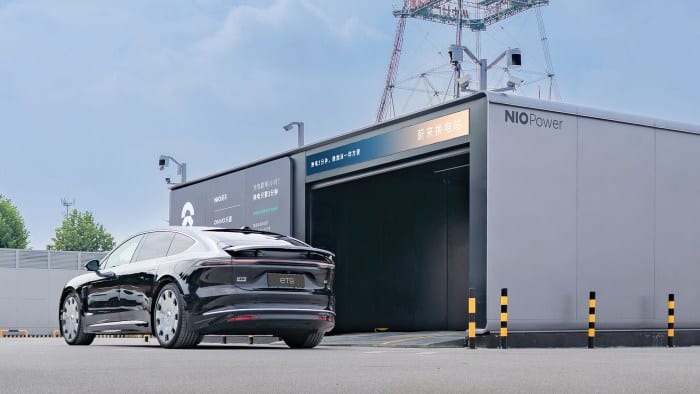
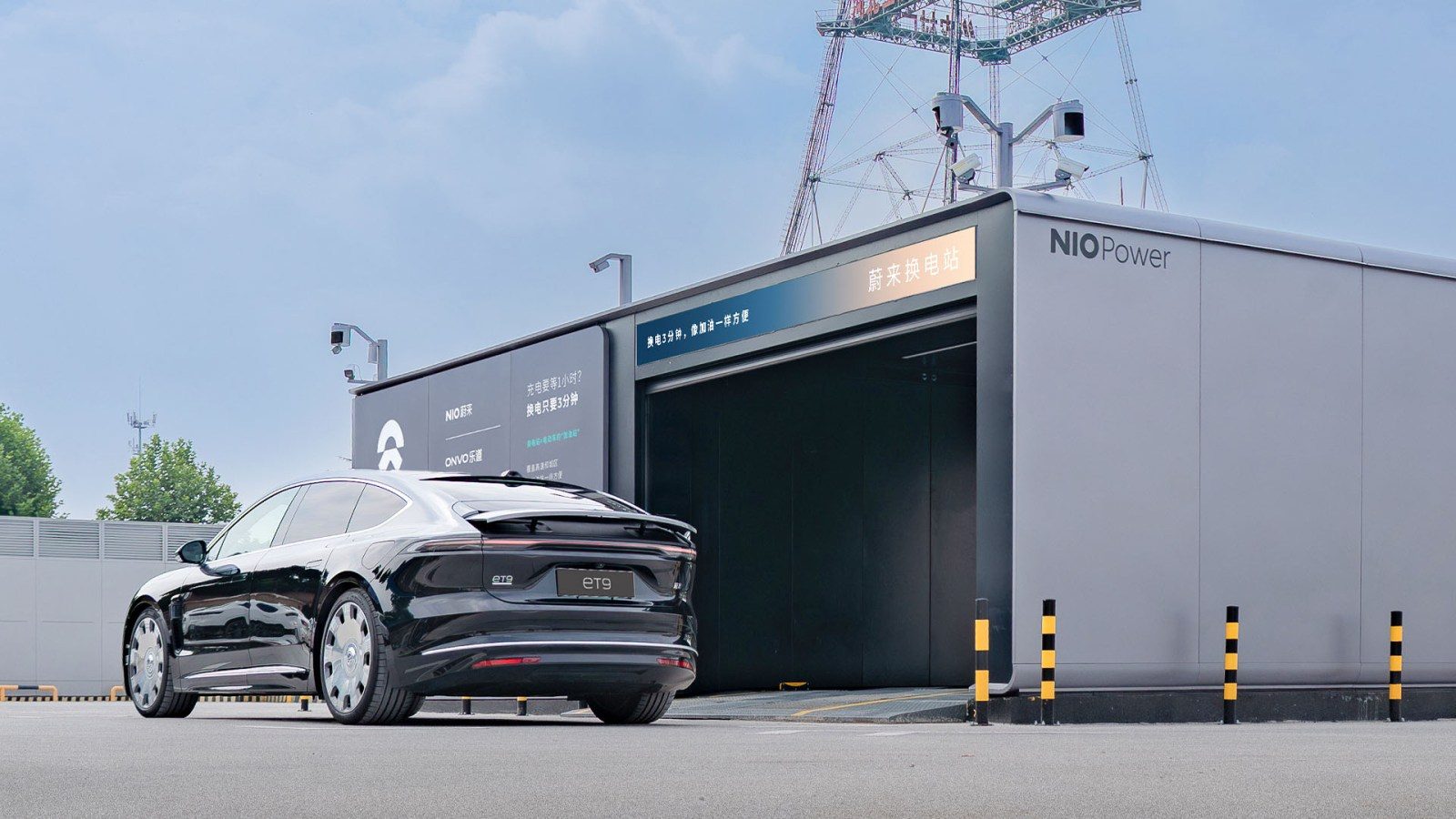
Nio Power had 4,126 swap stations in China on Monday evening local time, including 1,062 on highways, according to its live network map. The count includes stations funded and owned by partners.
That leaves 5,874 to build in a little over four years to the end of 2030, or about 1,380 a year, according to EVcalculations.
Nio’s best year was 2023, when it added 1,011 stations. It added 679 in 2024 and 681 in 2025.
With Geely’s resources, Nio Power will build its swap network faster and is more confident of reaching 10,000 by 2030, founder and Chief Executive Officer William Li said on Monday, as Nio and Geely signed their charging and swapping deal in Hangzhou.
Nio had set the 10,000 goal before the deal.
Under the deal, Yiyi’s commercial swap business “will be integrated into NIO Power,” Nio said, and it will be run as a separate network for Geely’s Cao Cao Mobility ride-hailing fleet and robotaxis, Li said.
The companies have not said whether the 10,000 target includes those commercial stations.
Cao Cao’s fleet was served by 448 swap stations in August. Counting all 448 toward the target would still leave about 1,270 a year to build, above Nio’s best year.
This Year’s Target
Nio aims to add more than 1,000 swap stations in 2026, which would take it past 4,600 by the end of the year, according to the company.
It has added 450 so far this year, from 3,676 at the end of 2025. That is about 1.7 stations a day over the first 271 days of the year.
To add 1,000 in the year, Nio would need to open another 550 in the 94 days to December 31, or nearly six a day.
Reaching 4,600 would take 474 more, or about five a day.
Li set out the 2026 plan in his New Year letter to staff.
“From the second quarter of 2026, fifth-generation swap stations will begin large-scale construction. The full-year plan is to add 1,000 swap stations, with more than 4,600 built by the end of the year,” Li wrote.
“This year, our target is to build a total of more than 1,000 power swap stations,” Li said on Nio’s first-quarter earnings call on May 21.
Nio began deploying its fifth-generation stations in August, and the 4,000th station, in Quanzhou, Fujian province, was also its first of the new generation.
Targets Met and Missed
Nio met its early targets. It set a goal of more than 700 stations for 2021, raised from 500, and reached its 700th on December 10, 2021, according to Nio. The EV maker ended that year with 777.
It targeted 1,300 stations by the end of 2022 and ended the year with 1,305.
Nio planned to add 1,000 stations in 2023 and added 1,011, ending the year with 2,316, including 747 on highways, according to figures Nio released in January 2024.
In the same release, Nio said it would add another 1,000 in 2024, for more than 3,310 by year-end. It added 679, ending 2024 with 2,995.
For 2025, Nio planned to build 1,800 to 2,000 new stations, after Li said in December 2024 that it would build 2,000. Nio added 681, ending 2025 with 3,676.
In July 2021, Nio had set a goal of more than 4,000 stations worldwide by the end of 2025, about 1,000 of them outside China, according to its plan. It ended 2025 with 3,676 in China and only approximately 61 outside its domestic market.
Open, but Not in a Hurry
Li has spent much of this year saying Nio was in no rush to open its swap network to other carmakers.
“In the short term, we will not treat whether third-party companies use our battery swap network as a priority — it is not our strategic focus,” he told reporters in Beijing on April 29.
“We don’t have short-term targets for the number of partners. Our core business priority is to enhance user experience through the battery swap network and sell our own vehicles well,” he said.
“In the long term, this will be an open network, drawing on experience from the cloud services industry,” he added.
At an industry forum in May, Li called swapping Nio’s moat.
“Nio is certainly willing to open up swapping, but we are also in no hurry to open it,” Li said, according to Sina Finance. “I have to work out whether, if I open it now, I make more money or less.”
“Right now, swapping is still our moat,” he said. “I really need like-minded partners with truly deep strategic cooperation before I will open it.”
“A few years from now, the main reason people join swapping won’t really be speed and convenience. It will be because it’s cheap,” Li added.
Monday’s deal takes the route Li described in May as Geely becomes an equity partner in Nio Power and a commercial network run alongside Nio’s own, rather than an opening of Nio’s passenger network to all carmakers.
Nio’s statement on early Monday called them “preliminary plans” subject to further discussion.
Slower Thousands
Nio took 1,508 days to reach its first 1,000 stations, from its first station in Shenzhen on May 20, 2018, to its 1,000th in Lhasa on July 6, 2022.
The second thousand took 477 days, to Baoji West on October 26, 2023, and the third 435 days, to Harbin on January 3, 2025.
The fourth took 581 days, ending in Quanzhou on August 7, 2026. Nio has added 126 stations in the 52 days since.
Partners Pay
Nio has slowed its own spending on stations and turned to partners.
“This year, the vast majority of the swap station construction funding won’t come from us,” Li told reporters in March 2025. “We’ll work with battery swap partners and lease the stations.”
More than 800 of Nio’s stations have been built with over 40 state-capital platforms and financial institutions across 25 provinces and regions, Nio said in September.
“We have basically reached the point where, from here, we can build as many swap stations as we want without worrying about funding,” CFO Stanley Qu, who heads Nio Power, said on September 26, according to TMTPost.