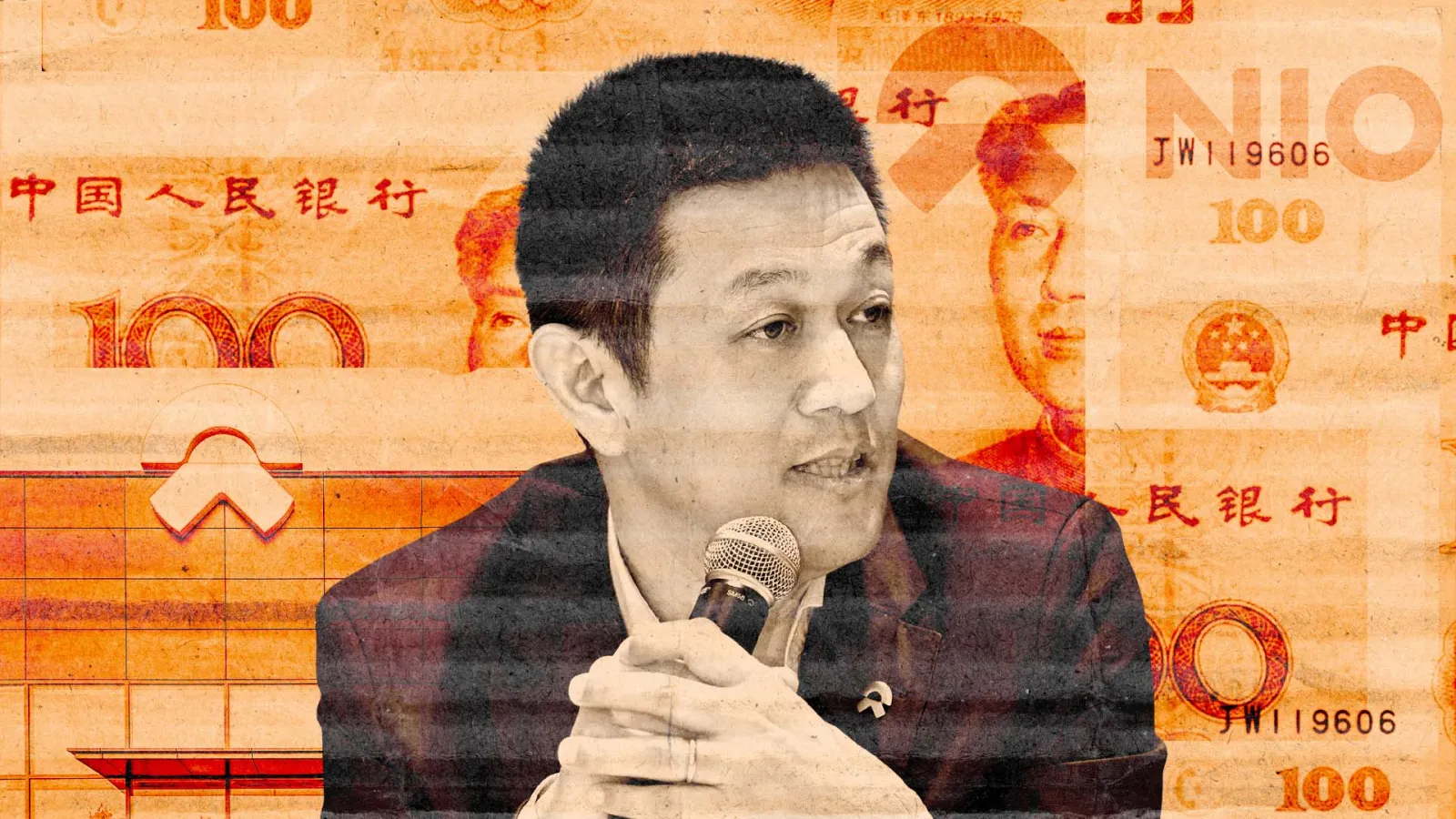
Nio Inc.‘s founder and CEO William Li signalled the EV maker may upgrade that secondary listing to primary status, a step that would open its shares to mainland China for the first time.
In remarks to shareholders at the company’s 2026 annual general meeting, Li said the premium brand wanted to deepen its Hong Kong presence without unwinding the User Trust structure that anchors its user-centric identity.
By publication time, Nio‘s US-listed shares had fallen 3.15% to $4.93, slipping back below the $5 threshold.
The remark was the most market-relevant of his comments at the meeting, held on Wednesday in Shanghai, whose formal business ran to just two resolutions.
Already Listed, Just Not for the Mainland
Nio‘s shares already trade in Hong Kong, but not in a form that mainland money can buy.
The company took a secondary listing on the Hong Kong exchange in March 2022, by way of introduction, meaning it issued no new shares and raised no fresh capital.
Its stock trades under the code 9866 and the short name NIO-SW, the suffix flagging a secondary listing by a company with weighted voting rights.
Those Hong Kong shares are fully fungible with the American depositary shares in New York, which remain Nio’s primary listing.
A secondary listing of that kind sits outside the Southbound Stock Connect, the channel that lets investors in mainland China buy Hong Kong-listed stocks.
Rivals took a different path, with XPeng and Li Auto opting for dual-primary Hong Kong listings that issued new shares and can qualify for Stock Connect.
Upgrading to a dual-primary listing, a route Hong Kong’s rules let secondary-listed firms take voluntarily, would widen Nio‘s investor base at a time when its valuation is depressed, the prize Li pointed to.
The obstacle is governance.
Nio runs a dual-class structure that keeps voting control concentrated with Li, and a vehicle called the User Trust sits inside it.
Li moved 50 million of his shares into the trust in 2019, retaining the voting rights himself while letting a user council, elected by the community, propose how the economic benefits such as dividends are spent.
The arrangement, central to Nio‘s self-styled user enterprise, drew detailed scrutiny from Hong Kong’s exchange before the 2022 listing, which probed how the trust squared with its rules on weighted voting rights.
Nio cleared that bar with added disclosures and governance changes, and Li has signalled he intends to protect the structure again rather than unwind it to satisfy regulators.
The structure has also attracted short-seller scrutiny.
In a 2024 report, Grizzly Research alleged that Li had pledged the trust’s shares to UBS to secure a personal loan, which it claimed left shareholders exposed to a possible forced sale if the stock fell far enough.
Grizzly, a short-seller positioned to profit from a falling share price, said its report reflected opinions rather than statements of fact, and the allegations remain unverified.
Analysts have grown a little warmer on the stock, with Goldman Sachs recently lifting price targets on Nio’s Hong Kong-listed shares.
Two Listings, One Sliding Share Price
Nio raised capital only once on public markets, at its New York debut.
The company priced its initial public offering on the New York Stock Exchange in September 2018 at $6.26 per American depositary share, selling 160 million of them to raise about $1 billion, short of the $1.8 billion it had targeted.
That valued the Tencent-backed carmaker at roughly $6.4 billion.
The stock climbed to about $13.80 within weeks, then surged during the 2021 electric-vehicle rally to above $60, lifting Nio’s market value close to $100 billion.
Its slide since has been steep.
Nio‘s Hong Kong shares dropped about 53% in 2024, a year in which the broader Hang Seng index rose.
The New York stock now trades near $5, below its 2018 offer price and roughly 90% beneath its early-2021 peak, leaving a company that once flirted with a $100 billion valuation worth a fraction of that.
By publication time, Nio‘s US-listed shares had fallen 3.15% to $4.93, slipping back below the $5 threshold.
On valuation, Li offered little, saying Nio had no capital plan to disclose and could not directly control its market value, with the focus on building shareholder value over time and a goal of raising dividends in future.
A Routine Meeting on Paper
The formal agenda was thin.
Shareholders re-elected Hai Wu as an independent director and appointed PricewaterhouseCoopers and its mainland affiliate as auditors for the year, at an estimated fee of 12.5 million to 14.5 million yuan.
Nio had announced the meeting on May 22 and did not stream it, in keeping with the in-person format these annual meetings usually take.
Everything beyond those resolutions came from Li’s wider remarks, which ranged across research spending, autonomous driving, batteries and overseas strategy.
Leaner R&D, Same Ambition
Li used the meeting to defend a leaner cost base, arguing Nio could spend less on research and keep its technology lead.
The company cut headcount by about 10,000 in 2025 and trimmed its large-scale research staff by roughly 40%, yet Li said efficiency had risen and foundational research stayed protected.
Much of the saving comes from platform reuse, with a 900-volt rear-drive motor shared across models and finer parts such as seat structures used group-wide, including between Nio and Onvo.
Application-level work is now ranked strictly by return on investment, reviewed every six months, with European programs pursued only where they turn a profit.
Nio reinforced the foundational-research point this month when it expanded its UK engineering centre.
Autonomy and Chips
Li framed autonomous driving as a core advantage, citing a new version of the Nio World Model pushed to about 700,000 cars across two vehicle generations and refreshing four intelligent systems at once.
The rollout follows Nio‘s second-generation NWM update across three platforms earlier this month.
He said Nio now relies fully on its in-house NX9031 chip, which it considers industry-leading, and argued that memory bandwidth and image processing matter more than peak compute, with the company’s low-light perception outperforming rivals.
Nio has said the chip shaves about 10,000 yuan from the cost of each vehicle, the clearest example its executives cite for spending less on research while extracting more from it.
The EV maker adopted 8-megapixel cameras and LiDAR back in 2022, Li said, ahead of Tesla on sensor configuration, with a further major update expected in the fourth quarter.
He also made the case for spinning out the Shenji chip effort and treating embodied intelligence as a separate company, arguing those applications could one day dwarf the automotive business.
Batteries and Swap Economics
Battery procurement will exceed 30 billion yuan this year, rise next year and could reach about 50 billion yuan within two years, he said, with battery spending growing even as overall research budgets shrink.
Li said the advantage of Battery-as-a-Service had yet to be fully realised, and that long-life cells and standardised formats would let monthly subscription fees fall further.
The push echoes Li’s earlier call for the industry to standardise battery and chip formats to save more than 100 billion yuan.
On the swap network, he said gross margin reached 20% from the first quarter and should hold, with energy operations the only loss-making segment.
Around 300,000 users hold lifetime or near-free swap rights, costing roughly 3,000 yuan each a year and about 1 billion yuan annually, an expense Li said sits with sales rather than Nio Power but is booked under energy.
At annual sales of 400,000 to 500,000 vehicles the system is close to break-even, he said, a point that fits Nio‘s recent run as ES8 deliveries topped 120,000.