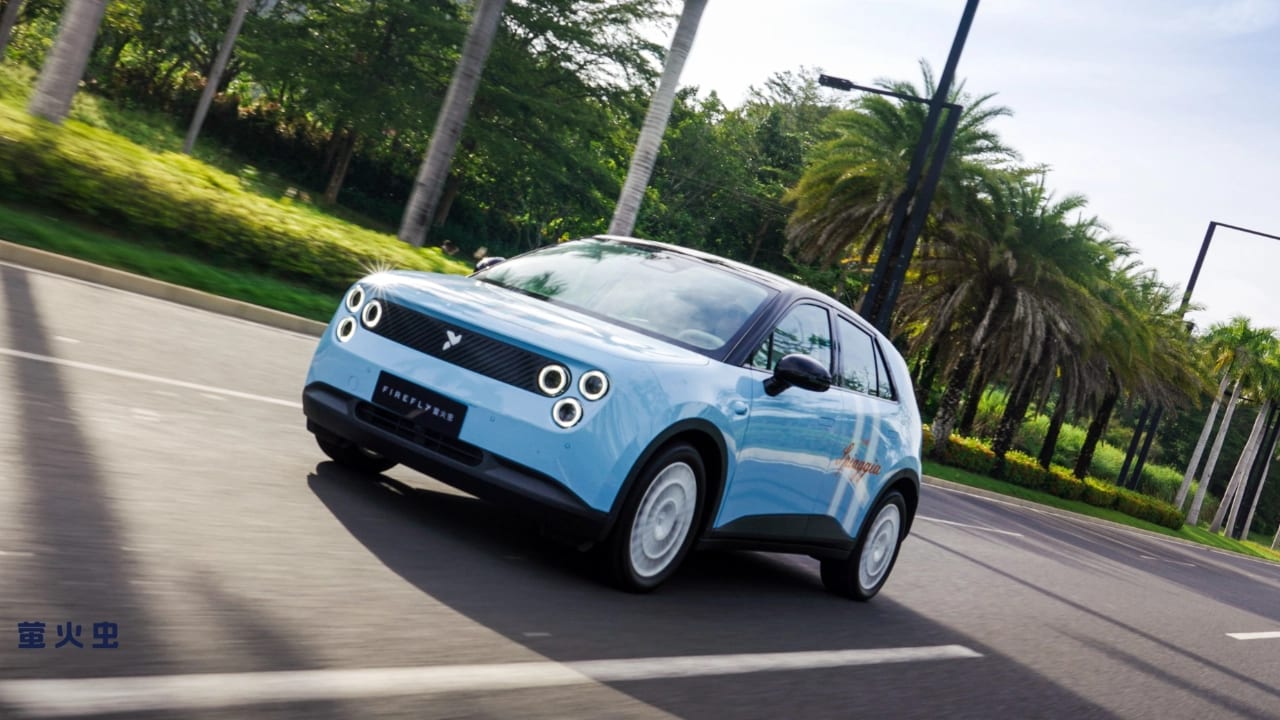

Nio Inc.’s entry-level brand Firefly delivered 5,852 vehicles in August, which brought cumulative deliveries to 80,209 since the brand’s debut in April 2025.
August was a marginal improvement on July’s 5,771 units, a 1.4% sequential gain that left Firefly below its 2026 monthly peak of 6,946 set in June.
The figures also represented a 34.7% increase from 4,346 in the same month last year.
Year-to-date deliveries through eight months reached 40,795, up 180.3% from the year-earlier period, when the brand existed for only five of those months.
Firefly remains the smallest contributor within Nio Inc., accounting for 16.3% of the group’s 35,836 units in August.
In the earnings conference call, the company’s founder and CEO William Li said the brand will maintain its single model approach while launching special editions and improved versions.
Li detailed it on Tuesday when asked by Wall Street analysts about the 2027 product roadmap for the three brands of the group.
“[…] And for the Firefly brand, we will keep this single model strategy but keep rolling out special editions and also technology upgrades,” the founder and CEO said. “So for Firefly, it’s a bit like taking the iPhone approach where it will stay in this same product, but with new additions.”
Position in the Group
Founder and CEO William Li has outlined a long-term brand mix of 35-55-10 across Nio, Onvo and Firefly by volume, assigning the compact brand just 10% of group sales — well below the 16.3% share it held in August.
The gap reflects Onvo’s recent underperformance rather than Firefly outperforming its slot.
Nio’s main brand delivered 21,174 vehicles, up 101.2% year over year, while the family market sub-brand Onvo delivered 8,810 — down 46.4% from the 16,434 recorded in August 2025.
Firefly sells a single model — a compact electric hatchback positioned as Nio Inc.’s cheapest vehicle and the brand directed at overseas markets.
Despite being the lowest-volume of the three brands, Firefly posted the most consistent sequential performance in the second quarter and into summer.
Monthly deliveries have stayed in a narrow band between 4,980 and 6,946 units since April, while Onvo swung from a 2026 high of 12,029 in May to 8,810 in August, and the Nio brand ranged from 15,159 in February to 22,490 in March.
Nio Inc.’s third-quarter delivery guidance, issued alongside second-quarter earnings on Tuesday, implies September group deliveries of between 36,230 and 39,230 vehicles.
At Firefly’s current share, that range would translate to about 5,900 to 6,400 units for the brand if its proportion holds.
The Road to 100,000
Brand chief Daniel Jin said late last year that Firefly aimed to reach 100,000 cumulative deliveries by the end of 2026.
The brand passed 70,000 on July 19 and now stands at 80,209 units.
Reaching the target requires roughly 19,800 more deliveries across September through December — an average of about 4,950 a month. At August’s pace of 5,852, that arithmetic works.
Firefly launched in China in April 2025 with 231 deliveries in its first month and scaled to 7,084 by December of that year.
January reset the count at 2,807 — the seasonal pattern common across Chinese automakers — before climbing back through the spring.
Busy August
August was a busy month for the brand beyond the delivery number.
Nio completed its 4,000th battery swap station and first fifth-generation station in Quanzhou, Fujian province on August 7.
Gen-5 stations are the first generation compatible with Firefly‘s shorter wheelbase, giving the brand access to a domestic swap network it had been excluded from since launch.
Battery swap support had been integrated through software in May via the Aster 1.5.0 update, and the Gen-5 hardware rollout completed the chain.
On August 14, Firefly began rolling out Aster 2.0.0, the brand’s first full version bump since the operating system launched alongside the vehicle.
The release added or optimized 33 features spanning the smart cabin, assisted driving, and the Lumo voice companion, including AI-powered wallpaper generation and a mic-free karaoke system.
Firefly also appeared at the 29th Chengdu International Auto Show on August 21.
The brand also displayed the Halo series’ debut model, named Habitat, which launched in July, and a user-customized pet concept car.
On August 28, Firefly put its seventh design variant in a year on sale — a coastal-themed limited run called Long Summer by the Sea, capped at 666 units.
Firefly described it as the sixth special-edition model, distinct from the Halo design series introduced in July.
Every numbered limited edition has sold out, with the pace of sellouts compressing from about 30 hours for the first run of 333 units in August 2025 to under eight hours for the Pixel Player’s identical allocation in June 2026.
Europe Remains Marginal
Overseas demand continues to lag far behind domestic performance.
Firefly shipped 54 vehicles out of China in July — its second-strongest export month of 2026 — enough to lift group exports to a four-month high, though all three brands combined accounted for 0.26% of the group’s deliveries that month.
Firefly sells in seven European markets and has extended price cuts of 11% to 17% across four of them through late summer, discounting in Europe while charging double-digit premiums on limited editions at home.
European registration figures have been measured in single digits per market for most of 2026, and none of the special editions has been offered outside China.
Jin has acknowledged that early-2026 overseas sales fell short of expectations while maintaining expansion targets of 20 to 30 countries.