Apple is preparing to offer digital car key support for two new carmakers, the Beijing-headquartered tech giant Xiaomi and the California-based Lucid Motors.
Both automakers were spotted in the iOS 27 beta software code earlier this week, according to a report by MacRumors.
While no specific models or launch dates were disclosed, the inclusion of the code in an iOS beta suggests the feature could arrive with the operating system’s public release in September.
Apple Wallet’s car key feature lets iPhone and Apple Watch owners lock, unlock and start compatible vehicles using NFC or Ultra Wideband wireless technology.
The platform supports passive entry, proximity-based access and remote control through the Wallet app. Specific implementations vary by automaker.
Lucid-Apple History
Lucid was first named as a future car key partner at Apple‘s Worldwide Developers Conference (WWDC) in June 2025, when the iPhone maker announced 13 new automakers had pledged support for the feature.
Thirteen months later, the Saudi-backed company has yet to offer the integration of the function.
The timing is significant for a company whose key fob problems have been one of the most persistent complaints among Gravity SUV owners.
Since customer deliveries began in late 2025, Lucid has shipped at least eight software and firmware updates targeting “key not detected” alerts that have left drivers stranded, sometimes with passengers locked inside.
At CES in January, then-interim CEO Marc Winterhoff called the fob failures “sometimes embarrassing.”
The Phone-as-Key digital key feature was previewed in the Gravity’s UX 3.5 release notes in March, when Senior VP of Engineering and Software Emad Dlala revealed that Lucid was developing the capability for both the Air sedan and the Gravity SUV.
By then, Dlala said deployment was planned for later in 2026.
The company’s 2026 software roadmap presented at its first Investor Day that same month listed a digital key for the Gravity among features planned for this year.
VP of Communications Nick Twork confirmed in May that the Mobile Key would arrive in the third quarter.
What Lucid Offers
Lucid already offers several vehicle-access methods through its own app: a Bluetooth-based Mobile Key for passive entry, an NFC key card for locking and unlocking, and the physical key fob that has proved so problematic.
Apple Wallet car key would add a platform-level layer on top of those options, storing credentials in the iPhone’s secure element and functioning independently of the Lucid app.
According to Lucid owners’ forum discussions, the Gravity is expected to support the full Ultra Wideband experience — enabling passive entry at range — while the Air sedan may be limited to NFC-only access via its B-pillar sensor, as current Air models lack UWB hardware.
The iOS 27 code references Lucid under the identifier “LCID” but does not distinguish between models.
Apple x Xiaomi
Apple and Xiaomi rank among the world’s largest consumer technology companies and are direct rivals in smartphones, wearables and smart-home devices.
Adding Xiaomi‘s vehicles to Apple Wallet’s car key roster means two of the largest phone makers on opposite sides of the Pacific will share a layer of digital infrastructure inside a car — a pairing that could have seemed difficult to imagine.
However, while Xiaomi had not been mentioned as a potential car key partner before Tuesday’s discovery, the link between the two brands inside Xiaomi‘s vehicles is already deep.
Xiaomi‘s SU7, SU7 Ultra and YU7 all ship with wireless Apple CarPlay — including adjustable full-screen support — along with a rear extension mount for iPads and Apple Watch controls for select vehicle functions.
Software updates rolled out in 2025 added iPhone digital keys with Ultra Wideband unlocking, improved Apple Music integration and remote vehicle controls that leverage iPhone features such as the Action Button and Dynamic Island.
Reviewers have described the result as one of the strongest Apple integrations outside Tesla’s proprietary ecosystem.
Xiaomi‘s co-founder and CEO Lei Jun framed the approach explicitly when the SU7 launched in April 2024.
“Apple users have shown remarkable interest, with 51.9% lock-in orders coming from them,” Lei said then. “With support for CarPlay and iPad, we’re committed to making Xiaomi SU7 the most Apple-friendly EV available, the perfect choice for iPhone and iPad users.”
Last year, upon the launch of the YU7 SUV, he also teased Apple users, saying that “since Apple stopped developing its car, we’ve given special care to Apple users.”
Xiaomi delivered 34,738 vehicles in June, up 36.45% from a year earlier, according to data published Wednesday by the China Passenger Car Association (CPCA).
Of those, 14,324 were YU7 SUVs — a 63.97% jump from May — while the SU7 sedan accounted for the remainder.
June marked the third consecutive month the brand topped 30,000 deliveries, however, first-half deliveries reached only 185,055 units — covering roughly a third of Xiaomi‘s full-year target of 550,000.
Reaching the target requires an average of nearly 62,000 deliveries a month in the second half, well above the brand’s all-time monthly peak of 50,212 set last December.
Xiaomi currently sells vehicles only in China.
The brand’s inclusion in the upcoming iOS 27 surfaces as the Beijing-headquartered company lays the groundwork for its first expansion outside China.
At its Investor Day in April, president Lu Weibing outlined plans to begin overseas expansion in the second half of 2027, starting with Europe, followed by right-hand-drive markets in the first half of 2028.
The company opened an EV research and design centre in Munich in 2025, led by former BMW engineer Rudolf Dittrich, and recently appointed Dieter Lorenz, a former Tesla delivery operations manager in Central Europe, to lead logistics for the European launch.
Apple Wallet car key support would fit neatly into Xiaomi‘s broader strategy of binding hardware, software and services into a single ecosystem — the same playbook the company uses with its smartphones, smart-home devices and wearables.
Automakers Supporting Apple Key
Apple first launched car key in 2020 with BMW. Adoption was slow for several years and has accelerated sharply since late 2025.
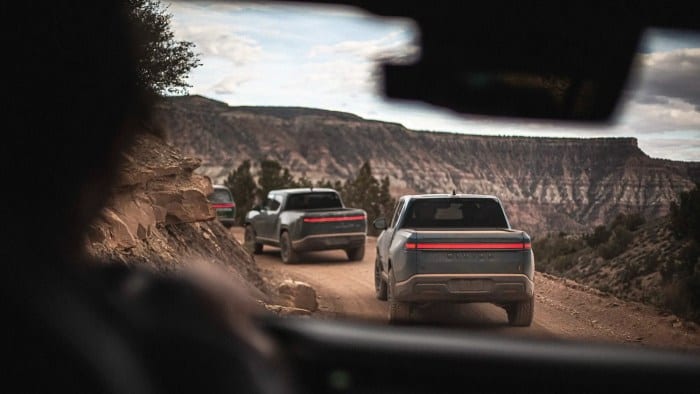
Automakers with active or confirmed Apple Wallet car key support now also include Mercedes-Benz, Hyundai, Genesis, Kia, Audi, Mini, Volvo, Polestar, Lotus, BYD, Nio, RAM, Toyota, Rivian and Porsche.
Toyota launched support on the 2026 RAV4 in February, Rivian rolled out its implementation in late December 2025, and Porsche activated the feature on the 2026 Macan EV in May.
At WWDC 2025, Apple announced that 13 additional brands had pledged support: Acura, Cadillac, Chevrolet, GMC, Chery, Hongqi, Lucid, Porsche, Smart, Tata, Voyah and WEY.
Beyond the WWDC list, backend code discoveries have revealed several more brands in preparation.
Lexus appeared in Apple‘s server-side code in April, corroborating reports that the 2026 Lexus ES would support the feature.
Volkswagen was added to Apple‘s backend just last week.
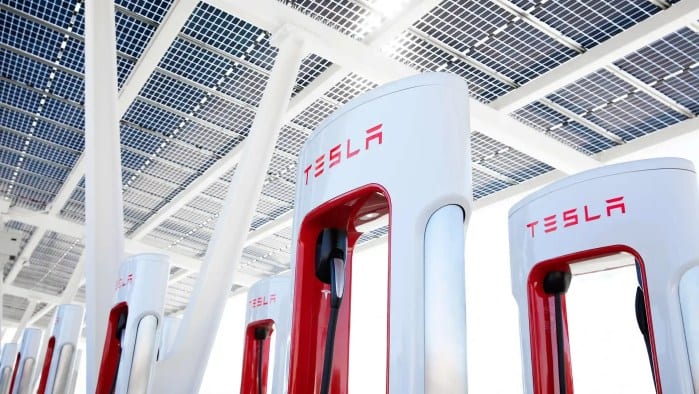
Tesla does not support Apple Wallet car key, relying instead on its proprietary Phone Key system, which requires the Tesla app to run in the background.
XPeng and Li Auto, two other major Chinese EV makers with growing international footprints, are also absent from Apple‘s car key ecosystem.