
Weekly orders for new energy vehicles in China were 52% lower than a year earlier in the week that took in the start of the National Day holiday, Goldman Sachs said in a note, as the country’s car market contracts sharply from last year’s record September.
Orders rose 9% from the previous week, the bank said in its report. HIMA posted the largest weekly gain at 56%, followed by Leapmotor at 15% and Geely at 9%.
HIMA, the Huawei-led Harmony Intelligent Mobility Alliance, groups five brands built with partner carmakers: Aito with Seres, Luxeed with Chery, Stelato with BAIC, Maextro with JAC and Shangjie with SAIC.
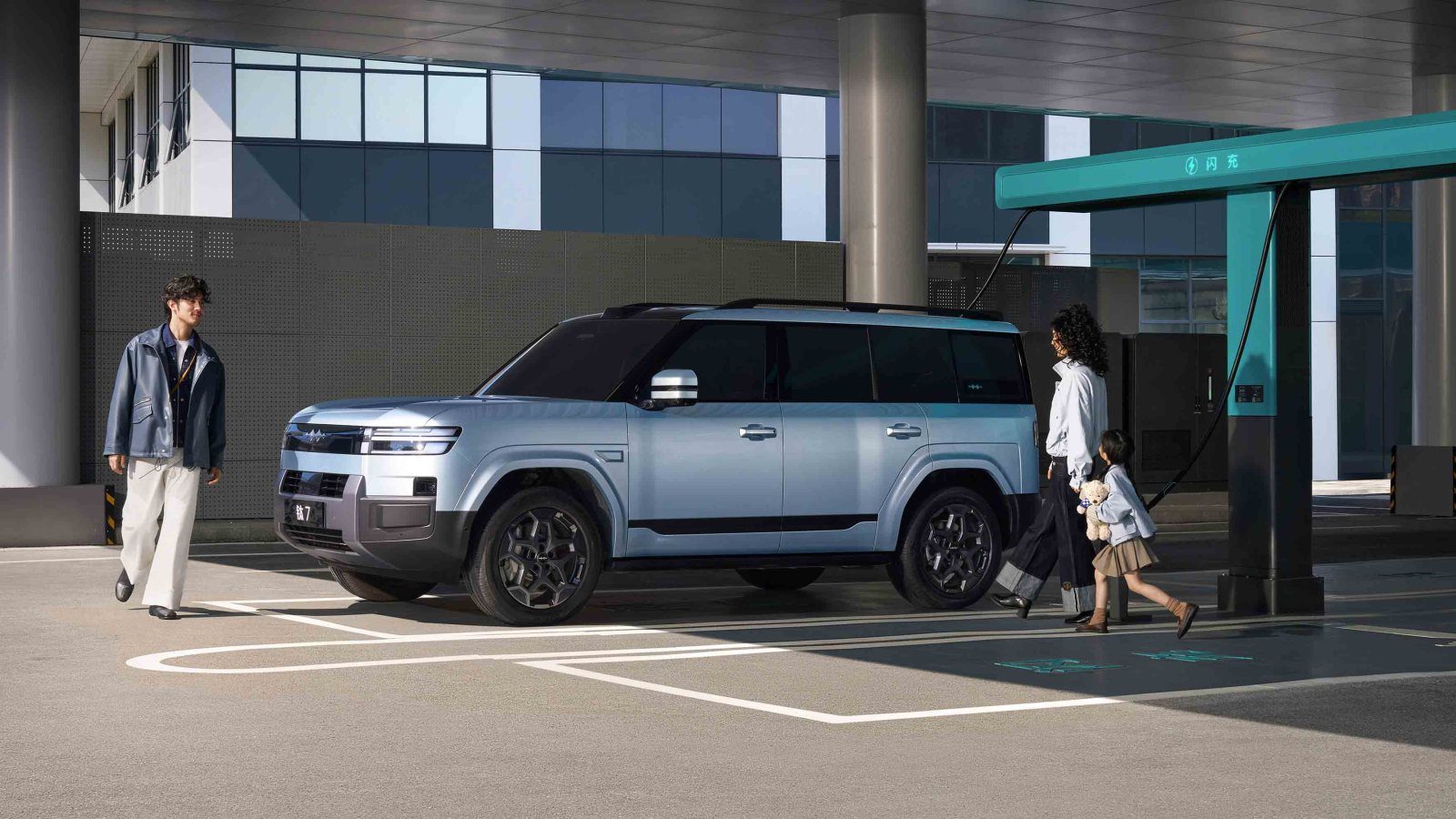
Goldman attributed the gains mainly to new model launches, including the Luxeed RX electric SUV.
Both Sides of the Comparison
The 40th week runs from September 28 to October 4 on the standard calendar, which places four days of the National Day break inside it.
The same week of 2025 also fell within the holiday, so the calendar alone does not account for a decline of that size.
The 39th week contained China’s Mid-Autumn Festival, which depressed activity, and the Luxeed RX went on sale on September 28, the first day of the period Goldman measured.
What the Industry Data Show
The note’s market figures come from the China Passenger Car Association, and they match the association’s own release for September 1 to 27.
Passenger vehicle retail sales were 1.258 million in the period, down 29% from a year earlier and up 1% from the same period of August.
Wholesale volume was 1.474 million, down 30% on the year and 12% on the month.
NEV retail sales were 827,000, down 20% on the year and up 2% on the month, and NEV wholesale was 1.032 million, down 11% and 7%.
Those figures put NEV penetration at 65.7% of retail sales and 70% of wholesale, which Goldman gives as 66% and 70%.
The bank compared them with 65% and 63% in August.
The CPCA’s final August data show retail penetration of 65.2% and wholesale penetration of 64.2%, slightly above the wholesale figure Goldman cites.
The Last Week Dragged the Month
The cumulative numbers hide a sharp deterioration at the end of the period.
Daily retail sales averaged 54,000 in the fourth week of September, down 42% from a year earlier, after declines of 19%, 26% and 19% in the first three weeks, according to the CPCA.
Manufacturers’ daily wholesale fell 46% in the same week.
The association said the week was the Mid-Autumn holiday, that the shift in its timing had a large effect, and that a 42% fall in retail “is also normal”.
A comparison of the CPCA’s figures for September 1 to 20 and September 1 to 27 shows the effect on the NEV numbers.
NEV retail sales had been down 9% on the year through September 20 and were down 20% a week later.
NEV wholesale went from an 8% increase to an 11% decline over the same seven days.
About 231,000 of the 380,000 cars sold at retail in the fourth week were NEVs, a share of roughly 61%, against 67.9% through September 20, EV calculations from the two releases show.
The CPCA had already described the high NEV share earlier in the month as “unusually high”, saying manufacturers were pushing volume to meet targets without strong order backlogs.
The Year-on-Year Gap
The CPCA attributes the scale of the decline to an exceptionally high base.
A rush to buy before subsidies stopped in some regions pushed retail sales in September 2025 to a record, it said.
The association forecast on September 17 that retail sales for the full month would reach about 1.69 million, down 24.6% from 2.241 million a year earlier, with NEVs at about 1.11 million.
That forecast assumed daily retail of 70,000 in the fourth week, well above the 54,000 recorded.
Reaching 1.69 million would have required about 432,000 retail sales in the final three days of the month.
The CPCA has not yet published its full-month figure.
It said this year’s market was a contest for existing demand in which growth was concentrated in NEVs, and that combustion-car wholesale fell 53% in the first four weeks of September.
Year to date through September 27, passenger vehicle retail sales were 12.973 million, down 22%, while NEV wholesale was up 7% at 10.81 million.
NEV exports rose 154.7% in August to 518,000, the CPCA’s monthly data show, which helps explain how wholesale can grow while domestic retail falls.
The Brands Goldman Singled Out
The weekly gains Goldman cites are orders, not deliveries, and the two can diverge.
Leapmotor delivered a record 105,656 vehicles in September, its third consecutive month above 100,000.
The Luxeed RX, built by Chery with Huawei’s technology, launched too late in the month to affect September deliveries.
Goldman’s summary gave no weekly figures for other brands.
Prices and Battery Costs
Dealer discounts on NEVs were unchanged from the previous week, while discounts on combustion cars widened, Goldman said.
Battery-grade lithium carbonate held at 125,000 yuan ($18,700) a tonne, and prices of prismatic LFP and NCM battery cells were stable, according to the note.
The CPCA said gasoline prices had risen by more than 830 yuan ($100) a tonne since late July, which it said was suppressing demand for combustion cars.