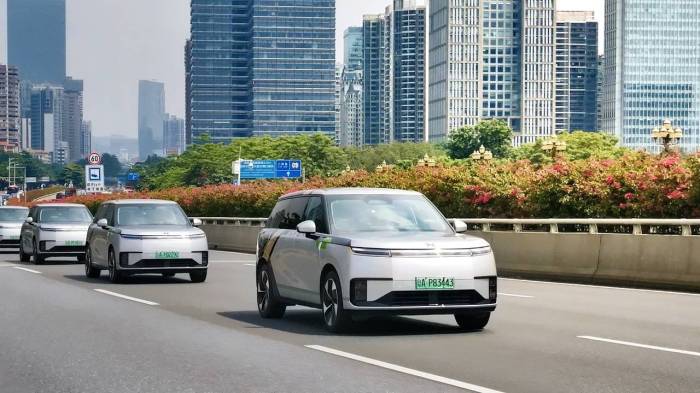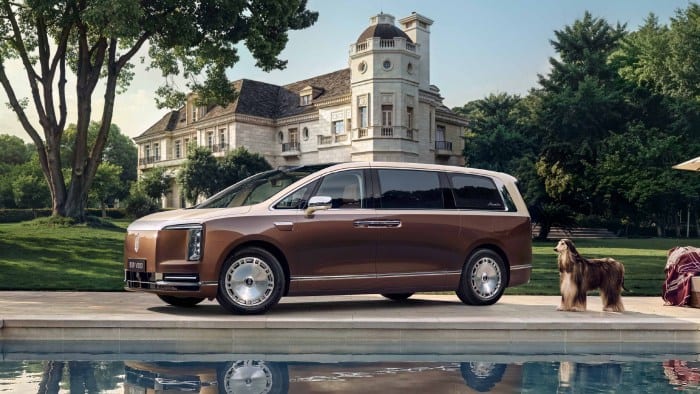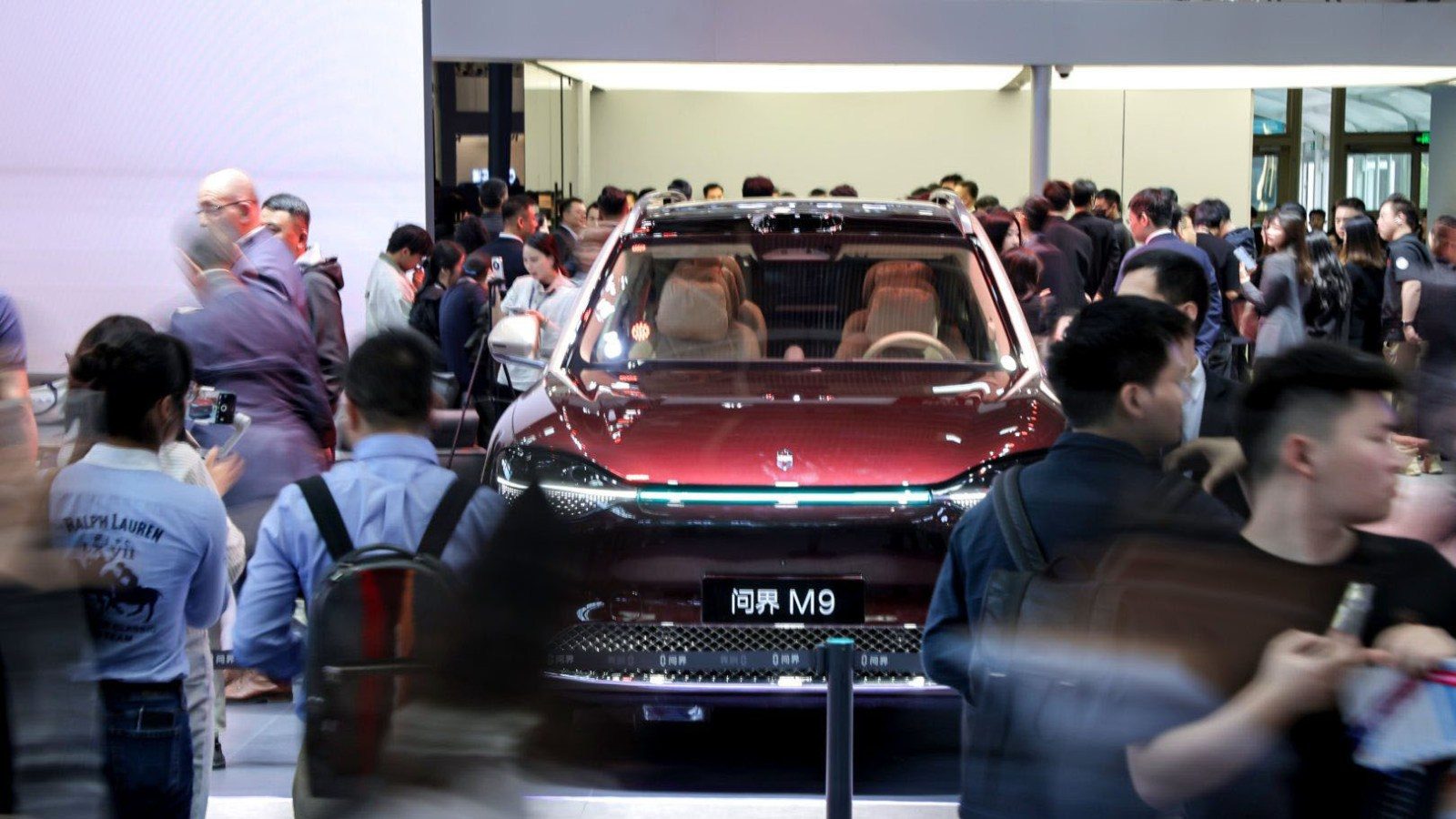

Huawei is handing day-to-day control of AITO, the EV brand it built with Seres, back to the carmaker, according to a report by the Chinese financial outlet Cailianshe on Tuesday.
Seres shares fell in both Hong Kong and Shenzhen, with the Hong Kong listing down more than 5% to a record low.
Product definition, marketing, in-store sales and customer service will pass from Huawei to Seres this week, the outlet said, citing people familiar with the matter. Huawei will remain a technology supplier.
The change applies to AITO alone.
Huawei’s four other partner marques, Luxeed, Stelato, Maextro and Shangjie, stay on the existing arrangement, and the report said the alliance would concentrate its resources on accelerating them.
What the Model Was
Huawei works with carmakers at three levels: supplying parts, licensing a full intelligent driving and cockpit package, or the deepest tier, known as smart selection.
Under smart selection, Huawei co-defines the vehicle, sets its price, runs the marketing, sells it through its own retail stores and owns the customer relationship. The carmaker builds the car and carries inventory, warranty and most of the capital cost.
AITO was the prototype for that arrangement, and the reason the other four marques exist.
How It Got Here
Seres, then called Chongqing Sokon Industry Group, signed a comprehensive cooperation agreement with Huawei at the company’s headquarters on January 18, 2019, covering smart electric vehicle technology.
The first car appeared at the Shanghai Auto Show in April 2021.
The Seres Huawei Smart Selection SF5 was built by Seres and carried Huawei’s DriveONE electric drive system and HiCar software, but it was the retail arrangement that was new: it became the first production vehicle sold in Huawei’s own stores.
AITO followed on December 2, 2021. A deeper agreement in February 2023 let Huawei use its consumer-market research to define new AITO products while Seres concentrated on manufacturing, with a joint target of one million new energy vehicles by 2026.
That agreement produced the M9. The millionth AITO vehicle rolled off the line on January 13 this year, about 46 months after launch.
The Timing
AITO sales have halved in each of the past two months.
Seres Auto, the AITO operating entity, sold 20,480 vehicles in July, down 50.9% year on year, with production down 50.5%. In August it sold 20,652, down 49.7% and a monthly low for the year.
A year earlier AITO was selling more than 40,000 a month, and above 50,000 in some months.
Across the parent company, new energy vehicle sales were 24,229 in July, down 45.7%, and 24,244 in August, down 44.0%. Counting all powertrains, group sales were 26,679 and 27,684.
The year-to-date picture is far milder and belongs alongside the monthly figures. Seres Auto sold 181,250 vehicles in the first seven months, down 6.5%, and the parent’s new energy sales were 203,006, down 6.3%. First-half sales had been up 3.9%.
Over the same period the alliance grew. It delivered 45,046 vehicles in July and 286,000 in the first seven months, up 13.7%, with cumulative deliveries past 1.48 million. August brought 42,101, its first year-on-year decline and a third consecutive monthly fall.
AITO’s share of alliance volume has fallen sharply as the other four marques launched, though published estimates of the current figure vary widely.
What It Cost
Seres swung to a loss in the first half of this year, reporting revenue of 57.49 billion yuan, down about 8%, and a net loss attributable to shareholders of 1.72 billion yuan against a profit of 2.94 billion a year earlier.
The company attributed it to a model changeover in the second quarter and to asset impairments. Chairman Zhang Xinghai has separately said rising battery and chip prices added 15,000 to 20,000 yuan of cost per vehicle.
That followed a record 2025, with revenue near 165 billion yuan and net profit of 5.96 billion.
Seres has also been paying Huawei heavily. Its disclosed procurement from its largest supplier, identified in Chinese coverage as the Huawei ecosystem, rose from 5.8 billion yuan in 2022 to 7.2 billion in 2023, 42 billion in 2024 and 56 billion in 2025, moving from 14.5% of its procurement spend to 33.8%.
Seres has said in its filings that the arrangement involves no profit-sharing and that the payments are procurement, covering hardware, a technology licence to Huawei’s automotive unit Yinwang and channel and service fees to its consumer business.
Buying Its Way Out
Seres has spent two years converting a supplier relationship into ownership.
On July 2, 2024 it paid 2.5 billion yuan for 919 registered and pending AITO trademarks and 44 design patents held by Huawei, taking the brand assets in-house.
It also paid 11.5 billion yuan for a 10% stake and a board seat in Yinwang, the intelligent automotive solutions business Huawei spun out, turning Seres from a customer into a shareholder.