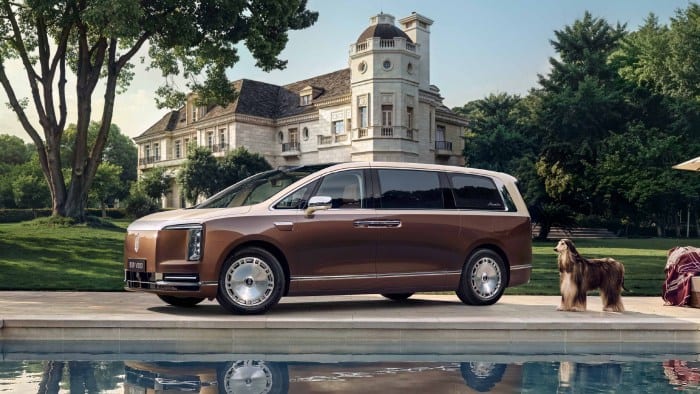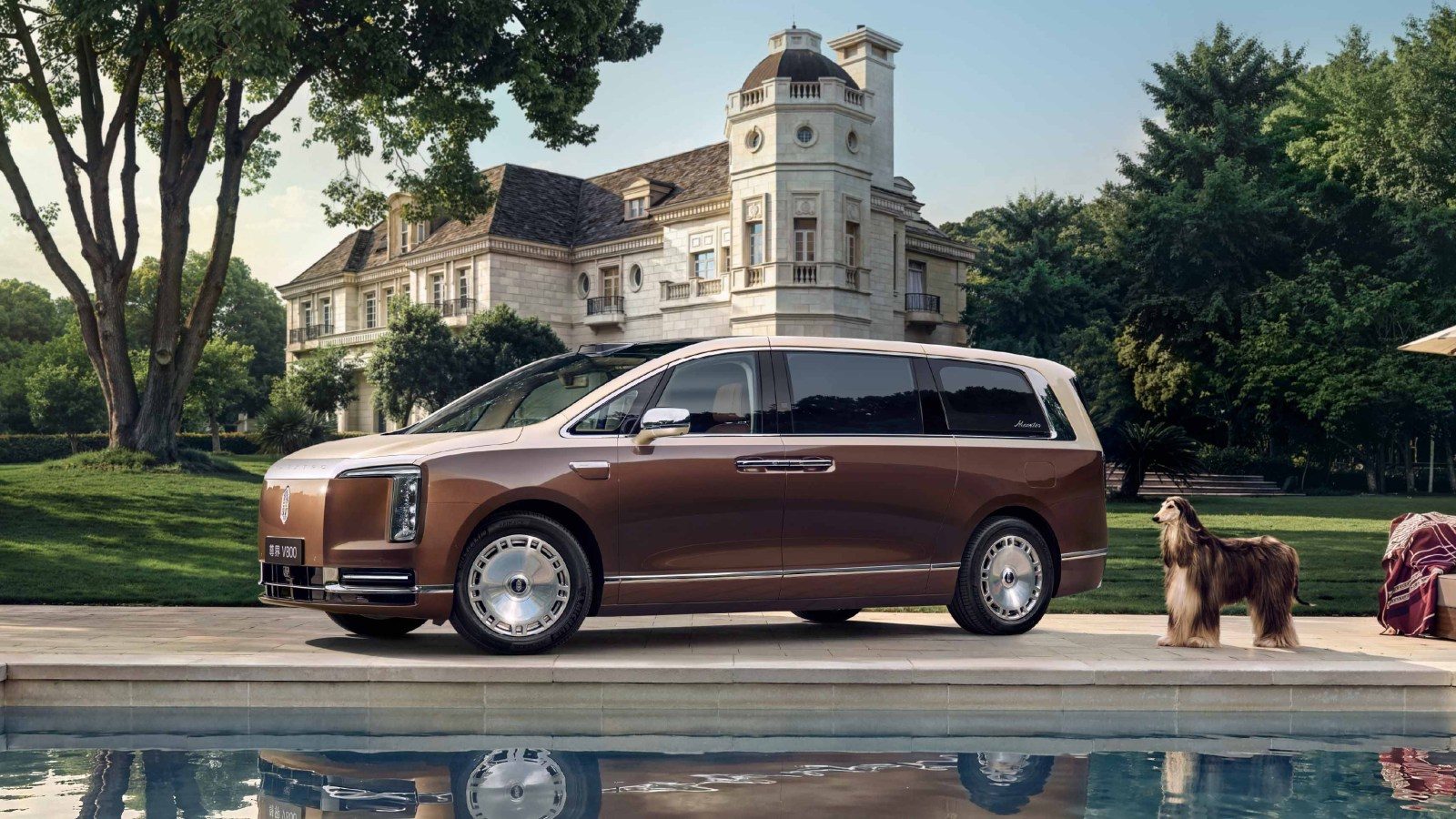

Maextro, the Chinese luxury car brand backed by Huawei, said it would redesign a brake pedal part on its V800 minivan and offer owners a free upgrade, after a test video showed the part breaking on three new vehicles during emergency stops.
The bracket that holds the brake pedal broke on all three cars during repeated stops from 100 kilometers per hour, leaving the foot brake unusable, according to the video released on Thursday by Dongchedi, a car information platform owned by the Chiense giant ByteDance.
In a statement on Thursday, Maextro said no bracket had broken in customer use since deliveries began, and described the conditions in the video as “non-standard, extreme test conditions.”
The V800 is sold in China for 766,000 yuan ($114,100) to 1,016,000 yuan ($151,400) and is aimed at the luxury business-minivan segment led by Toyota‘s Alphard and the Lexus LM.
What the Test Showed
The testers bought the three cars between October 1 and October 3 and braked each one hard from 100 kilometers per hour to a standstill on a closed course.
The bracket on the first car broke on its third stop, tested on October 1, and the car rolled to a halt, according to the test results shown in the video.
Maextro’s second vehicle, tested on October 3, stopped in 39.56 meters, 36.3 meters and 37.32 meters on its first three attempts before the bracket broke on the fourth, when the stop took 151.79 meters.
The testers then bought a third V800, a 2026 Pilot version that was brought from a dealer on a flatbed truck with about 3 kilometers on the odometer.
Fitted with a force sensor, it stopped in 38.44 meters on its first attempt with a peak pedal force of 1,596 newtons.
On the second attempt the bracket broke at about 1,612 newtons, and the testers stopped the car using the emergency braking function triggered through the Park button, taking 140 meters.
All three fractures occurred at the root of the bracket, a plastic part made of glass-fiber-reinforced polypropylene, the testers said.
They said the pedal’s center sits about 130 millimeters from the bracket pivot, the longest lever of the cars they compared, and that the pivot area had a single vertical support plate where comparable parts had two or three.
They also pointed to a weld line, a known weak point in molded plastic, in the area under the highest load.
Other cars tested in the same session, including a Luxeed V9, an Aito model and a Porsche, completed six full-force stops without damage to the pedal or bracket, according to the testers.
These descriptions come from the testers, and no regulator or independent laboratory has published findings on the part.
A copy of the video posted on Bilibili at 7:00 a.m. Beijing time had drawn about 2 million views by Thursday evening.
Maextro’s Response
“The braking system bears directly on users’ travel safety, and we attach great importance to the concerns raised by the related video,” the brand said.
It said the braking system had been developed and validated to requirements above China’s national standards GB 21670-2025 and GB 7258-2026 and the industry standard QC/T 788-2018.
Even under “non-standard, extreme” conditions, it wanted to give users a greater safety margin, the brand said.
It will further optimize the design of the brake pedal bracket base, offer delivered customers a free upgrade, and carry out a systematic review of design validation, test boundaries and production quality management.
“User safety is always our first priority,” it said.
The statement did not name Dongchedi, give a timetable for the upgrade or mention a recall.
JAC, which builds the V800, said earlier on Thursday that it was aware of the matter, was investigating and was running tests with several parties, and would give an official explanation once it had results.
Huawei’s Harmony Intelligent Mobility Alliance (HIMA), which sells Maextro cars, said it had not received any feedback involving the brake pedal and that delivery times were normal.
Huawei’s Car Alliance
Maextro is jointly developed by JAC and Huawei and sits at the top of HIMA’s brand lineup.
Huawei does not build cars itself, and instead supplies the cockpit, driver-assistance and electric drive technology to partner manufacturers, with JAC building Maextro cars in Hefei.
The V800 went on sale on August 5 in three versions priced at 766,000 yuan, 866,000 yuan ($129,000) and 1,016,000 yuan, alongside a smaller V680 MPV.
HIMA said deliveries of both models began on August 31.
HIMA is concentrating resources on Maextro and three other partner brands after Huawei stepped back from day-to-day operations at Aito last month, according to Chinese media reports.
Market Reaction
JAC’s Shanghai-listed shares slumped 10.01% to 24.72 yuan on Thursday, the maximum daily decline allowed, on the first trading day after China’s National Day holiday.
The fall erased about 6.2 billion yuan ($923.5 million) of market value and ended a run in which the stock had risen by the daily limit three times in six sessions from September 22.
JAC said on September 30 that it, Huawei and Stellantis “do have an intention to cooperate,” but that no binding agreement had been signed.
Chinese media have reported that JAC would build bodies for Maserati models developed with Huawei, to be finished in Italy, though none of the three companies has confirmed the plans.