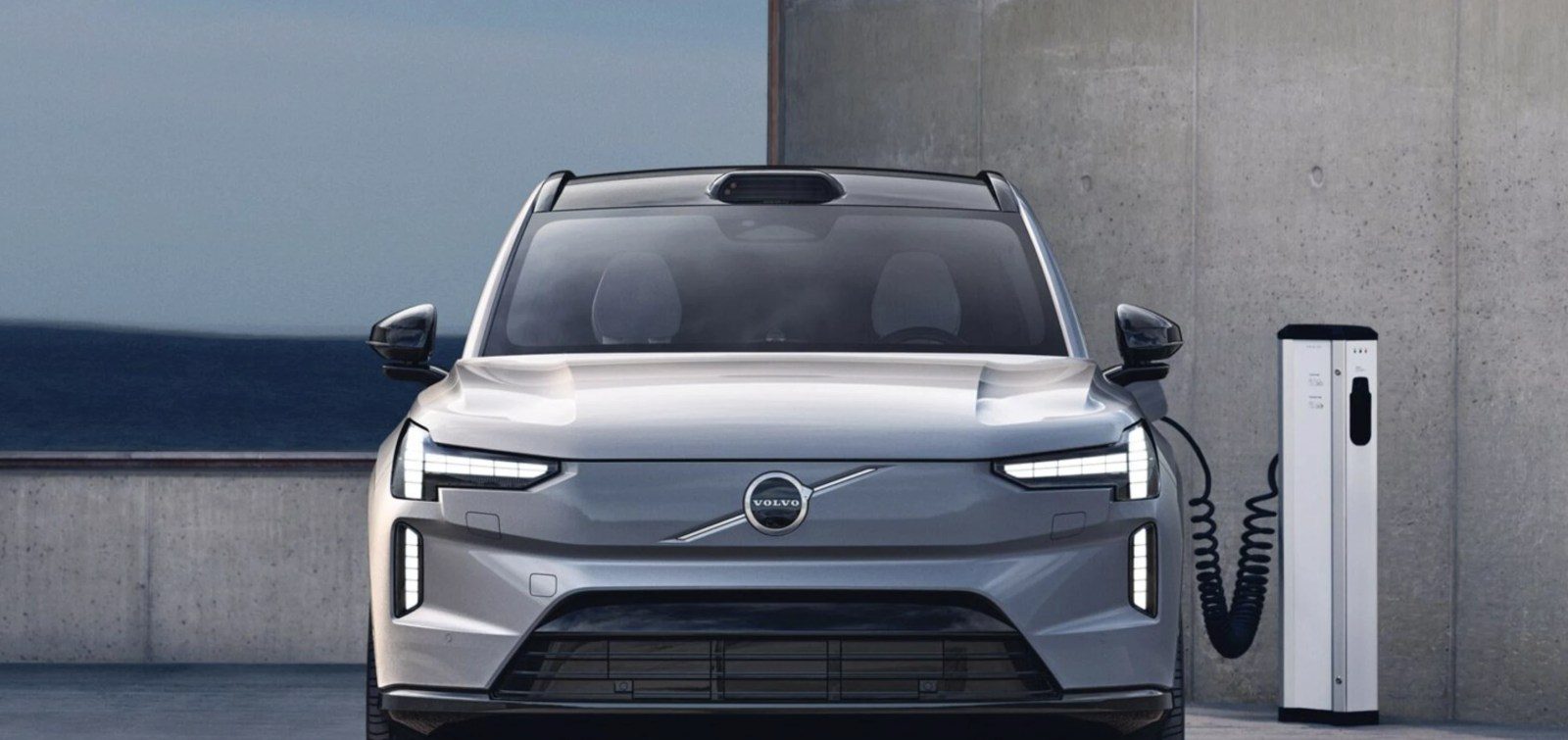

Volvo Cars said on Sunday that it will pay NOK 18,000 ($1,900) to every Norwegian owner of a LiDAR-equipped EX90 or ES90 vehicle, as part of its formal decision to permanently abandon the Luminar-supplied tech and all features that depended on it.
Henrik Juel Teige, spokesperson for Volvo Cars Norway, confirmed the compensation to the automotive outlet Motor.no on Sunday.
The decision came after Luminar filed for Chapter 11 bankrupcy protection in the final weeks of 2025.
Volvo had first signed a supply deal with the company in May 2020, according to which the Florida-based tech company would provide LiDAR and perception technology for its vehicles.
The partnership was later expanded to sister brand Polestar in 2023.
On Sunday, Juel Teige told the outlet that “Volvo Cars has ended its partnership with the company’s supplier of LiDAR technology and has discontinued its plans to develop LiDAR-based functions for the EX90 and ES90.”
As such, “the LiDAR-based features Volvo previously communicated about will not be launched, and the driver assistance systems in the EX90 and ES90 will not be based on LiDAR technology.”
Volvo will also phase out data collection through the LiDAR system on vehicles already delivered with the hardware.
No retrofit exists to physically remove the roof-mounted sensor, meaning that current owners will have to keep the sensor suite on their vehicles.
Owners with questions about the refund can contact their Volvo dealer, Juel Teige said.
Abandoned Hardware
Volvo launched the EX90 with Luminar’s Iris LiDAR as standard equipment, marketing the roof-mounted laser sensor as a generational leap in crash prevention and a foundation for future autonomous driving capabilities.
Combined with dual NVIDIA Drive AGX Orin processors, cameras, radars, and ultrasonic sensors, the LiDAR was presented as a centrepiece of what Volvo called its “Safe Space Technology.”
Execution fell short of the marketing. Luminar’s sensor generated more data than the EX90’s original central computer could handle, leaving the LiDAR-dependent features inactive for months after early deliveries.
Volvo later upgraded the vehicle’s computing hardware but still could not deliver the full suite of promised functions.
Supply constraints at Luminar, compounded by the company’s worsening financial position, forced Volvo to begin producing EX90 and ES90 units without the sensor in 2025.
On November 11 of that year, Volvo posted a support page confirming vehicles without LiDAR would enter production.
A week later, on November 18, the automaker told The Drive it had terminated its relationship with Luminar entirely.
A Volvo Cars USA spokesperson attributed the decision to Luminar’s failure to meet contractual obligations and cited supply chain risk.
From model year 2026 onward, LiDAR would not be offered on any EX90 or ES90 — even as an option.
The change also affected the Polestar 3, which shares the SPA2 platform. The option to purchase the SUV with the LiDAR included has also been removed from the configurator.
However, as of Tuesday, the sister brand, also owned by China’s Geely Holding Group, had not issued any similar statement to Volvo‘s.
Luminar’s Bankruptcy
Luminar Technologies filed for Chapter 11 bankruptcy protection on December 15, 2025, after months of layoffs, executive departures, and the loss of Volvo as its primary customer.
Founder Austin Russell had resigned as CEO months earlier following an ethics inquiry.
During the proceedings, Luminar sold its LiDAR business to MicroVision and its semiconductor subsidiary to Quantum Computing for $22 million and $110 million, respectively.
Both transactions closed last February.
On April 3, the US Bankruptcy Court for the Southern District of Texas confirmed Luminar’s liquidation plan.
All equity interests were cancelled with no recovery for shareholders. Luminar — once valued at more than $3 billion — ceased to exist as an operating company.
Volvo has not indicated plans to source LiDAR from another supplier for these models.
Any decision on LiDAR integration in future vehicle generations has been deferred to 2029 at the earliest.
How Other Markets Compare
Norwegian owners are not the first to receive compensation. Volvo has rolled out market-specific packages across several countries since late 2025, though amounts and formats vary.
In Sweden, Volvo applied a SEK 16,000 ($1,600) price reduction for customers whose pending orders were affected when LiDAR was first removed from production.
Swedish outlets Vi Bilägare and Auto Motor & Sport reported the adjustment in November 2025.
In the United States, Volvo contacted affected 2025 EX90 owners and offered a choice among three packages, each valued at approximately $1,500: a three-year SiriusXM subscription combined with $565 in charging credits, a two-year Volvo Protection Plan covering tire and wheel repair, or a two-year Car Select maintenance package.
US owners must claim the offer by the last day of 2026.
Dutch EX90 owners have reported receiving €1,500 ($1,700) in compensation through European owner groups in mid-2026, and a Canadian owner shared on the r/VolvoEX90 subreddit in late June that offered C$2,000 ($1,500).
Across all markets, Volvo has maintained that the vehicles remain safe without the sensor.
Juel Teige reinforced that position in his statement to Motor.no, saying both the EX90 and ES90 retain an advanced sensor system that does not depend on any single component.
Broader Context for Volvo
The LiDAR compensation adds a legacy cost to a business already navigating a difficult transition.
Volvo Cars reported 171,501 global deliveries in Q2 2026, down 5.6% year-over-year, with weakness concentrated in China.
Deliveries of fully electric vehicles, however, rose 14% — the company’s ninth consecutive month of EV growth — and electrified models accounted for 52% of all sales in the quarter, a first for the brand.
Revenue fell to SEK 77.7 billion ($7.9 billion) and the EBIT margin came in at 1.1%, though both figures marked a return from the SEK 10 billion operating loss posted in Q2 2025.
Volvo delivered SEK 5 billion ($512.8 million) in targeted full-year cost savings six months ahead of schedule.
EX60 customer deliveries began in Europe this month, and the company expects stronger sales in the second half driven by EX60 ramp-up and continued European EV momentum.
A strategy update is scheduled for September 17, where Volvo plans to outline what it has called the most ambitious product plan in its history.