Jefferies now expects Waymo‘s expansion to shave 0.4 percentage points off Uber‘s bookings growth in 2028, a larger hit than the bank modeled at the start of the year, but still too small to change its view that the ride-hailing company can absorb robotaxi competition.
The bank also put Waymo’s drag on Uber’s bookings growth at 0.2 points in 2027, against underlying growth in the high teens, according to a summary of the note published by Proactive on Wednesday.
In January, Jefferies had estimated a Waymo headwind of just 0.07 points to Uber’s 2026 bookings growth and 0.11 points in 2027, saying autonomous vehicles would have “nearly zero impact on growth through 2027.”
At the time, Waymo’s paid rides had risen to 450,000 a week in December 2025 from 250,000 in April, Jefferies noted.
It also said Tesla’s robotaxi costs would likely stay slightly above those of human-driven ride-hailing even after scaling, limiting its ability to undercut prices.
“We recommend buying UBER,” the bank wrote then, after the shares had fallen about 17% since late September.
The new 2027 estimate is nearly double that figure. The bank still raised its above-consensus estimates for Uber, citing confidence in the company’s growth and the potential for a higher valuation multiple, Proactive reported.
A Bigger Waymo in the Model
The change reflects a much larger Waymo. In January, Jefferies’ analysis rested on Waymo reaching its target of 1 million weekly rides by the end of 2026, which it estimated would equal about 1.2% of U.S. ride-hailing trips.
The bank’s view of Uber’s own base has grown too. It credited Uber with 160 million mobility users in January and about 170 million in the new note.
The new note assumes Waymo could run 40,000 vehicles in 2028. Even at that size, Waymo’s share of U.S. ride-hailing trips would reach only 3.6% by the end of 2028, Jefferies estimated.
That 40,000 figure is double the 20,000-vehicle fleet Waymo is reported to be targeting for the end of 2027.
Waymo had about 4,000 robotaxis in October and aims to reach about 8,000 by the end of 2026 and 20,000 by the end of 2027, Semafor reported on October 19, citing people familiar with the matter.
Waymo itself says it now provides more than half a million rides a week, about half its year-end goal.
Waymo operates paid rides in 15 U.S. cities. It took out a $5 billion loan in October, its first debt deal, from lenders including PIMCO, Blackstone and Sixth Street.
Lyft More Exposed
Jefferies sees a larger headwind for Lyft, at 0.8 points in 2027 and 1.5 points in 2028, Proactive reported. The bank said that was still not enough to undermine consensus forecasts for Lyft.
Lyft has offered Waymo rides in Nashville through its app since September. Its gross bookings rose 17% to $5.6 billion in the third quarter, the company said.
Uber’s scale is its defense, according to the note. With about 170 million mobility users, Uber can integrate robotaxis into its existing driver network, Jefferies said.
The bank expects Uber to remove safety drivers from its own autonomous operations in 2027 and to expand to more U.S. markets in 2028. Uber plans to invest more than $10 billion over several years in autonomous vehicles, mostly through vehicle commitments, according to the note.
Neither point is new.
Jefferies set out the same timeline for safety drivers and the same $10 billion plan in August, when it put the commitments at about 120,000 vehicles, before a shift to an asset-light model relying on third parties.
What Uber Has Said
Uber expects about 700 fully driverless vehicles on its platform by the end of 2026 and more than 2,000 in 2027, it said in its third-quarter results on November 4.
“Our focus on autonomous is now on commercial execution,” Chief Executive Officer Dara Khosrowshahi said.
Gross bookings rose 20% to $59.8 billion in the third quarter, Uber’s fifth consecutive quarter of growth of 20% or more, with mobility bookings up 18% to $29.5 billion.
Trips rose 16% to 4.1 billion, and monthly active platform consumers rose 14% to 215 million. Uber guided for fourth-quarter gross bookings of $63.25 billion to $65.25 billion, up 18% to 22% in constant currency.
Uber also used its earnings call to argue that robotaxis earn more on its network than on their operators’ own apps.
Waymo and Tesla were averaging trips per vehicle per day “in the low teens versus high 20s that we are seeing on our network in these hybrid markets,” CFO Balaji Krishnamurthy said in the call.
Krishnamurthy said Uber’s hybrid U.S. deployments show about 30% higher utilization than mature deployments run by robotaxi companies on their own. He said Uber plans to bring in third-party capital as its autonomous fleet scales “into the 10,000-plus territory in 2028 and beyond.”
That is the same year in which Jefferies models a 40,000-vehicle Waymo.
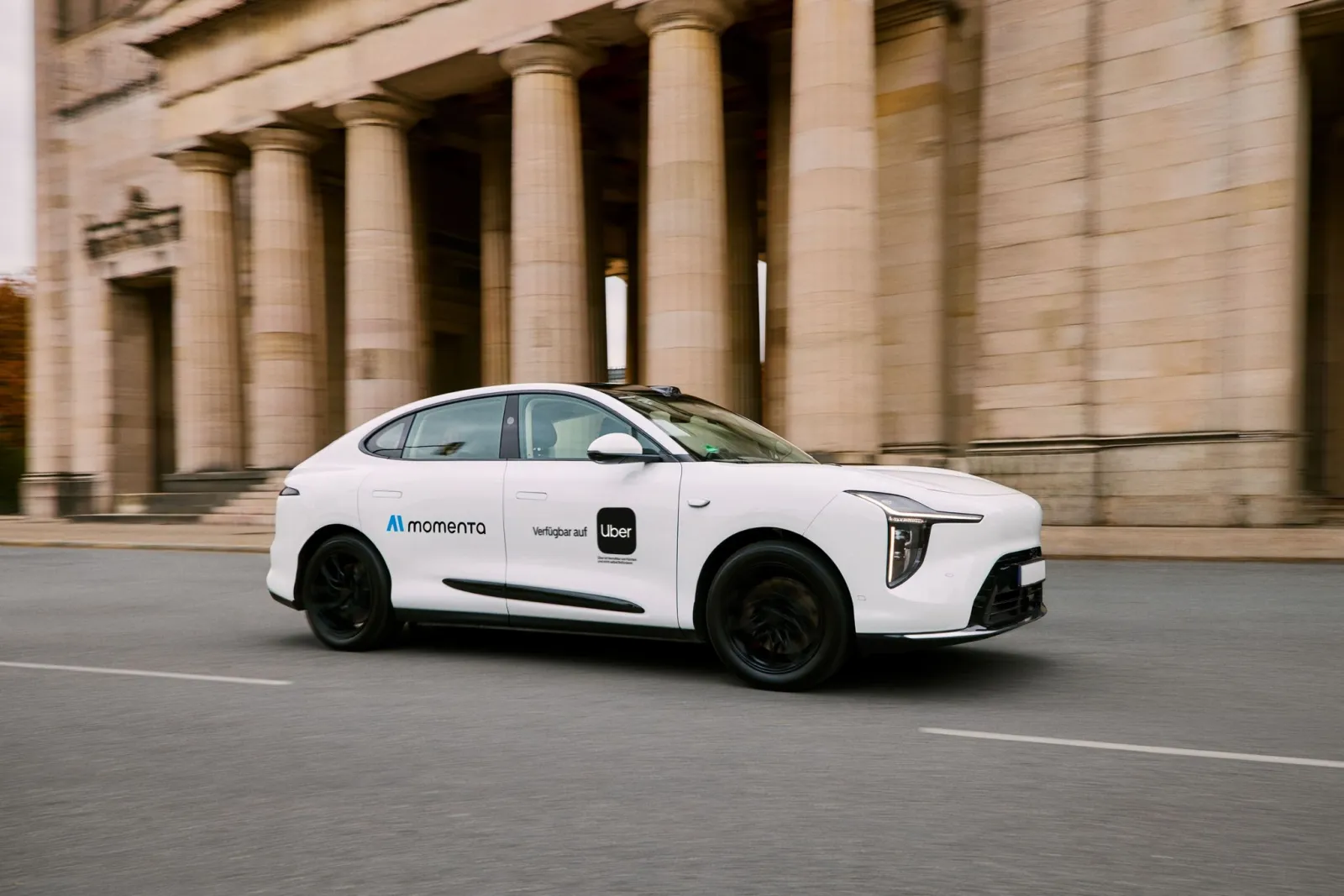
Uber this week started its first robotaxi rides in Germany, with Momenta in Munich.
Waymo’s Own App
Waymo is both a partner and a rival.
Its robotaxis are available through Uber in Austin and Atlanta, but Waymo plans to launch its own app in those cities in January 2028, ending its exclusive arrangement with Uber there. Its current fleet stays on the Uber app through at least May 2028, Uber confirmed in July.
Jefferies said at the time that the split would likely benefit Uber in the long run, giving it more flexibility to expand across the U.S. through its many partners.
Two weeks before the split surfaced, in a July 14 preview of Uber’s results, Colantuoni had written that progress on smaller U.S. autonomous partnerships “could help somewhat alleviate disintermediation fears related to Waymo/Tesla.”
Waymo co-Chief Executive Officer Tekedra Mawakana said this month that riders’ experience of booking its robotaxis through Uber had been “a little bit of a crapshoot,”.
Waymo also faces setbacks. It suspended freeway service in all its markets after California’s Department of Motor Vehicles barred its driverless cars from state freeways, citing “an imminent hazard to public safety.”
Price Target Not Disclosed
Proactive‘s report did not name the analyst behind the latest note or say whether Jefferies changed its rating or price target.
Jefferies analyst John Colantuoni has had a $110 target and a ‘Buy’ rating on Uber since at least July.
In August, he named the stock the bank’s Franchise Pick, writing that “a bullish story is crystallizing for 2027, as UBER delivers sustainable Bookings growth” and scales its U.S. autonomous operations. Jefferies reiterated the $110 target in September.
That remains below the $120 target Jefferies had on the stock in January, when it kept its ‘Buy’ rating.
The $110 target implies about 62% upside from Uber’s price of $67.78 in early trading on Thursday.
Uber shares are down 17% this year. They closed at $65.25 on October 30, their lowest close since April 2025, and are 23% below their 2026 closing high of $87.59 on January 8.
The stock was little changed on Wednesday, closing at $68.76.
In August, Jefferies said Uber traded at a near-record discount of about 50% to DoorDash despite peer-leading growth.