
Rivian is considering manufacturing its own LiDAR sensors in the United States using Chinese technology, potentially through a joint venture, founder and Chief Executive RJ Scaringe said in an interview with Reuters on Tuesday.
The disclosure comes as Washington tightens scrutiny on Chinese sensor suppliers, putting pressure on US automakers planning to integrate LiDAR to find a workable structure that combines Chinese cost and capability with American manufacturing.
The pressure on Rivian is acute.
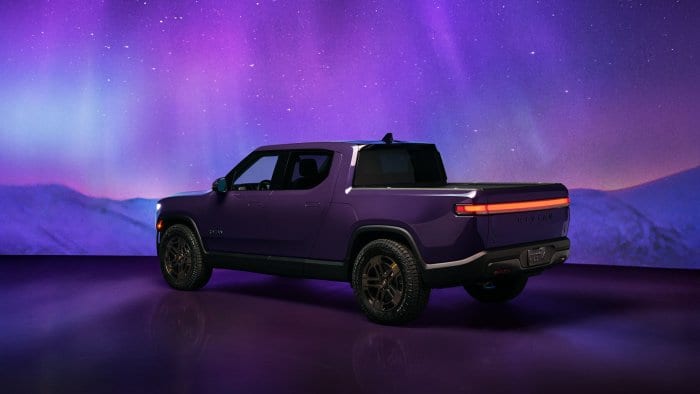
The R2 — set to begin LiDAR-equipped production in late 2026 — is built around a sensor segment dominated by Chinese suppliers, with Hesai Group and RoboSense controlling most of the global market for solid-state automotive LiDAR.
Late last year, US lawmakers introduced a bill seeking to phase out Chinese sensors in self-driving cars, citing national security concerns.
A few months earlier, in July 2025, the US District Court for the District of Columbia ruled against Hesai Group in its lawsuit against the US government for adding it to a Pentagon blacklist of companies allegedly working with the Chinese military.
The court ruled that the Defense Department’s finding that Hesai contributes “to the Chinese defense industrial base” was supported by substantial evidence reflecting LiDAR’s military application, national security concerns around Chinese LiDAR makers, and Hesai’s cooperation with Chinese agencies.
RoboSense, Rivian’s R2 supplier based on multiple disclosures across 2025, is not currently on that blacklist.
But the regulatory direction is one-way — and any tightening would directly threaten the R2’s autonomy roadmap.
Scaringe’s comments on Tuesday point to the structure Rivian is preparing in response.
The founder and CEO told Reuters that “all the real choices are coming out of China” for the “low hundreds of dollars price point” sensor that automakers like Rivian require.
“Think of it as finding a way to structurally ingest the technology,” he said.
“The advancements in terms of going from the early lidars that I think a lot of us have seen — we see them here — to these much more advanced solid-state lidars, those advancements didn’t happen in the United States. Those advancements happened in China.”
Scaringe said the company is in “active discussions” with LiDAR firms without naming Robosense or any other competitor.
A Workaround
The Hesai ruling in July 2025 set the precedent that has been weighing on the industry ever since.
The Pentagon’s Section 1260H list, which flagged Hesai as a Chinese military company, was upheld by the federal court despite Hesai’s argument that LiDAR is a commercial automotive product.
The decision opened the door for the Defense Department to apply similar reasoning to other Chinese LiDAR suppliers — and gave Congress the legal foundation it needed for the December bill targeting Chinese sensors in self-driving vehicles.
For automakers planning to ship LiDAR-equipped vehicles in 2026 and beyond, that creates a sourcing problem with no immediate Western alternative.
The structure described by Scaringe — manufacturing in the US with Chinese intellectual property, possibly via joint venture — would let Rivian tap Chinese cost and capability without buying directly from a Chinese supplier.
It mirrors the approach several Western automakers have used to navigate Chinese battery cell technology under the Inflation Reduction Act framework — most visibly Ford’s licensing arrangement with CATL for its Marshall, Michigan plant.
Scaringe added that the effort might extend beyond Rivian.
“A number of different car manufacturers are thinking about how they could do that either together, or at least through a shared alignment to say, hey, let’s develop production capacity in the United States for this, or at least outside China,” the CEO said.
The RoboSense Backdrop
Rivian has so far described its LiDAR partner only as “undisclosed.”
Multiple indicators throughout 2025 and early 2026 pointed to RoboSense as the supplier — the world’s largest automotive LiDAR supplier by installations and the holder of a 33.5% global market share in 2024, according to Gasgoo Research Institute.
RoboSense disclosed in April 2025 that it had partnered with “a leading emerging automaker in North America” and a “North American new energy vehicle brand.”
A subsequent August infographic listed eight top OEM customers, describing one as a “global top-tier EV pickup brand vehicle OEM.”
Rivian’s profile fit the descriptions, and EV knows that the LiDAR units set to equip the R2 later this year are RoboSense.
However, a Rivian spokesperson denied the relationship to EV in late March, days after RoboSense’s annual filing referred to one of its design win customers as “a leading global manufacturer of SUVs and trucks.”
“While I don’t know what company RoboSense was referring to, it is not Rivian,” the spokesperson said in a statement at the time.
Crucially, RoboSense is not currently named on the Pentagon’s Section 1260H list — unlike Hesai.
That gives Rivian some near-term cover for shipping the first LiDAR-equipped R2 units, but no guarantee on the medium term.
Scaringe’s Tuesday comments to Reuters offer a structural answer to the regulatory uncertainty.
A vertically integrated manufacturing arrangement — where the Chinese technology is licensed and the sensor is built on US soil — would mean Rivian is technically not a direct customer of any Chinese supplier, even if Chinese intellectual property sits inside the device.
It would also insulate the R2 program from any future expansion of the Pentagon list or further Congressional action.
Tied to the In-House Silicon Push
The LiDAR move fits a broader vertical-integration strategy that Rivian detailed at the Palo Alto Autonomy and AI Day in December.
The company unveiled the Rivian Autonomy Processor 1, or RAP1 — a custom 5-nanometer chip manufactured by Taiwan Semiconductor Manufacturing Company that delivers 1,600 sparse INT8 trillion operations per second.
Two RAP1 chips will sit inside the third-generation Autonomy Compute Module, which will ship on R2 vehicles starting in late 2026 alongside the LiDAR sensor.
The Gen 3 sensor stack includes 11 cameras, five radars, and one LiDAR unit.
Scaringe told Reuters that Rivian is committing “many hundreds of millions of dollars” to its custom chip program.
“It’s not like you invest a few hundred million dollars and it’s done,” the CEO said.
“We’ve built a team. That team is going to continue to develop future versions of the platform.”
Rivian plans to release a new chip “every couple of years,” according to Scaringe, with RAP-2 and RAP-3 successors built on “more powerful” chip technology than the 5-nanometer process used for RAP1.
A Cost Equation
Scaringe spent much of 2025 publicly highlighting the dramatic decline in LiDAR costs, telling The Verge’s Decoder podcast and Business Insider that prices had fallen from “tens of thousands of dollars” to “a couple of hundred bucks.”
That collapse has been driven almost entirely by Chinese manufacturers.
RoboSense reported its first-ever profitable quarter in the final three months of 2025, posting net income of 103.7 million yuan as robotics LiDAR shipments surged more than twenty-fivefold.
The Shenzhen-based company also disclosed that average sensor prices nearly halved in a single year.
For Rivian, keeping LiDAR cost under control is essential to the R2’s economics.
The R2 Performance starts at $57,990 with a Launch Package, but Rivian has long positioned the entry-level $45,000 Standard variant — now expected only in late 2027 — as the centrepiece of its mass-market strategy.
Scaringe told CNBC in February that the $45,000 target is non-negotiable.
“The top-line number, the starting price of $45,000, has to be achieved. And we have to do it profitably,” he said at the time.