
Nissan’s top European executive said on Wednesday that the United Kingdom may have to raise import tariffs on Chinese vehicles if it wants to be included in the European Union’s emerging trade protections for its car industry, the Financial Times reported.
Massimiliano Messina, chairperson of Nissan’s AMIEO region — covering Africa, the Middle East, India, Europe and Oceania — said the UK must adjust its tariff policy to remain part of the EU’s automotive framework, according to the Financial Times.
“The whole UK has to adjust some of their tariff policy,” Messina told the FT.
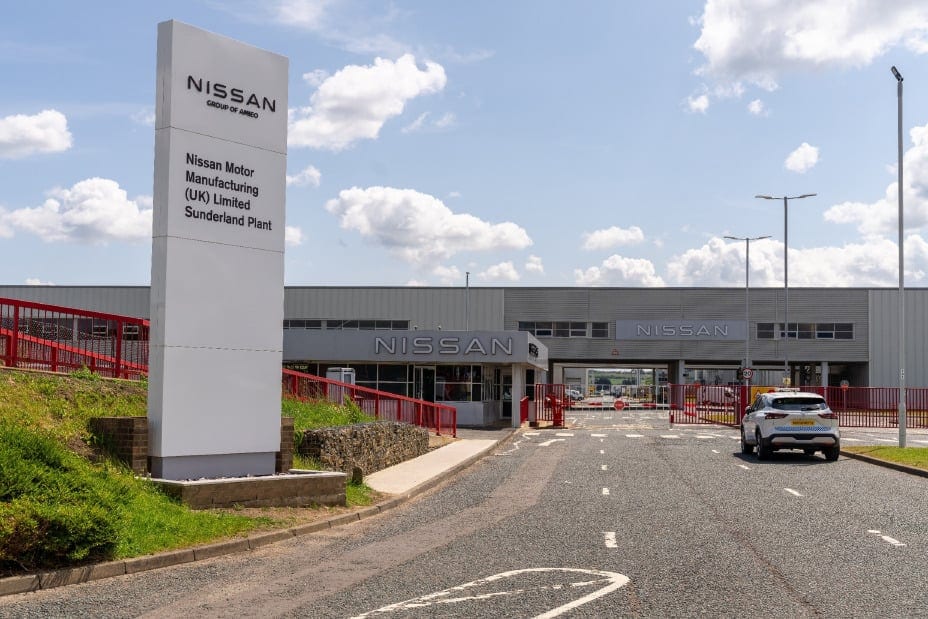
The remarks arrived alongside a £170 million ($228.9 million) investment commitment for Nissan’s Sunderland plant, where the company will build the Kicks e-POWER hybrid crossover for UK, European and Turkish markets.
Kicks is a B-segment model already sold in over 70 countries with cumulative sales exceeding 1.8 million units, but has never previously been offered in Europe, according to Nissan’s press release.
‘Made in Europe’ Threat
The tariff push reflects growing anxiety over the EU’s proposed “Made in Europe” rules under the Industrial Accelerator Act, which would set a 70% EU-content threshold as a condition for subsidies, tax support and public procurement, with assembly-in-the-bloc rules for corporate fleets and small electric vehicles. Batteries are treated separately.
UK-built cars that miss the threshold would be excluded from those schemes.
About 60% of cars produced in the United Kingdom are exported to the EU, making access to that market critical for plants like Sunderland.
The Society of Motor Manufacturers and Traders has called the proposals a direct threat to British manufacturing, warning that they could strip UK vehicles out of the corporate fleet market — which accounts for more than 60% of EU new car sales, according to Reuters.
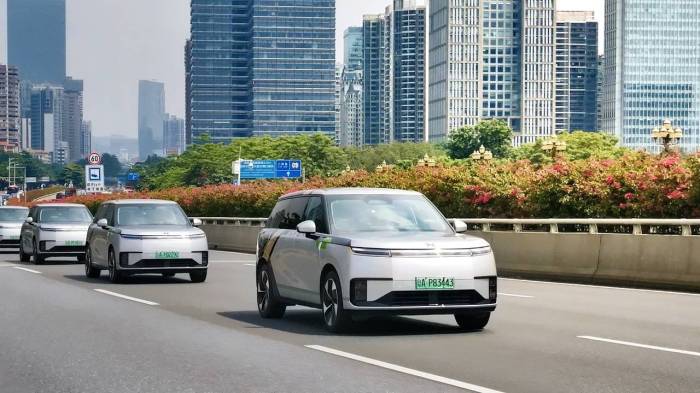
BYD, Chery and other Chinese rivals have expanded rapidly in the UK, which applies the standard 10% import duty on cars but has not matched the additional anti-subsidy duties Brussels imposed on Chinese-made EVs, taking the EU total to as much as 45%.
BYD’s European market share more than doubled in the first half of 2026, reaching 2.4% across the EU, EFTA and UK, according to ACEA data published in July.
Nissan’s European and UK share fell to 2.1% over the same period as sales dropped 10% year on year, the FT reported, also citing ACEA data.
ZEV Mandate Dilution
Messina also pressed for a deeper cut to the UK’s zero-emission vehicle mandate, which currently requires 80% of all new cars sold in Britain to be fully electric by 2030.
The UK government launched a formal review of the ZEV mandate targets on August 14, consulting on lower 2030 trajectories including 70%, 60% and 50%, alongside an option that keeps the 80% target with extended flexibilities.
He also said a large part of the decision to build the Kicks at Sunderland was subject to the mandate being amended, according to the Guardian.
EV market share in the UK is running well below the current trajectory.
Fully electric vehicles accounted for about 27% of new car registrations year to date, according to SMMT data, against a 33% target for 2026.
SMMT chief executive Mike Hawes argued in June that the assumptions underpinning the mandate “no longer hold,” calling for an urgent review of the regulation.
The government’s consultation closes on October 23, with results expected in early 2027.
A relaxation of the ZEV rules would give Nissan room to produce more hybrid models at Sunderland without facing fines of £15,000 per non-compliant vehicle.
The Kicks allocation reinforces that logic — the model runs on Nissan’s third-generation e-POWER system, where a petrol engine generates electricity for an electric motor that drives the wheels, but does not qualify as a zero-emission vehicle under the mandate.
Sunderland’s Volume Gap
The Kicks investment addresses a persistent capacity problem.
Sunderland has installed capacity of approximately 600,000 vehicles per year, but production reached only about 273,000 units in 2025, leaving utilisation at about 45%.
Nissan consolidated its two production lines into one earlier this year, freeing a second line for potential third-party use.
The Kicks is expected to add up to 50,000 vehicles per year to Sunderland’s output, the FT reported, citing a person close to the company.
That is not a company figure, and Nissan has not published a volume or a start date. On those numbers utilisation would reach about 54%.
Production will run alongside the Qashqai, Juke and Leaf. From next year, Nissan will also manufacture the all-new, fully electric third-generation Juke at the plant.
Kicks becomes the tenth model allocated to Sunderland since the first Bluebird rolled off the line in 1986.
The plant has now built 12 million vehicles, averaging one car every one minute and 45 seconds, and employs around 6,000 workers directly with an additional 30,000 jobs in the supply chain, according to Nissan.
UK business secretary Jonathan Reynolds called the decision to build Kicks in Sunderland “a huge vote of confidence in the UK’s manufacturing expertise and automotive future,” according to Nissan’s press release.
Chery Negotiations Continue
Nissan is simultaneously negotiating with Chery over shared use of the freed second production line.
The two companies signed a non-binding memorandum of understanding in June to study building vehicles under Chery’s Omoda and Jaecoo brands at the plant, with production targeted for fiscal year 2027.
Messina told the FT that Nissan was waiting for Chery to finalise the volumes and models involved, but signalled that other partners remained in the frame.
He described Sunderland as “probably the best plant we have at Nissan globally,” adding that “many people” were interested in the factory’s capacity and that Chery was “the first in the line” but not the only option.
CEO Ivan Espinosa declined in May to identify the companies in discussions but confirmed talks were progressing.
He framed Sunderland’s challenge as a volume problem rather than a competitiveness problem, describing the plant as “one of the best we have worldwide.”
The partnership would offer Chery a way to sidestep future tariff or regulatory barriers — potentially including the very import levies Messina is now advocating.
Local production at Sunderland would give Chery vehicles UK-origin status, insulating them from any new duties on Chinese-made imports.
Pixo EV Next Week
Separately, Nissan will unveil the Pixo next week — a fully electric A-segment city car built on Renault’s AmpR Small platform at the Revoz plant in Novo Mesto, Slovenia.
Pricing is expected to start below €20,000 on the continent and between £17,000 and £18,000 in the UK, according to multiple reports.
The full reveal is scheduled for September 23.
Nissan was in advanced talks with the UK government over financial support for Sunderland as recently as June, according to Reuters.
The £170 million Kicks commitment and the broader push on tariffs and ZEV mandate relaxation suggest those discussions have progressed into concrete policy demands.