
China will end the vehicle and vessel tax breaks it grants to energy-saving and new energy vehicles from January 1, 2027, removing another layer of the support that helped build the world’s largest EV market.
The announcement was made on Friday by the Ministry of Finance, the State Taxation Administration and the Ministry of Industry and Information Technology.
The notice scraps the half-rate levy applied to energy-saving vehicles and abolishes the full exemption enjoyed by pure-electric commercial vehicles, plug-in and range-extended hybrids, and fuel-cell commercial vehicles.
The change repeals several provisions of a 2018 notice that had set out the preferential treatment, and applies both to vehicles bought after the new rules take effect and to those already on the road.
What the Change Covers
The vehicle and vessel tax is a modest annual property levy, charged on passenger cars by engine displacement and on commercial vehicles by weight, with rates set within national bands by provincial governments.
For a passenger car with an engine between 1.6 and 2.0 liters, for example, the annual charge runs from 360 yuan ($53) to 660 yuan.
Its reach into the new energy market is narrower than the headline suggests, and the detail matters.
Pure-electric and fuel-cell passenger cars sit outside the tax’s scope altogether, since the levy on cars is tied to engine displacement and neither type has any, leaving them unaffected by the change.
Battery-electric passenger cars, the largest segment of China’s new energy market, will continue to pay no vehicle and vessel tax in practice.
The bigger effect falls on plug-in and range-extended hybrids, which carry combustion engines and had been exempt, and which now face the annual charge from 2027.
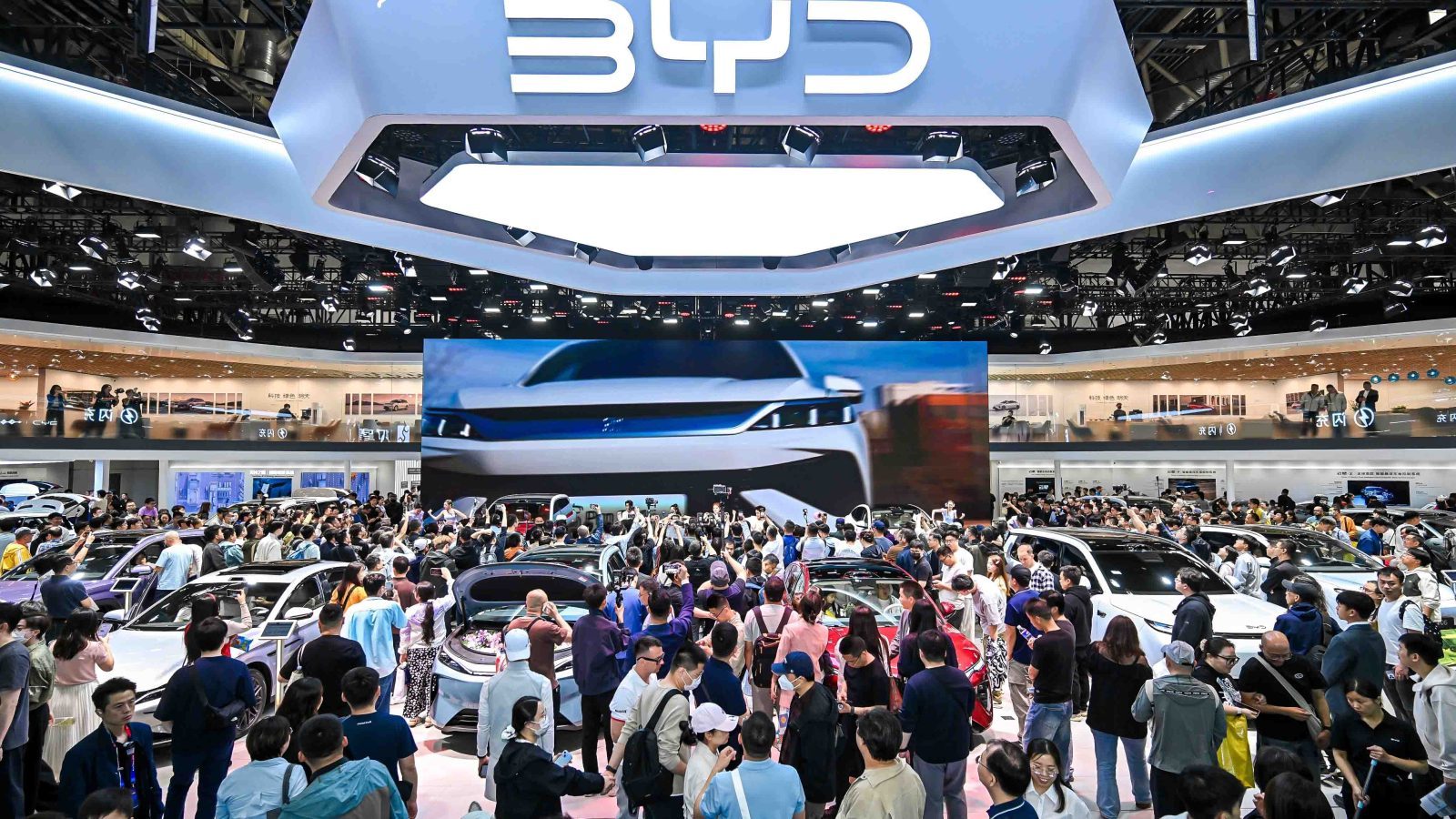
Plug-in hybrids and range-extenders together account for roughly 40% of new energy vehicle sales and underpin the lineups of manufacturers such as BYD, Aito and Li Auto.
Operators of fully electric and fuel-cell commercial vehicles, from delivery vans to trucks, will also lose their exemption, as will buyers of the fuel-efficient combustion and hybrid models that had qualified for the half-rate.
A Smaller Piece of a Larger Rollback
The move lands as Beijing steadily withdraws the tax advantages that made new energy vehicles cheaper than their combustion rivals for more than a decade.
The far larger lever is the purchase tax, and China reintroduced a 5% levy on new energy vehicles from January 1, 2026, ending more than ten years of full exemption from the standard 10% rate.
That exemption, first introduced in 2014 and extended four times, had been worth up to 30,000 yuan per passenger vehicle through 2025 before being halved for 2026 and 2027, with the per-vehicle reduction capped at 15,000 yuan.
The reinstated purchase tax reshaped the market at the start of this year, and the China Passenger Car Association described the first quarter of 2026 as a “tax subsidy adjustment period” as domestic sales cooled, with BYD posting successive year-over-year declines even as it retained the sales lead.
Several manufacturers moved to soften the blow. Chinese carmakers absorbed the new purchase tax themselves at the turn of the year, among them Xiaomi, working through a backlog for its SU7 and YU7 models, and Nio, which was filling orders for its relaunched ES8 SUV.
The vehicle and vessel tax adjustment is far smaller in financial terms, but it points in the same direction, extending the normalization of new energy taxation from the point of purchase to the cost of ownership.
Why Now
New energy vehicles made up a record 62.9% of retail passenger-vehicle sales in May, exceeding 60% for a second consecutive month, according to the China Passenger Car Association, after more than 16 million units were sold in 2025 and new energy models passed half of all new cars sold.
The finance ministry set out its reasoning directly. In an accompanying question-and-answer statement, it said the preferential policy, in place since 2012, had encouraged buyers to choose new energy and energy-saving vehicles, but that the industry had matured and the policy environment had changed.
The ministry also cast the vehicles as high-value property, noting that plug-in and range-extended hybrid passenger cars sold for an average of 218,000 yuan in 2025, with some models above 1 million yuan, and argued that taxing them like other fuel-powered cars would promote tax fairness and strengthen the role of taxation in regulating income distribution.
Officials have framed the wider wind-down as a natural progression rather than a retreat.
Cui Dongshu, secretary-general of the China Passenger Car Association, has said the end of the purchase tax exemption is an inevitable trend and a sign that the government is moving to manage the sector under normal rules rather than emergency incentives.
The withdrawal of subsidies is also unfolding across other major markets, with the United States having ended its $7,500 federal purchase credit in September 2025 and several European governments trimming their own support, leaving China’s producers to compete on price and product rather than tax relief at home and abroad.
The Market Backdrop
For the industry, the latest measure adds incremental cost pressure at a moment when growth has already slowed.
Domestic demand softened through the first half of 2026 after the purchase tax returned, and the expiration of the earlier exemption weighed on deliveries as buyers who had rushed to beat the year-end deadline left a gap in early-year sales.
Export markets have taken on greater importance as a result, with BYD and Tesla‘s Shanghai plant leaning more heavily on shipments abroad even as their Chinese retail sales came under pressure.