
Polestar registered 603 vehicles in Germany in June, a 16.6% increase from 517 a year earlier and the brand’s strongest month of 2026 so far, data released on Friday by the Federal Motor Transport Authority (KBA) showed.
First-half registrations reached 2,429 units, up 26.8% from 1,915 in the comparable period of 2025.
Second-quarter registrations totaled 1,145, an 8.0% increase from 1,060 in the same period a year ago.
The pace was slower than the first quarter’s 50% surge to 1,284 units, however, June’s strong close suggests the quarter-end shipment pattern that defines Polestar‘s registration cadence continued to hold.
The brand’s monthly registrations in Germany have been volatile in 2026, reflecting the timing of shipments from production sites in China, the United States and South Korea rather than underlying demand trends.
January opened with 532 units, a 126% jump that was Polestar‘s strongest year-over-year gain of the year.
February cooled to 296 registrations, up 13%, before March brought 456 units and a 28% increase.
April was the only month to fall year over year, with 250 registrations marking a 17% decline. May rebounded to 292 units, up 22%.
June’s 603 registrations surpassed January’s 532 to set the year’s high. In 2025, June was also a strong month at 517, though far below the year’s peaks in July (670) and December (781).
Full-year 2025 registrations in Germany totaled approximately 5,007 units, meaning Polestar‘s first-half 2026 total already amounts to roughly 49% of last year’s annual figure.
German EV Market
Polestar‘s German growth coincides with a broader surge in electric vehicle demand.
Germany registered 84,057 battery-electric vehicles in June, a 78.2% year-over-year increase that pushed the BEV share to 28.4% of total passenger car registrations, according to the KBA.
First-half BEV registrations rose 48.0%.
The federal government’s reinstated EV purchase incentive, a €3 billion programme administered by BAFA, retroactively covers all eligible battery-electric vehicles registered since January 1.
Private buyers can receive between €3,000 and €6,000 depending on household income and family size.
The programme’s online application portal went live in May.
Polestar has been running a parallel €2,000 brand-funded discount on the Polestar 4 in Germany through June 30, stacking with the federal subsidy for eligible buyers.
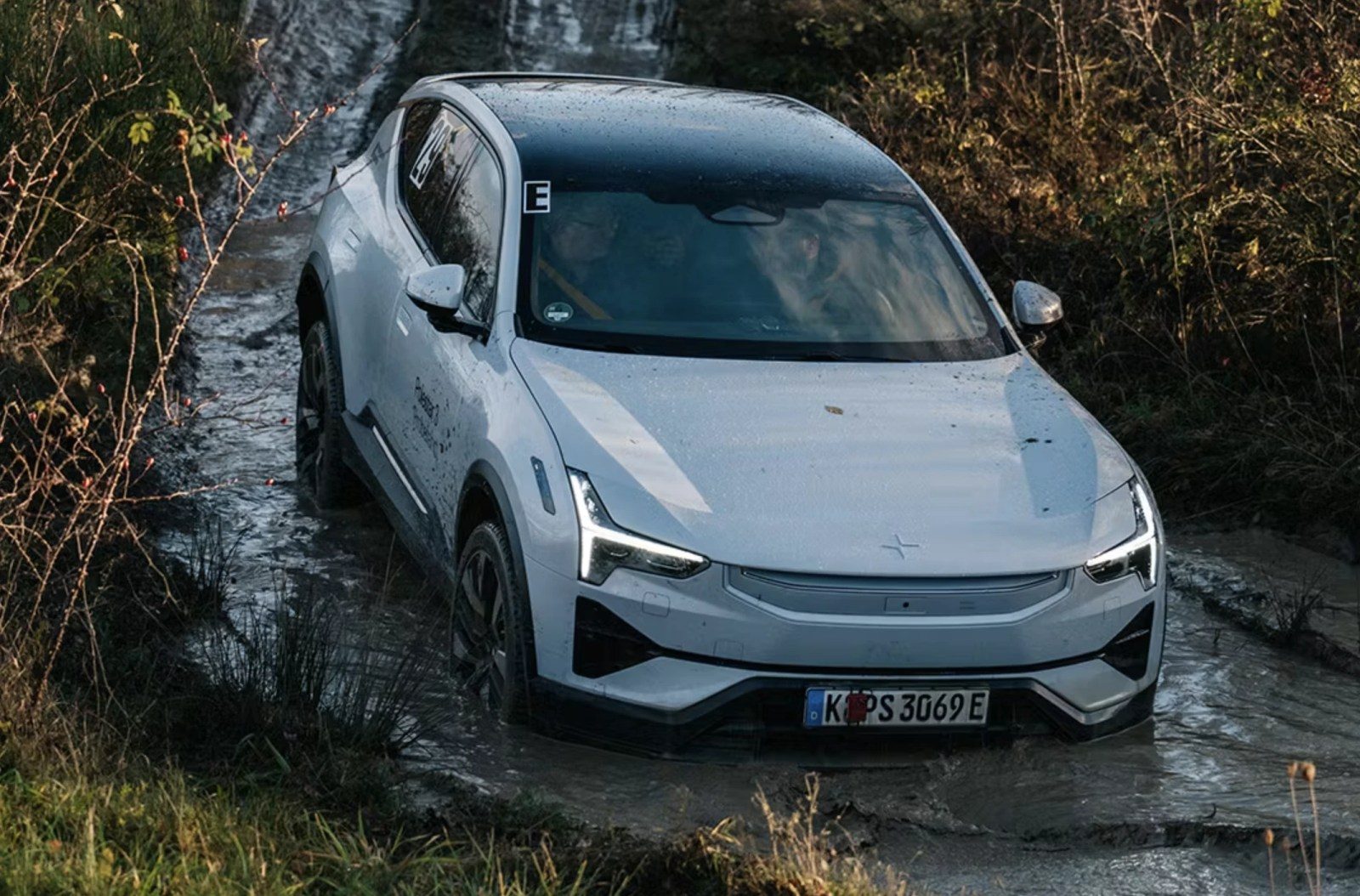
The entry-level Polestar 4 Long Range Single Motor carries a list price of €61,900, while the Polestar 3 starts from €78,900 for the Long Range Single Motor.
Product Pipeline
The brand recently opened orders for refreshed versions of the Polestar 3 and Polestar 4 across Europe and Canada.
The updated Polestar 3 gains 800-volt architecture, narrowing the technology gap with rivals such as the Porsche Macan Electric.
The Polestar 5 grand tourer is set for summer deliveries in Europe, while a new Polestar 4 variant is due in the second half of 2026.
The company also plans to build the coming Polestar 7 compact SUV in Košice, Slovakia, through a manufacturing partnership with Volvo — marking the brand’s first European-assembled model.
Polestar delivered approximately 60,119 vehicles globally in 2025 and is guiding for low double-digit volume growth in 2026, implying roughly 66,000 to 69,000 deliveries.
European Pivot Intensifies
The gains come as Polestar accelerates a strategic pivot toward Europe following the US Department of Commerce’s decision last month to bar the brand from selling connected vehicles in the United States from the 2027 model year onward.
The rule targets manufacturers owned or controlled by Chinese entities regardless of where their vehicles are built — meaning a US-assembled Polestar 3, rolling off the same Ridgeville, South Carolina line as the authorized Volvo EX90, cannot be sold once the prohibition takes effect.
CEO Michael Lohscheller framed the denial as a catalyst to accelerate the company’s European focus.
Europe already accounts for approximately 80% of Polestar‘s retail sales, and about 94% of first-quarter volume came from outside the United States.
European registrations exceeded 3,600 units in May alone across 16 tracked markets.
Polestar has also named Southeast Asia, Eastern Europe, Latin America and Canada as growth targets.
The brand entered Estonia, Latvia and Lithuania in June, lifting its European presence to 31 markets.
Financial Strain
The registration growth sits against a deteriorating financial backdrop. In the first quarter of 2026, Polestar reported a net loss of $383 million, more than double the $166 million loss a year earlier.
Gross margin swung to negative 3.2% from positive 10.3% in Q1 2025, a 13.5-percentage-point deterioration that reflected pricing pressure across Polestar‘s lineup.
Cash fell 42% in three months, dropping to $676 million as of March 31 from $1.159 billion at the end of December 2025.
Revenue stagnated at $633 million despite a 7% increase in global retail sales to a record first-quarter 13,126 units — a divergence that underscores how much of the volume growth is being driven by discounting rather than demand at list price.
To shore up its balance sheet, the company raised $700 million in new equity during the quarter from financial institutions including Sumitomo Mitsui Banking Corporation, Standard Chartered and Crédit Agricole CIB.
Volvo Cars and Geely Sweden also agreed to convert approximately $639 million in outstanding loans into equity, reducing the debt load but diluting existing shareholders further.