
Ford Motor Company‘s US electric vehicle sales plunged 57.4% in the first half of 2026, with the automaker delivering just 16,606 EVs — fewer than the Mustang Mach-E alone sold in the same period last year.
The Detroit automaker disclosed the figures on Thursday alongside its second-quarter sales report, which showed total vehicle sales of 549,200 units in Q2, a 10.3% decline year over year.
Ford attributed the broader drop to the planned phase-out of the Escape and Lincoln Corsair, plus a 69% fall in daily rental volumes.
EVs accounted for just 1.8% of Ford‘s second-quarter sales, down from 2.7% a year earlier.
Across the full first half, the company sold 1,006,515 vehicles — a 9.6% decline from 2025.
Mach-E Now Ford’s Only Volume EV
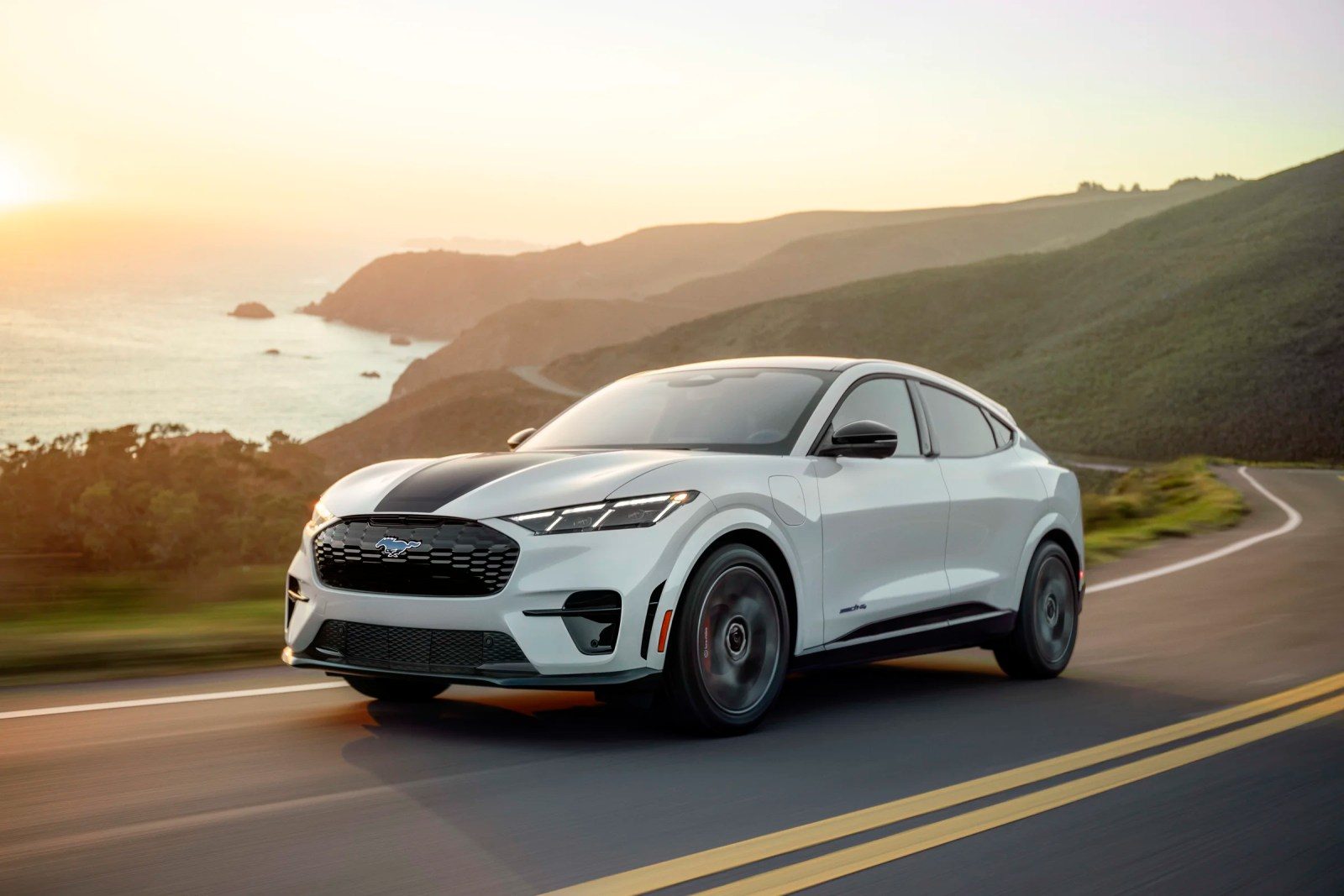
The Mustang Mach-E carried nearly all of Ford‘s remaining EV volume in Q2, accounting for 7,032 of the 9,746 battery electric vehicles sold in the quarter — a 30.9% decline from 10,178 units a year ago.
Through six months, Mach-E deliveries totaled 11,632, down 46.6% from 21,785 in the first half of 2025.
Production at the Cuautitlán plant in Mexico continued to outpace demand.
Ford built 19,176 Mach-E units through June, according to the production data in the release, against 11,632 sold.
June gross stock stood at 6,900 units — roughly 88 days of supply at current sales rates.
The F-150 Lightning, for which the fully electric version was discontinued late last year, sold 2,421 units in the second quarter, down 58.6% from 5,842.
First-half Lightning sales reached just 4,481 units, a 65.6% collapse from 13,029 in the same period of 2025.
Ford‘s Rouge Electric Vehicle Center in Dearborn — originally sized for 150,000 units annually — now produces residual inventory of the electric pickup.
The E-Transit van posted the sharpest decline of any Ford model, falling 88.2% year-to-date to 493 units.
Second-quarter sales came in at 293, down 29.9% from 418.
Ford‘s commercial electric van has effectively reached end-of-life volumes, even as the ICE Transit posted 78,925 sales through June — up 3.8% — and Ford Pro maintained a 40.4% share of the US Class 1-7 commercial truck and van segment.
Hybrid Sales Dwarf BEVs
Ford‘s own sales release made no mention of “electrified” vehicles outside of the data table, instead leading with records set by the Maverick Hybrid, Bronco, and F-Series.
Hybrid vehicles outsold battery electric models by roughly 5.7-to-1 in the second quarter.
The Detroit automaker delivered 53,163 hybrids in the quarter — down 20% from a year earlier — against 9,746 BEVs.
The Maverick Hybrid set a Q2 record at 29,457 units, up 19.3%, while the F-150 Hybrid remained America’s best-selling full-size hybrid pickup with 24,596 units sold through June.
Total electrified vehicle sales — combining hybrids and BEVs — fell 24.1% in the second quarter to 62,909 and 29.1% year-to-date to 110,928.
EV Business Under Continued Pressure
The sales trajectory extends a decline that began after the expiration of the $7,500 federal EV tax credit on September 30, 2025.
Ford‘s US EV sales dropped year over year for the past consecutive nine months.
The second quarter figure of -40.7% marks a moderation from the a steeper contraction of 69% in the first three months of the year, though volumes remain a fraction of 2025 levels.
Ford‘s EV unit ‘Model e’ recorded $4.8 billion in losses for the full year of 2025.
Chief Financial Officer Sherry House has forecast an additional $4 billion to $5 billion in losses in 2026, with the division not expected to reach profitability until 2029.
In April, Ford merged its Electric Vehicle, Digital and Design team with its global Industrial System — the latest in a series of restructuring moves.
Doug Field, who led the company’s shift toward electrified and connected vehicles, left the company as part of the reorganization.
The automaker also formally assumed a $3.8 billion DOE loan tied to its Kentucky battery plant in May after dissolving the BlueOval SK joint venture with South Korean manufacturer SK On.
The facility will not produce EV batteries — Ford is converting it to manufacture battery energy storage systems under its new Ford Energy subsidiary.
UEV Platform
Ford‘s Q2 release framed the current EV sales decline as part of a broader transition.
Retooling is underway at the Louisville Assembly Plant to build the company’s all-new, affordable small four-door electric pickup on its Universal Electric Vehicle platform, with production set to begin in 2027.
The UEV platform — developed at Ford‘s Electric Vehicle Development Center in Long Beach, California — is a clean-sheet architecture designed to underpin a midsize electric pickup priced around $30,000.
Ford is investing approximately $5 billion in the program, including a $2 billion upgrade to Louisville Assembly.
Louisville previously built the Escape and Lincoln Corsair, both of which have been phased out.
Ford‘s first-half production data showed Louisville Assembly recorded zero output through June, confirming the plant is offline for the retooling.
The company expects the first UEV-based vehicle to reach customers in 2027, followed by a broader family of models on the same architecture.