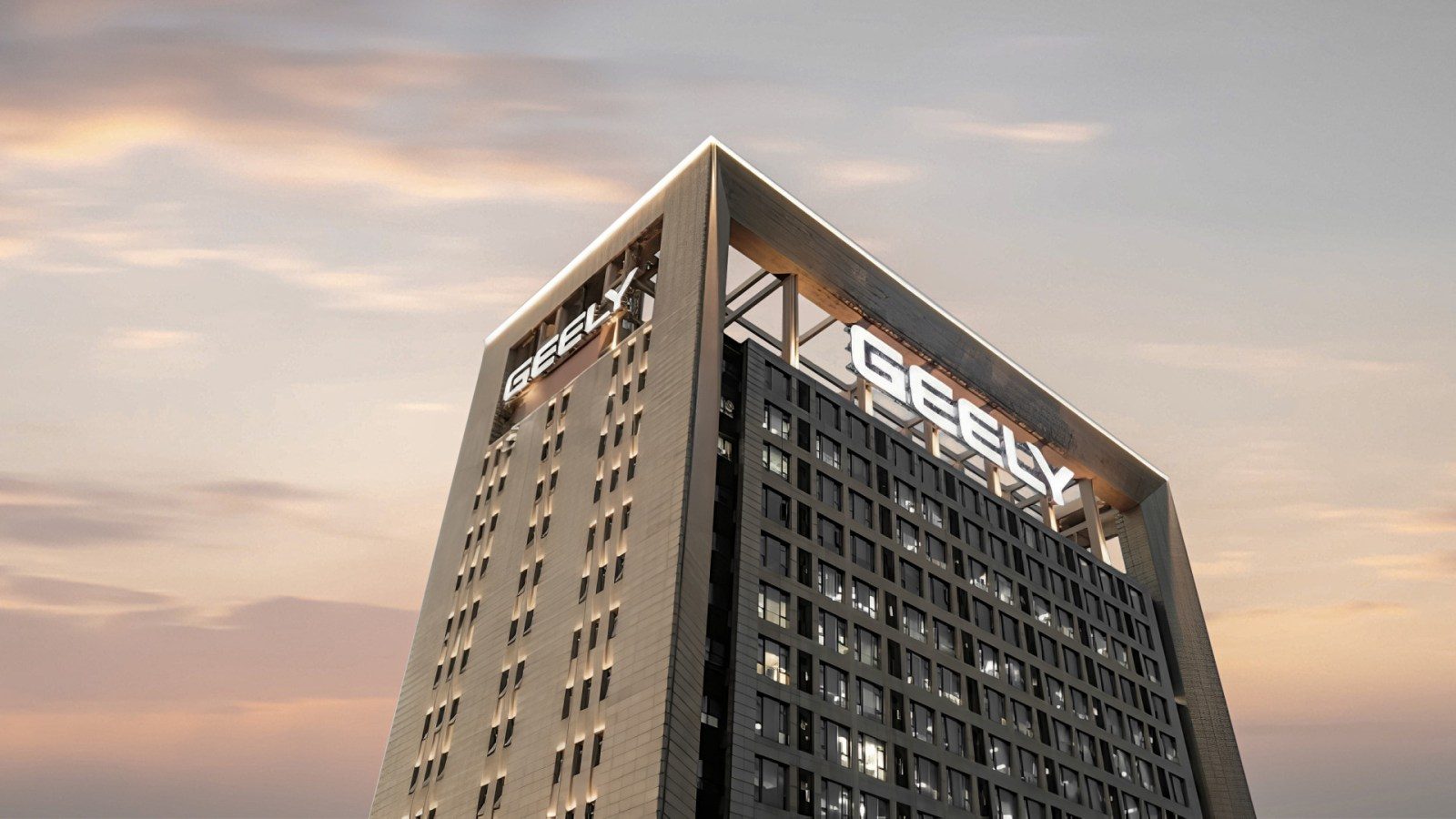

Ford will formalise an agreement on Thursday to sell the Body 3 assembly hall at its Almussafes plant near Valencia to Geely, Spanish daily ABC reported on Wednesday, citing information given to Las Provincias by people familiar with the transaction.
Prime Minister Pedro Sánchez will attend the plant the same day alongside Jim Baumbick, president of Ford Europe.
Ford has issued a press call saying Baumbick will make a corporate announcement concerning the restructuring and continuity of its European operations.
Neither company has disclosed financial terms or a timetable, and neither has confirmed the sale.
The reporting record
Thursday’s event would formalise a transaction first reported more than two months ago rather than disclose a new one.
La Tribuna de Automoción reported on May 5 that Geely had reached an agreement to buy the hall, citing industry sources.
A Ford spokesperson dismissed that report as speculation when contacted by Reuters, saying the company talks to many companies about various topics and that nothing was finalised.
Reuters had reported in February that the two were in advanced discussions over shared manufacturing in Europe and collaboration on in-vehicle technology including automated driving, as EV reported at the time.
What is being sold
Body 3 is the newest facility at Almussafes and has been idle since 2023.
The hall was built around Ford‘s CD4 platform and opened in 2015 to assemble the Mondeo, Galaxy and S-Max after the closure of the Genk plant in Belgium in 2014.
Mondeo output ended in 2022 and the two people carriers followed a year later.
Automation is high enough that the line requires around 100 workers per shift.
Current production at the site is limited to the Kuga, built mainly on Body 2. Annual output has fallen below 100,000 units.
Sources differ on the plant’s capacity. ABC puts planned annual capacity at 400,000 units, while Autocar and CleanTechnica cite roughly 300,000.
Before the pandemic the site built five models, produced more than 300,000 vehicles a year and employed over 4,000 people.
Reporting in May indicated Body 3 is configured so that Geely could run production independently without sharing supply chains inside the plant.
Prior dealings
The two companies have transacted before, and on a larger scale.
Ford sold Volvo Cars to Zhejiang Geely Holding Group in 2010 for $1.8 billion, having paid about $6.45 billion for the Swedish marque in 1999.
Volvo has since become the anchor of a European portfolio that also includes Polestar and Lynk & Co, and Geely said in March it would use Volvo plants to raise output on the continent.
The vehicle
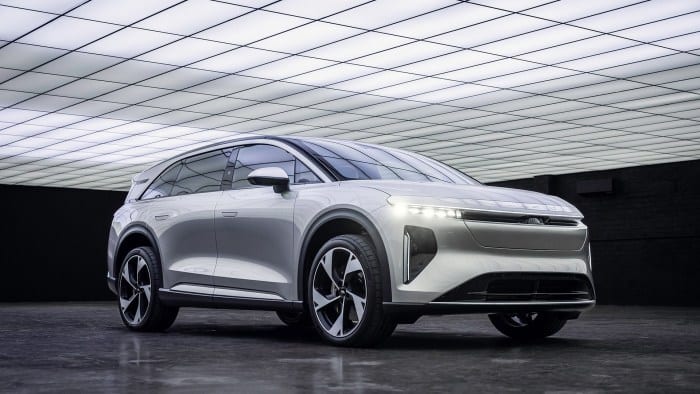
ABC describes a city car of similar dimensions to the Ford Fiesta, identifying it as the Geely EX2.
The May trade reporting described a compact electric crossover measuring about 4.13 metres, carried internally under the code 135 and built on the Global Intelligent Electric Architecture, a platform supporting hybrid, plug-in hybrid and fully electric powertrains.
The report said the European version would be sold as the E2 rather than the EX2.
Specifications published alongside those reports list an 85 kW motor, equivalent to about 114 horsepower, and a lithium iron phosphate battery of roughly 40 kWh giving a WLTP range of up to 325 kilometres.
The model is sold in China as the Xingyuan under the Galaxy sub-brand, where it starts at about 65,800 yuan and was among the country’s best-selling passenger cars last year.
Tariffs
Assembling inside the European Union would remove the duties Brussels applies to battery electric vehicles imported from China.
The bloc introduced provisional levies of up to 37.6% in 2024. Geely faces a definitive rate of 18.8% on China-built electric cars.
Hybrids imported from China are not subject to the additional duties, which makes battery electric production the stronger commercial case for European assembly.
Ford’s European position
The sale would cut fixed costs at a site running well below capacity while preserving employment.
Ford has confirmed the next Bronco will be built at Valencia from 2028.
Partnership has become the company’s dominant European strategy.
The electric Explorer and Capri use Volkswagen‘s MEB platform, and two further electric models built on Renault architecture are due before the end of the decade.
Spain as the landing point
Underused Western plants have become the standard route into European production for Chinese manufacturers, and Spain has drawn more of them than anywhere else.
Nissan and Chery International UK signed a non-binding memorandum of understanding on June 3 to study contract manufacturing at Sunderland, targeting production Line One during the 2027 financial year.
Under the proposed terms the plant would remain wholly owned by Nissan, with the workforce still employed by the Japanese manufacturer.
That agreement followed Nissan’s decision in May to consolidate Leaf, Qashqai and Juke output onto Line Two, and came weeks after the company reported a net loss of 533.1 billion yen for its 2025 financial year, a second consecutive year of heavy losses.
Chery brands have taken close to 7.0% of the British market in two years, with the Jaecoo 7 the third best-selling new car in the United Kingdom so far in 2026.
MG, owned by SAIC, confirmed on June 3 that it will build its first European plant at Ferrol in Galicia, with an industrial and logistics hub at As Pontes. Initial investment is put at €200 million, with construction from 2027, opening before the end of 2028 and eventual capacity of 120,000 vehicles.
SAIC faces anti-subsidy duties of 35.3% on top of the standard 10.0% import tariff, a combined 45.3% among the highest applied to any Chinese manufacturer.
EV reported the plan when it first surfaced, as Spain prepared for another Chinese car factory.
Chery and Ebro Motors have restarted the former Nissan plant in Barcelona, assembling the Ebro S400 and S700 on Chinese platforms with the Jaecoo 5 to follow.
Ebro EV Motors reported first-quarter revenue of €141.4 million, a rise of 223.6%, for a 2.2% share of the Spanish market.
Santana Factory at Linares in Jaén has resumed production under licence from Zhengzhou Nissan, majority held by Dongfeng, building the Santana 400 pickup and the Cajal.
Stellantis is moving through Leapmotor International, which it controls at 51.0%.
Figueruelas in Zaragoza adds an electric Opel crossover in 2028 sharing a line with the Leapmotor B10, while the Villaverde plant in Madrid will transfer to Leapmotor International’s Spanish subsidiary once Citroën C4 production ends, as EV reported in May.
Hongqi has separately been in talks with Stellantis about building cars at Zaragoza on the Leapmotor platform.
Geely has separately said it will use Volvo Cars plants in Europe to raise output, as EV reported in March, and has been examining British production, as EV reported in February.
Chinese brands now account for more than 11.0% of car sales in Spain, against 6.6% in 2024. MG was the best-selling Chinese marque in the country last year on 45,163 registrations.
The wider share picture
Chinese brands reached 5.0% of the European market in 2025 on 628,374 registrations across the European Union, the United Kingdom, Iceland, Norway and Switzerland, according to industry body ACEA.
SAIC led on 305,717 units, up 24.9%, for a 2.3% share.
BYD tripled its share from 0.4% to 1.4% on 187,657 registrations, while Omoda and Jaecoo together roughly doubled to about 135,000 units and 1.0%.