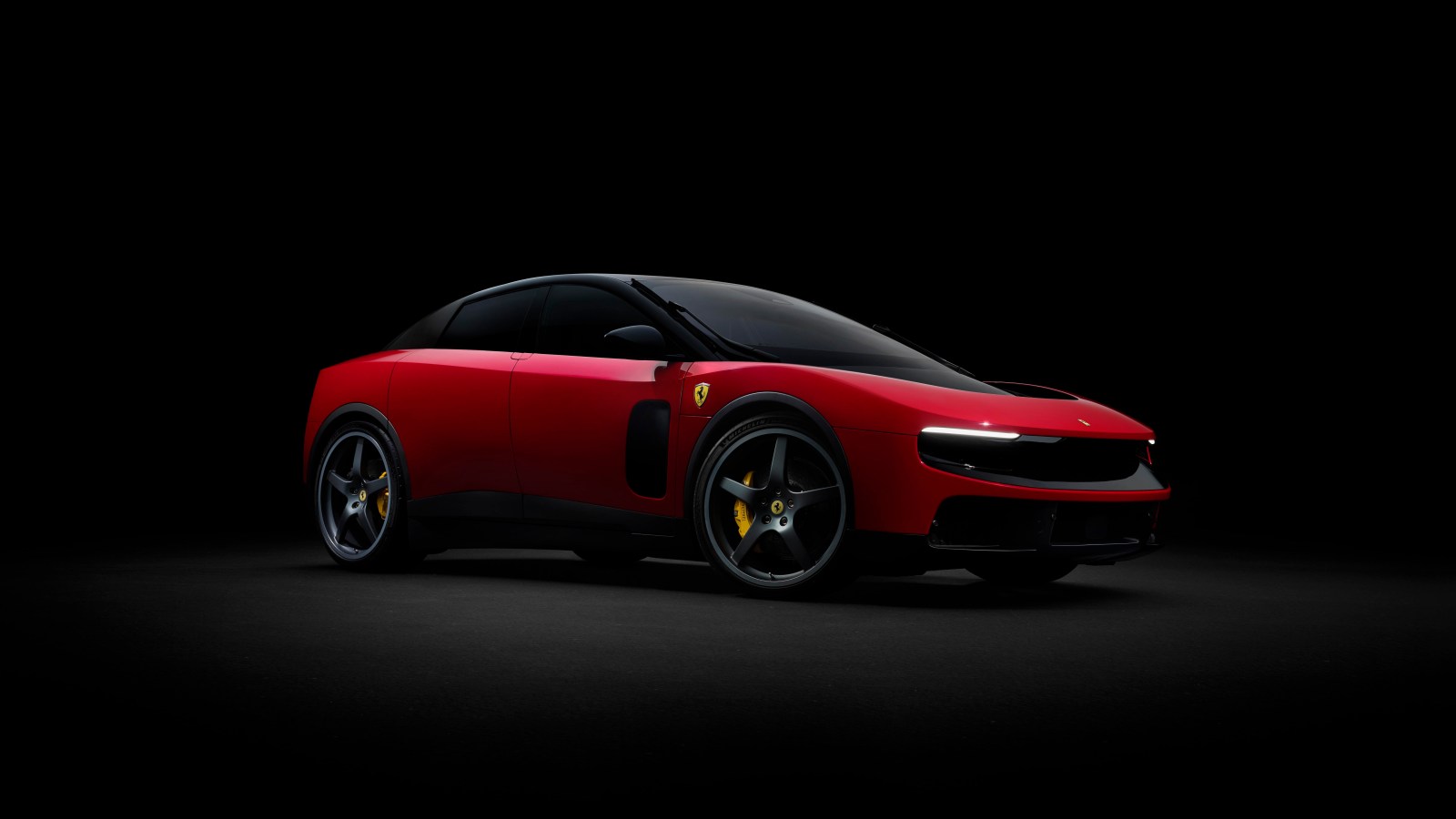
Ferrari has replaced the executive in charge of its marketing and sales, weeks after the controversial debut of its first electric model, Luce.
Massimiliano Di Silvestre will become Chief Marketing & Commercial Officer on 1 July, the Italian carmaker said on Tuesday.
He succeeds Enrico Galliera, who is leaving after more than sixteen years at Maranello.
Di Silvestre will report directly to Chief Executive Officer Benedetto Vigna.
A Commercial Chief Poached From BMW
Di Silvestre arrives from BMW, where he has run the German group’s Italian business since 2019.
He served as President and CEO of BMW Group Italy, one of the manufacturer’s most important markets worldwide.
His earlier career spans BMW Group Hungary, which he led from 2017 to 2019, and the BMW Roma operation he ran for five years before that.
Before joining BMW, he oversaw the Toyota and Lexus business at the dealer group Bonera and held a sales role at Mercedes-Benz Italia.
Across more than twenty years, he has worked almost entirely at the premium and luxury end of the market, the segment Ferrari sits atop.
The appointment brings an outsider’s perspective to Maranello, drawn from rival premium brands rather than from inside Ferrari’s own ranks.
“His international experience and leadership will be an important asset as we guide the Company into its next phase of growth,” the chief executive said.
Sixteen Years
Galliera’s exit closes a long run at the company.
Ferrari said his decision to leave, for what it described as a new chapter in his career, had been shared with the company some time ago.
“I would like to thank Enrico for the extraordinary contribution he has made to Ferrari throughout his long career,” Vigna said, crediting him with a significant role in the brand’s growth and global standing.
Galliera had steered Ferrari‘s commercial and marketing operation through the most consequential product decision in the company’s recent history.
Over sixteen years, he helped build that commercial machine through a stretch of record results and rising brand value.
His departure removes a long-serving figure at the moment the company is rewriting what the Ferrari name stands for.
That role placed him at the centre of the Luce rollout, which his team designed and then defended in public.
The Timing Is Hard to Miss
Even with the company’s framing, the change lands only weeks after the launch of the Luce, Ferrari‘s first EV.
Reporters were moved under police escort to the Vela di Calatrava venue, and non-disclosure agreements reportedly carried penalties as high as €600,000 for breaches.
Journalists’ phones and laptops were stickered and monitored on site, the outlet reported.
The car itself, styled in collaboration with Jony Ive’s LoveFrom studio, leaned on design restraint and a new dedicated EV architecture.
The control worked, up to a point, with no major details leaking before the reveal.
About 200 journalists attended, granted only around 30 minutes of supervised time with the car.
Ferrari pitched the Luce as more than another EV, stressing courage in new technology, a redefinition of performance, and a pared-back design language drawn from its work with LoveFrom.
A Launch That Split Opinion
What Ferrari could not control was the reaction.
The Luce drew enormous attention and heavy criticism in equal measure, with much of the conversation centred on its design rather than its performance or engineering.
Enthusiast communities on X, Instagram, Reddit and YouTube ran heavily negative, with talk of brand betrayal and a wave of memes crowding out the launch’s intended messages.
Within 72 hours, posts mentioning the car were reshared more than 62,500 times.
A single journalist’s post about critical comments from former chairman Luca di Montezemolo drew 4.8 million views, while a Facebook reel on the backlash from FormulaPassion logged roughly 70,000 interactions, about double Ferrari’s best-performing owned post in the period.
Montezemolo, who chaired Ferrari for more than two decades until 2014, remains an influential voice in Italy, lending his criticism added weight.
Earned media, much of it ironic or hostile, far outweighed Ferrari’s own channels.
Ferrari shares fell about 8% in the immediate aftermath, a rare market rebuke for one of the industry’s most valuable names.
Ferrari‘s marketing team pushed back after the reveal, with executives defending the design in interviews and casting the criticism as resistance to a necessary evolution.
The effort did little to move a conversation that stayed fixed on how the car looked.
Some analysts still called the rollout a masterclass in attention, arguing that polarizing an audience can itself be a strategy.
Others saw a brand that won the reveal and lost the story.