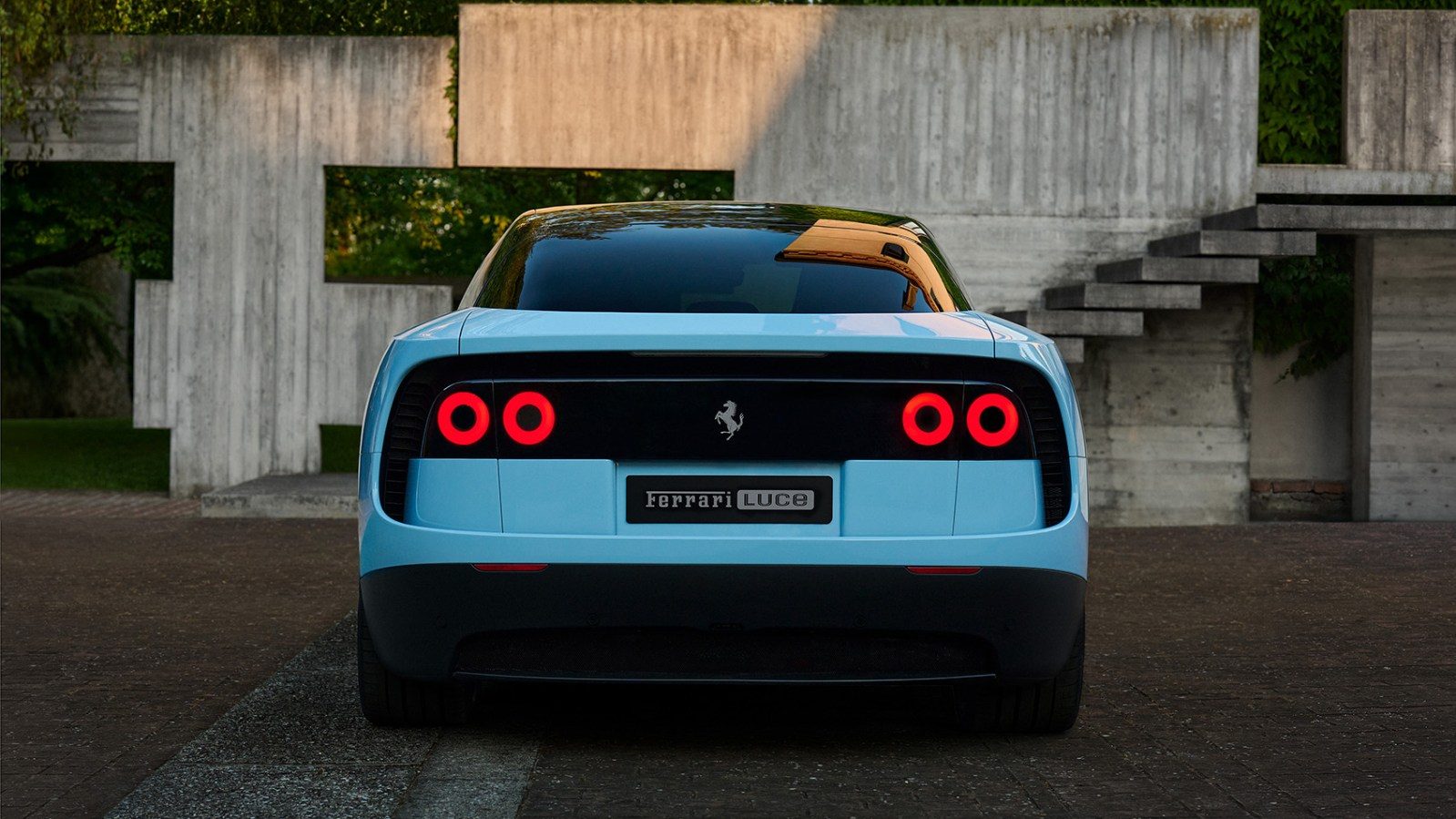

Ferrari is treating orders for the Luce as a measure of client commitment, with buyers who back the electric car standing a better chance of securing the brand’s scarcest models, Bloomberg reported on Wednesday, describing the approach as a loyalty test.
The Italian brand has signalled to portions of its collector base that committing to the €550,000 ($636,000) car earns a place in line for rarer, more exclusive models, people familiar with the discussions told the agency.
Ferrari, for its part, said it favours clients with deep, lasting ties to Maranello when deciding who is offered its most coveted cars, and that a buyer can earn that standing through cheaper, regular-production models.
Luce’s Unveil
The brand’s first electric model was unveiled on May 25 to one of the harshest receptions in the company’s history.
Shares fell about 8% in Milan the day after the Rome unveiling, the steepest drop since October, as the minimalist design — shaped with Jony Ive’s LoveFrom collective — drew ridicule across social media and the financial press.
Former chairman Luca di Montezemolo called the car a disgrace to Ferrari’s history and said he hoped the prancing horse would be removed from it, Reuters reported.
Italian Deputy Prime Minister Matteo Salvini called it “outrageously expensive.”
Ferrari presented the Luce to Pope Leo XIV and enlisted Formula 1 drivers Lewis Hamilton and Charles Leclerc to praise it on video.
Most consequential for the order book, Evercore ISI analyst Michael Binetti wrote that dealer checks suggested very little demand from existing Ferrari clients.
How Ferrari’s Allocation System Works
Understanding the loyalty test requires understanding how Ferrari sells its best cars.
Access to the company’s limited-run and halo models is not first-come, first-served but earned, allocated to clients with the deepest purchase histories and the strongest ties to Maranello.
Buying a series-production model — even one as contested as the Luce — is one way to build the standing that moves a collector up the list for a future special series.
Existing clients already number around 90,000, up 20% since 2022, giving Ferrari a wide base to lean on as it seeds early Luce orders.
That framing recasts the Luce from a hard sell into a strategic purchase, one whose real value to a buyer may lie less in the car than in the doors it keeps open.
Analysts at RBC Capital Markets pointed to a precedent, noting that the Purosangue SUV drew similar scepticism at its 2022 reveal before selling out with demand exceeding supply.
A loyalty test only works, though, if clients believe access to the next Icona or limited series is genuinely at stake.
The Demand Question Behind the Spin
Ferrari has insisted that interest is strong.
Chief Executive Benedetto Vigna said within days of the launch that the Luce was clocking up orders from both old and new customers, and defended the price as fair for the innovation it delivers.
Commercial chief Enrico Galliera said the share of existing clients buying the car would run well above the company’s planned target, with collectors “knocking at the door.”
Whether that converts into a full order book for a €550,000 EV remains the central test for a model Ferrari has priced as a flagship.
Ferrari‘s operating margins near 40% built on scarcity and pricing power rather than volume.
Leaning on that machine to seed Luce demand carries little downside for the company, since it discounts nothing and protects the car’s halo positioning.
Morgan Stanley upgraded Ferrari stock this week, arguing the market had moved too far in treating the launch as a lasting threat to the brand.
A Contrarian Bet Amid a Luxury Retreat
Lamborghini cancelled its Lanzador EV in favour of a plug-in hybrid, Porsche pivoted its flagship electric SUV toward combustion and hybrid power, and Bentley pushed full electrification back to 2035, all citing weak demand for high-end EVs.
Ferrari itself halved its 2030 fully electric target to 20% of its lineup at its October Capital Markets Day and delayed its second EV to at least 2028, citing the same soft demand.
Deliveries begin in the fourth quarter of 2026, with the first US cars following in 2027.