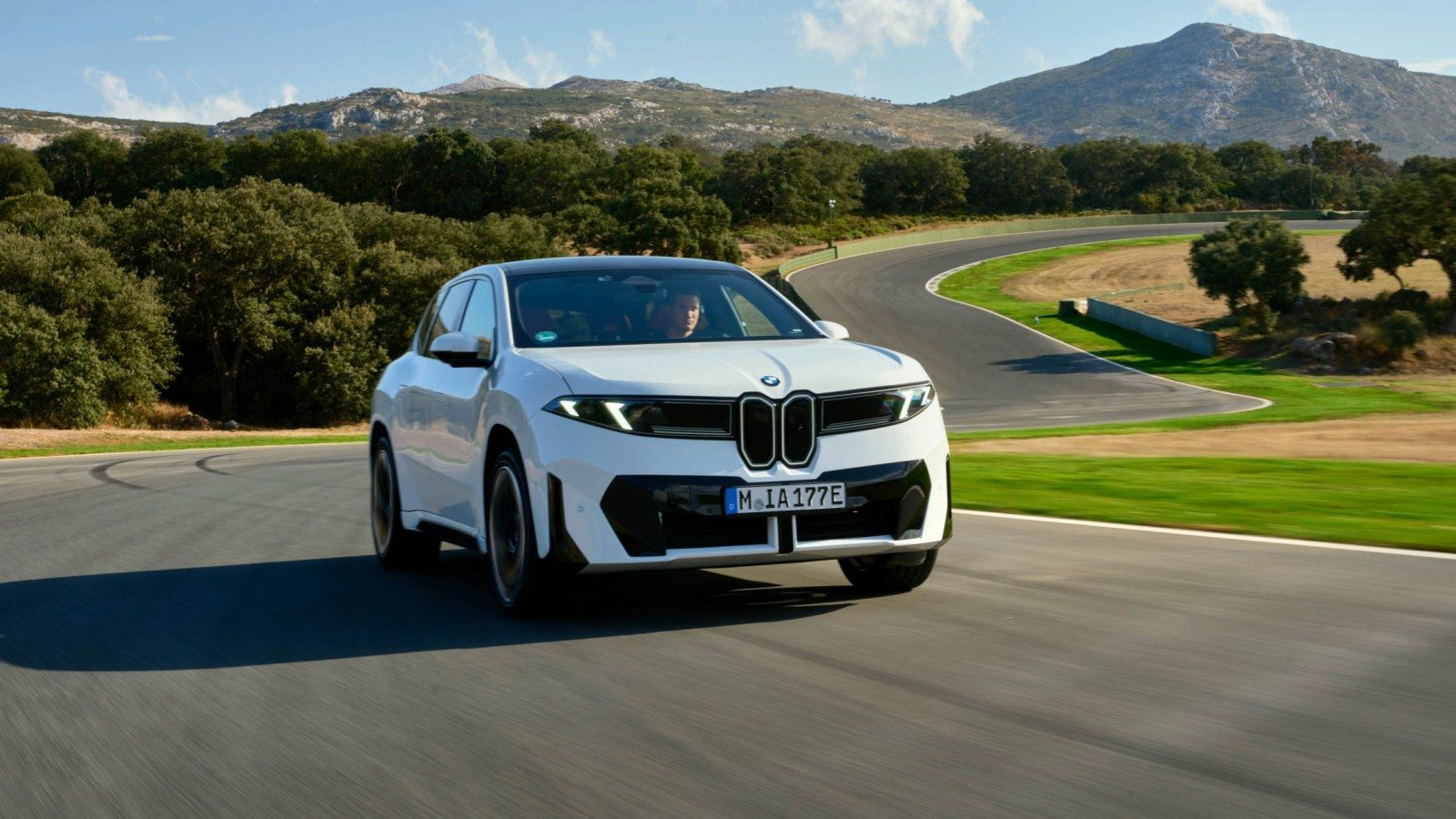

BMW Group has delivered its two-millionth fully electric vehicle, about eight months after the deadline it set itself five years ago.
In December 2021, Pieter Nota, then the board member responsible for customer, brands and sales, said the group would have delivered around two million fully electric vehicles by 2025.
The company had already reset the expectation by March, when its annual conference material described the two-millionth car as a 2026 event.
The vehicle, a BMW i5 M60 xDrive built at Plant Dingolfing, went to a customer in Spain.
Counting plug-in hybrids, the group has delivered around 3.5 million electrified vehicles since 2013, implying roughly 1.5 million plug-in hybrids alongside the two million battery-electric cars.
“Selling two million BEVs underlines how BMW and MINI models are winning over customers worldwide,” said Jochen Goller, Nota’s successor on the board.
What the Release Leaves Out
Every growth figure in Thursday’s announcement is European.
European fully electric deliveries rose 38.0% in the second quarter to 81,445 units.
Battery-electric vehicles took around 28% of the group’s European sales in the first half. More than one in four vehicles sold worldwide in the same period was electrified.
There is no global battery-electric figure for the first half, in units or as a share. Both exist.
BMW delivered 204,295 battery-electric vehicles worldwide in the first six months, down 7.4% year on year, and electrified deliveries including plug-in hybrids fell by the same margin to 295,407.
Fully electric cars accounted for 17.6% of group passenger car sales across the half, below the roughly 18% recorded for the whole of 2025.
The European quarter was genuinely strong. Its 81,445 units represent 69.7% of the 116,807 battery-electric vehicles the group delivered worldwide between April and June — itself a quarterly record, up 5.2%. But the first quarter fell sharply, to about 87,500 units, and the second quarter’s record did not recover it.
Where the Decline Came From
Two markets are absent from the release and account for most of the gap.
Group deliveries fell 4.9% to 590,962 units in the second quarter and 4.2% to 1,156,727 across the half.
China drove it as deliveries there fell 30.2% in the quarter to 117,817 units and 20.4% across the half to 261,773, a decline chief financial officer Walter Mertl identified as the single largest driver of the group’s second-quarter miss.
Mercedes-Benz and Porsche reported second-quarter declines of 8% and 16% over the same period.
In the United States, BMW grew overall — deliveries rose 3.9% across the half to 200,661 units — but battery-electric volumes fell sharply following the expiry of the federal tax credit.
The Pace Has Not Accelerated
The company’s framing emphasises how quickly the second million arrived. The intervals tell a flatter story.
BMW announced its one-millionth battery-electric delivery on April 10, 2024, covering the first quarter of that year, roughly a decade after the i3 reached the market. The 1.5-millionth followed in June 2025, about fifteen months later. The two-millionth has now arrived fourteen months after that.
Each half-million has taken between fourteen and fifteen months. The rate has been broadly constant for two and a half years.
The Factory Side Is Working
Where the Neue Klasse case is strongest is production.
Plant Debrecen in Hungary, built from scratch for more than $2.3 billion to make nothing but the iX3, produced its 50,000th car on July 28, nine months after series production began in late October 2025 — the fastest ramp-up of any new plant in BMW Group history.
A second shift was introduced in February, well ahead of schedule, because demand ran past the plan.
At full capacity the site can build 150,000 iX3s a year, three times the run rate it has needed so far. Standard-wheelbase assembly is due to extend to San Luis Potosí in Mexico from the second half of 2027, and an iX4 coupé variant is expected to join the line.
The model-level demand figures support it. Since the iX3’s premiere, one in three fully electric BMWs ordered in Europe has been an iX3, and within the X3 family one in every two orders is now the electric version — a substitution rate inside a single nameplate that no previous BMW electric model has achieved.
Series production of the i3, the second Neue Klasse model, began at Plant Munich in August. Munich is scheduled to build only Neue Klasse electric vehicles from around 2027, and the group plans 40 new or updated models on the architecture by the end of that year.
The Order Figure Has Not Moved
One number in Thursday’s release deserves attention for standing still.
Goller said the company will soon reach 100,000 new orders for the iX3. He used almost identical wording in the July sales release, when BMW said it was on track to soon reach that milestone.
Seven weeks later the threshold is still ahead. Orders are also not deliveries, and the two diverge when supply is constrained.
The 2030 Target
The same December 2021 statement that promised two million BEVs by 2025 set a longer one: at least one in every two BMW Group vehicles sold would be fully electric by 2030.
Battery-electric vehicles were 17.6% of group sales in the first half of this year. Reaching half by 2030 requires the rate to change materially from the constant pace of the past two and a half years, in the two markets the release does not mention.
The company has not restated the 2030 figure in this release.