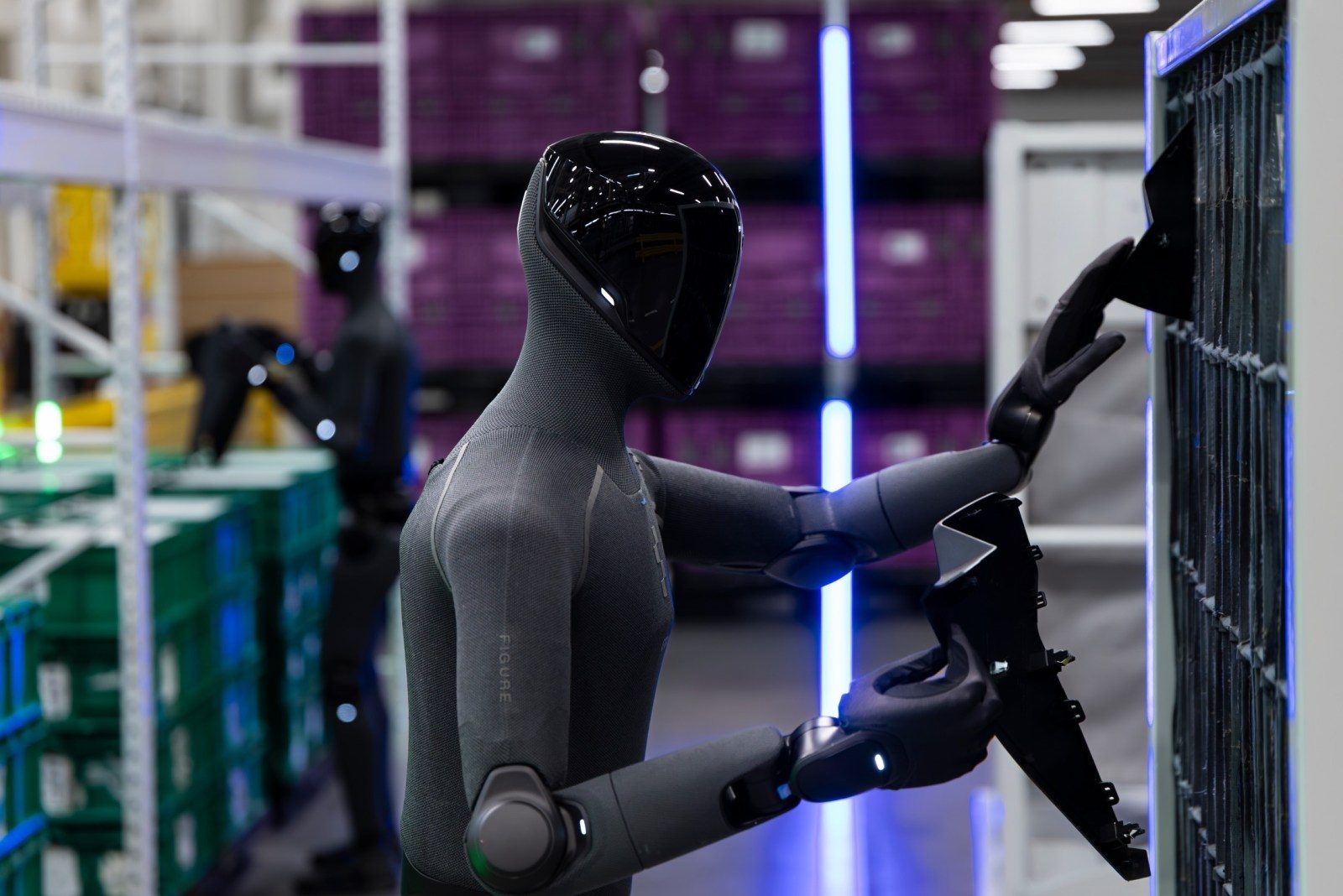

Figure AI announced on Tuesday it has officially deployed its third-generation humanoid robot to perform logistics work at BMW Group‘s plant in Spartanburg, South Carolina.
The company has raised roughly $1.9 billion, including a September 2025 Series C that exceeded $1 billion at a $39 billion post-money valuation.
The deployment places the company’s Figure 03 humanoid robot in Hall 52, one of Spartanburg’s assembly and logistics halls.
Figure 03 takes on sequencing, the process of picking unsorted components from large containers and placing them into trolleys in the precise order assembly workers need them on the line.
Automated tugger trains or Smart Transport Robots then carry the sorted parts to their installation points.
Hall 52 currently builds the BMW X3 and is slated to assemble the electrified BMW iX5, the automaker’s first fully electric model to be manufactured in the United States, when production begins later this year.
The iX5 was unveiled earlier this Tuesday in New Jersey.
From Agreement to Assembly Line
The partnership dates to January 2024, when Figure and BMW announced a commercial agreement to deploy general-purpose humanoid robots in automotive production — the first such deal between a major automaker and a humanoid startup framed as commercial rather than pure research.
Neither party disclosed financial terms, duration or robot count. BMW said it would start with a single robot for technical evaluation.
A multi-week trial followed in August 2024, with a Figure 02 robot inserting sheet-metal parts into fixtures in the Spartanburg body shop.
BMW described the exercise as a learning effort, testing how a multi-purpose robot integrates with an existing production system rather than a full rollout.
The deployment matured through 2025.
By the accounts both companies now give, Figure 02 moved from testing to a live production line, supporting the assembly of more than 30,000 G45-generation X3 SUVs over roughly ten months on ten-hour weekday shifts.
The robot fed sheet-metal panels into a welding process — a task demanding speed, accuracy and physical endurance.
The timeline leading to it was, however, more fraught than the announcement language suggested.
In February 2025, CEO Brett Adcock wrote on LinkedIn that Figure had a “fleet” of robots performing “end-to-end operations” for BMW.
Two months later, Fortune reported that until around March a single robot had operated, and only during off-hours, practising pick-and-place in the body shop.
Furthermore, it had only recently moved into live production — still one robot doing one limited task.
A BMW spokesperson described the work narrowly, far short of Adcock’s framing.
Adcock publicly stated his litigation counsel would pursue claims against the outlet.
What Figure 03 Changes
Figure AI manufactures at BotQ, a San Jose facility it says can produce a robot roughly every 90 minutes, with plans to scale toward 12,000 units annually.
The robot launched in October 2025 and is built for mass manufacture using die-cast components.
Figure 03 is a ground-up redesign, with soft textile coverings for safer operation around human workers, wireless charging for higher availability, speech-to-speech audio for communication with line workers, and reworked hands with tactile sensors and palm cameras.
Sequencing is harder than fixed pick-and-place, as parts arrive in varying orientations — shifted, rotated, partially occluded — meaning no two interactions are identical.
The task cannot be solved with hard-coded motions.
As such, Figure 03 must perceive each scene in real time, grasp parts with both hands while adjusting foot placement and body position, and place each component into the correct slot.
Figure AI calls this loco-manipulation, powered by Helix 02, the company’s proprietary vision-language-action model, which it brought fully in-house after ending an earlier partnership with OpenAI.
The company put Figure 03’s endurance on public display in May, livestreaming three robots sorting packages at a logistics facility on X.
The planned eight-hour run kept going.
By Day 8 the robots had logged 167 consecutive hours and sorted 209,000 packages autonomously, all running Helix 02 without human intervention.
Each robot had to detect a barcode, pick up the package, reorient it barcode-face-down onto a conveyor belt and move on.
The robots reason purely from camera pixels, according to Adcock.
A Crowded Field
Figure AI is not the only company positioning humanoid or AI-powered robots for the auto industry.
Tesla is converting its Fremont plant into a production line for its Optimus humanoid robot, with output expected to begin in late July or August and designed capacity of one million units per year.
A second factory at Gigafactory Texas targets 10 million units annually.
CEO Elon Musk acknowledged in January that no Optimus robots were doing useful factory work at the time, and Tesla has not announced external customers.
XPeng also produced its first automotive-grade Iron humanoid prototype in January.
The Chinese automaker broke ground on a dedicated 110,000-square-metre factory, with mass production targeted for late 2026.
Iron is already training on XPeng‘s Guangzhou production line, handling sorting and transport tasks.
Rivian‘s founder and CEO RJ Scaringe has taken a structurally different path, founding Mind Robotics as a separate company in late 2025 with Rivian as a large minority shareholder and launch customer.
Scaringe has questioned the humanoid form factor’s usefulness in manufacturing, telling The Wall Street Journal that the company focuses on practical factory robot designs rather than bipedal machines.
The startup has raised more than $1 billion and is valued above $3 billion.