Chinese carmaker XPeng sold 6,600 vehicles in China between April 14 and 20, down 1.5% from the previous week, according to registration data shared on Chinese social media this Tuesday.
Sales have dropped for the second consecutive week, yet the brand has consistently maintained over 6,000 units per week since February when the industry suffered disruptions due to the Chinese New Year Holiday.
Between March 31 and April 20, the carmaker sold 20,800 units in its home market.
Aiming to deliver 380,000 vehicles this year, XPeng sold 109,200 vehicles in the country between January 1 and April 20 — ranking fourth among NEV brands and second when considering only startups.
Competitors
XPeng was outperformed by Xiaomi and Leapmotor in last week’s registrations. The tech giant sold 7,200 vehicles, while the Stellantis-backed brand recorded 8,600 units.
Tesla, meanwhile, registered 6,800 vehicles in China (up 26% week over week), with numbers gradually rebounding as the U.S. automaker traditionally prioritizes exports from its Shanghai Gigafactory at the beginning of each quarter, delaying domestic deliveries.
Premium EV brands Zeekr and Nio registered 2,700 and 5,400 vehicles last week, respectively. Nio saw a strong rebound with a 54.3% increase from the previous week reaching the best result year to date.
As expected, BYD topped the rankings with over 56,000 units sold, a figure that includes sales from the main BYD brand as well as its premium and luxury sub-brands — Denza, Yangwang, and Fangchengbao.
Year to date, the Shenzhen-based firm sold about 778,000 fully electric and hybrid models in China, while Tesla registered nearly 150,000 battery electric vehicles.
Upcoming Models and Tech
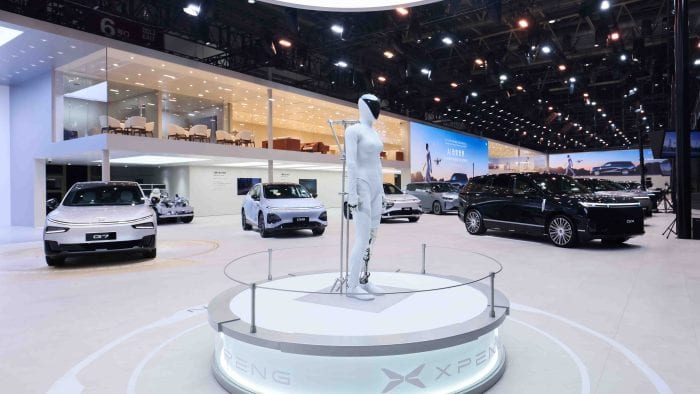
At the Shanghai Auto Show, starting this Wednesday, XPeng is launching a new variant of its recent P7+ sedan, with “a 5C ultra-fast charging AI battery” with the founder and CEO He Xiaopeng promising that it is “capable of powering a month’s commute with just 10 minutes of charging.”
The P7+ sedan was launched in November last year, with prices starting at 186,800 yuan ($25,600). The company also unveiled refreshed versions of its G6 and G9 in mid-March.
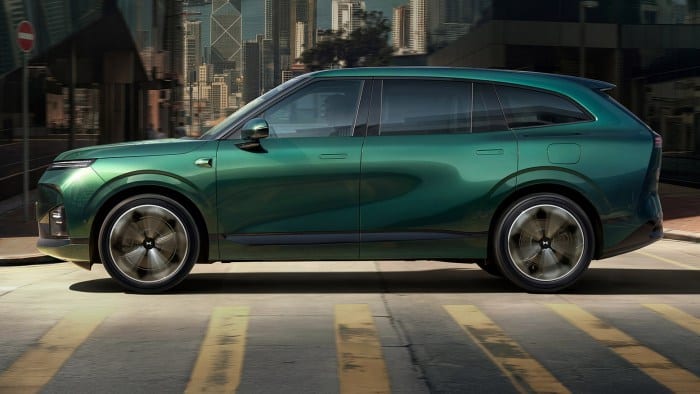
Last week, at a global event held in Hong Kong, the company launched its refreshed X9 multi-purpose van, which starts at 259,800 yuan ($35,600) in China, with a high-end variant priced just below 420,000 yuan ($57,600).
The Guangzhou-based carmaker also announced during the event that it is developing a large-scale autonomous driving model with 72 billion parameters, called XPeng World Base Model.
The company says it aims to compete “alongside the world’s leading AI autonomous driving companies in both the Chinese and global markets.”
He Xiaopeng said the company’s “highly competitive Robotaxi” was expected in 2026. However, when EV asked about it during the event, Xiaopeng didn’t provide a clear timeline, saying there are still major challenges to overcome.
Only focused on fully electric models until now, XPeng will enter the hybrid market later this year. According to a report from 36Kr, the company is developing at least five range-extended models, which are expected to be produced and launched in the next two years.
The extended-range variant of the refreshed X9 MPV was recently seen refueling in China indicating that the company has already started road testing the new version.
XPeng aims to be present in 60 markets this year, double from late last year. Last Wednesday, vice-chairman Brian Gu said the brand is launching in Italy “later this month.”