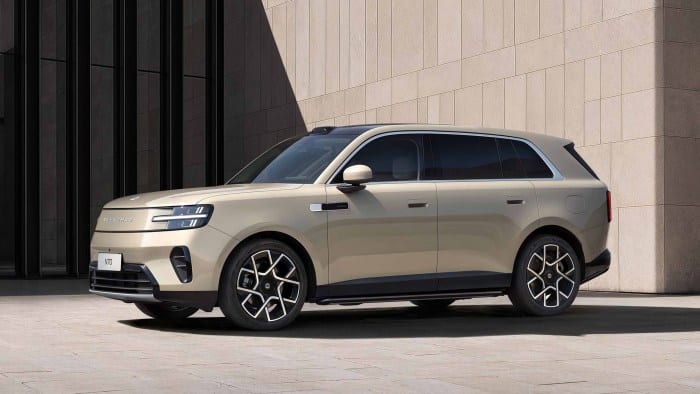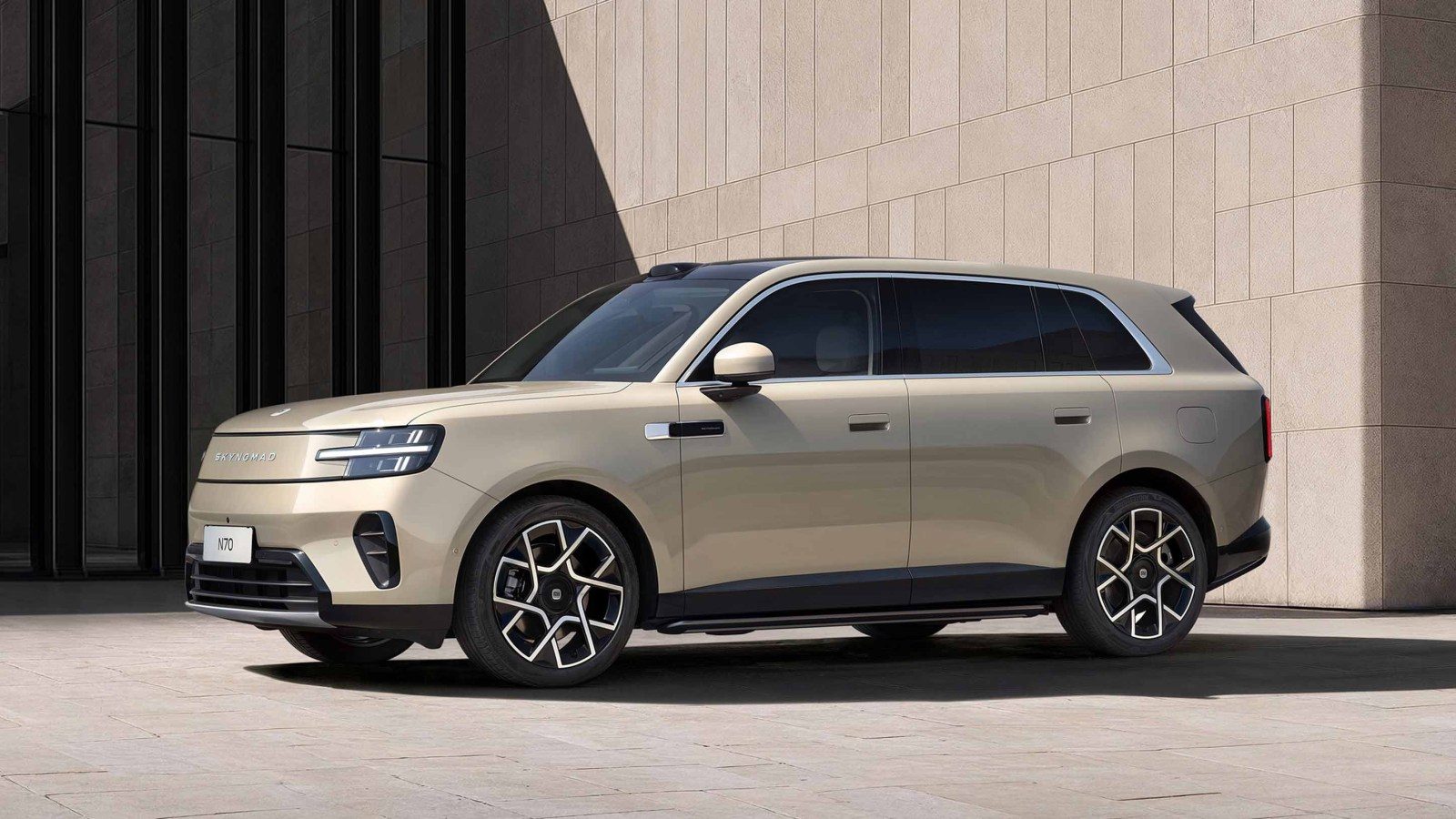

Xiaomi‘s new SkyNomad extended-range SUVs kept their September deliveries close to last year’s level in their first month on the market, as sales of its two fully electric models fell by more than a third, according to data released by the China Passenger Car Association (CPCA).
The SkyNomad N70 and N90 accounted for 12,444 of the 40,015 vehicles Xiaomi delivered, or 31.1%.
Combined deliveries of the SU7 sedan and the YU7 SUV fell 34.3% year on year to 27,571, from 41,948 in September 2025, when they were Xiaomi’s only models.
Including SkyNomad, Xiaomi’s total fell only 4.6%, as the new series made up 86.6% of the 14,377 units the two electric models lost.
The 40,015 figure was 15 units more than the “over 40,000” Xiaomi announced on October 1.
It was Xiaomi’s highest monthly total this year and its strongest since December 2025, when it set its record of 50,212.
SkyNomad’s Impact
Month on month, SU7 and YU7 deliveries fell 8.6% from 30,153 in August, when the two models still made up all of Xiaomi’s volume.
SkyNomad’s 12,444 units were nearly five times that 2,582-unit decline, turning it into a 32.7% gain for the company as a whole.
Without the new series, September would have been Xiaomi’s weakest month since March, when the changeover to the second-generation SU7 held deliveries to 21,440. It would also have ended a five-month run above 30,000 that began in April.
The same pattern holds for the quarter.
Third-quarter deliveries of 101,435 were down 6.8% from the record 108,796 a year earlier and 2.7% below the second quarter.
Excluding SkyNomad, they would have been 88,991, down 18.2% year on year and 14.6% from the second quarter.
Year to date, Xiaomi delivered 286,490 vehicles, up 7.4% from 266,722, while growth excluding SkyNomad was 2.7%.
SkyNomad’s First Month
The five-seat N70 accounted for 7,147 of the SkyNomad units and the larger N90 for 5,297, according to the CPCA data.
Xiaomi began handing over the SUVs on September 12, five days after Founder and CEO Lei Jun launched the series.
Prices range from 209,900 yuan ($31,300) for the N70 Pro to 299,900 yuan ($44,700) for the N90 Max Explorer Edition.
In 19 days of deliveries, SkyNomad outsold the YU7 and more than doubled the 6,042 units the YU7 delivered in July 2025, its first full month on sale.
The YU7 was then limited by production rather than demand, with waiting times of up to 52 weeks.
Xiaomi said on October 8 that the series had secured more than 70,000 locked orders in its first 30 days on sale, from September 7 to October 7.
That order book is more than five times the number of SkyNomad SUVs delivered in September.
Lei said first-month deliveries of the series exceeded 10,000.
Xiaomi Auto Vice President Li Xiaoshuang said the company would from now on publish only the first wave of locked orders and first-month figures for new models.
The N70 and N90 are Xiaomi’s first models that are not fully electric, and its Beijing plant received regulatory clearance to build extended-range vehicles only in June.
“The choice between an extended-range powertrain and a pure battery electric vehicle has never been about taking sides in a technological debate,” Lei wrote on Weibo ahead of the series’ July 30 debut.
SU7 and YU7 Lose Ground
SU7 deliveries were 15,751 in September, down 4.6% from August and 19.6% from 19,579 a year earlier.
Xiaomi said the SU7 was the best-selling sedan priced above 200,000 yuan ($29,800) in China in September.
The company stopped building the first-generation SU7 early this year, and SU7 deliveries fell to 218 units in February.
The second generation was unveiled on March 19 at a starting price of 219,900 yuan ($32,800) and first delivered on March 23.
SU7 deliveries totaled 124,576 from April to September. Through nine months, SU7 deliveries were down 39.0% at 133,809.
SU7 deliveries have fallen year on year in every month since October 2025.
Xiaomi delivered 11,820 units of the YU7, launched in June 2025, in September, nearly half the 22,369 of September 2025.
It was China’s best-selling model in January with 37,869 units, but its monthly volume has stayed below 15,000 every month since March.
Xiaomi added a cheaper YU7 version in May as the SUV’s sales slump deepened.
Year to date, YU7 deliveries of 140,237 still exceed those of the SU7.
Xiaomi reports monthly deliveries on the first day of each month only as rounded thresholds and without a model breakdown, leaving exact figures to the CPCA and to its quarterly earnings.
The CPCA monthly figures add up to 80,856 for the first quarter and 104,199 for the second, matching to the unit the delivery totals Xiaomi disclosed in its earnings reports in May and August.
In the CPCA’s September ranking of new energy vehicle (NEV) makers by domestic retail sales, Xiaomi placed ninth.
It finished 265 units behind SAIC Passenger Vehicle and ahead of the Huawei-backed HIMA alliance with 37,490, NIOwith 37,231, Li Auto with 31,817 and XPeng with 30,599.
Xiaomi’s 40,015 units made up 3.7% of China’s NEV retail market, which fell 16.7% year on year to 1.084 million in September even as NEV penetration reached a record 67.0%, according to the CPCA.
The Road to 550,000
The nine-month total of 286,490 is 52.1% of the 550,000-unit target Lei set in January and the company reiterated in late May.
To reach the goal, Xiaomi would need 263,510 deliveries in the fourth quarter, an average of about 87,800 a month.
That is more than twice September’s total.
That monthly pace is 75% above its record of 50,212, and the quarterly total would be 81.6% more than the 145,115 it delivered in the fourth quarter of 2025.
The gap has widened from an average of about 75,900 a month needed after August.
Xiaomi delivered 411,082 vehicles in 2025, beating its revised target of 400,000.
Lei said on September 7 that cumulative deliveries of the SU7 and YU7 had passed 800,000.
Adding Xiaomi’s reported totals of 136,854 for 2024 and 411,082 for 2025 to the CPCA figures for this year gives cumulative deliveries of 834,426 through September.
Prices and Profitability
Volume growth has come with lower prices.
The segment that houses Xiaomi’s EV business posted a second straight quarterly loss in the April-to-June period.
The average selling price per vehicle fell 9.6% year on year to 229,312 yuan ($34,200) as the higher-priced SU7 Ultra made up a smaller share of deliveries.
In the first quarter, the segment posted an operating loss of 3.1 billion yuan ($462 million).