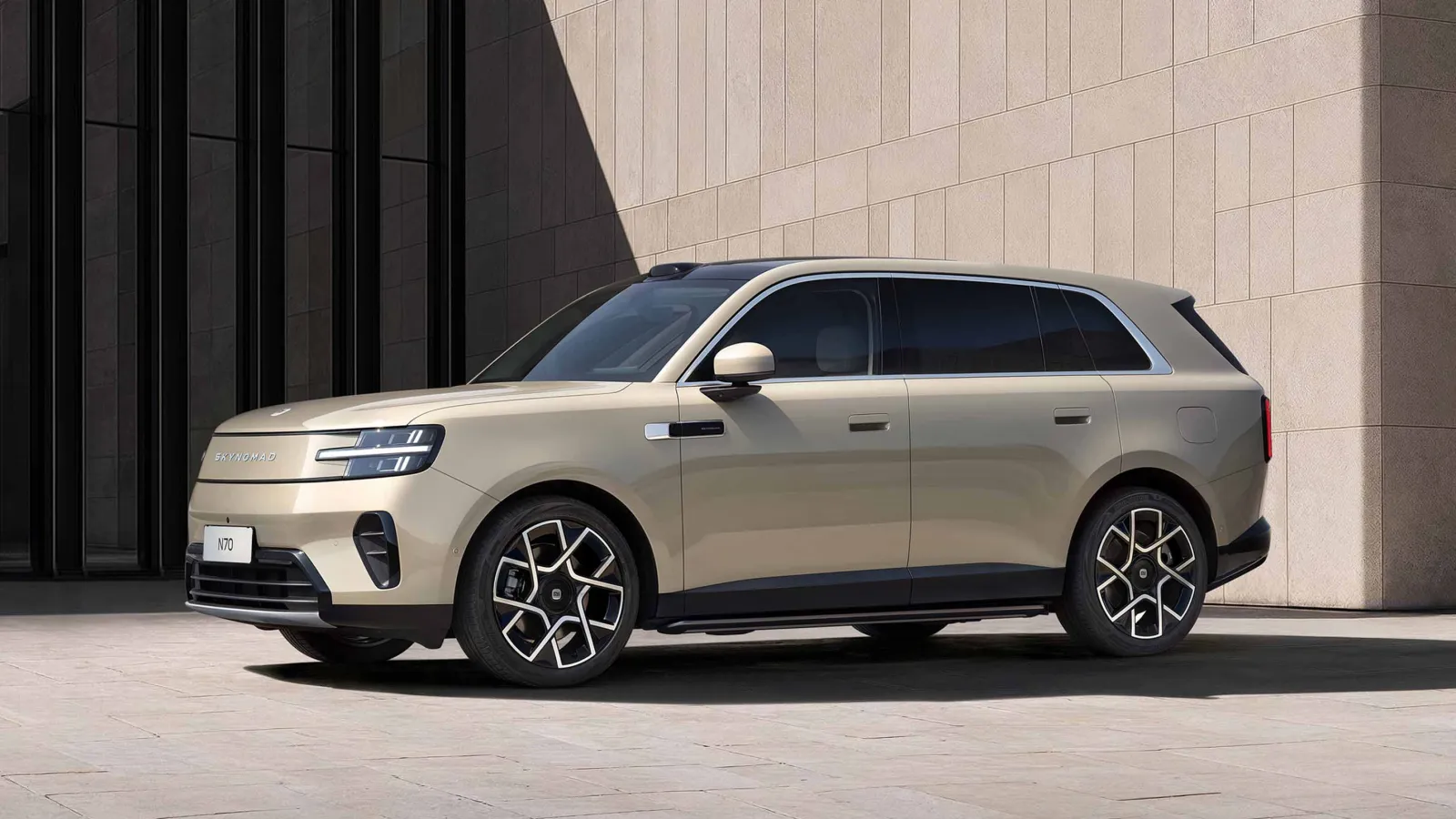
Xiaomi‘s two fully electric models posted a fourth straight monthly decline in deliveries in October, with the SU7 sedan and the YU7 SUV both losing ground for a second month since the company’s SkyNomad extended-range SUVs went on sale, according to data from Chinese auto portal Yiche compiled by EV.
Combined deliveries of the SU7 and YU7 dropped 16.6% from September to 22,991, the steepest monthly decline since February.
They have fallen 33.8% from 34,738 in June and are at their lowest since March, when the changeover to the second-generation SU7 held the total to 21,440.
The two models made up 45.9% of the 50,123 vehicles Xiaomi delivered in October, down from 68.9% in September and all of its volume in August. The SkyNomad N70 and N90 accounted for the other 27,132.
The 50,123 total was 123 units more than the “over 50,000” Xiaomi announced on November 1. It matches the retail figure the China Passenger Car Association (CPCA) reported for Xiaomi in October.
Four Straight Monthly Declines
The run began in July. Combined SU7 and YU7 deliveries fell 10.0% that month to 31,267, 3.6% in August to 30,153, 8.6% in September to 27,571 and 16.6% in October.
October’s drop of 4,580 units was the largest of the four. It took the pair below 25,000 for the first time since March.
Taken in pairs, the two months since SkyNomad went on sale produced 50,562 SU7 and YU7 deliveries, 17.7% fewer than the 61,420 of July and August.
The slide began before the new series arrived, with two of the four declines coming in July and August. The last two came with SkyNomad on sale. In August, the last month before the new series went on sale, the SU7 and YU7 delivered 30,153 units. Two months later they are 23.8% lower.
The SU7 is down 21.6% over that period and the YU7 26.4%. The data do not show whether buyers moved from one to the other.
SU7 at Less Than Half Its April Level
SU7 deliveries were 12,954 in October, down 17.8% from September. It was the sedan’s third straight monthly decline, after falls of 21.5% in August and 4.6% in September, and its lowest month since March, before the second generation reached full production.
Xiaomi stopped building the first-generation SU7 early this year. The second generation was unveiled on March 19 and deliveries peaked at 26,826 in April. They have fallen in five of the six months since, and October’s total was 51.7% below that peak.
YU7 at a Five-Month Low
Xiaomi delivered 10,037 units of the YU7 in October, down 15.1% from September, after a 13.3% fall the month before. That was its lowest month since May.
The YU7 was China’s best-selling model in January with 37,869 units, but it has stayed below 15,000 every month since March, even after Xiaomi added a cheaper version in May, priced from 233,500 yuan ($35,000). October’s figure was 73.5% below January’s.
The SU7 has outsold the YU7 for seven straight months. Year to date, the SUV remains ahead, with 150,274 deliveries to the SU7’s 146,763.
Against Last Year
The year-on-year comparison has worsened alongside the monthly one. Combined SU7 and YU7 deliveries were down 52.7% from 48,654 in October 2025, when they were Xiaomi’s only models, after falling 17.2% in August and 34.3% in September.
Part of that reflects a rising base. A year ago the YU7 was still ramping up, and the pair’s combined deliveries climbed from 36,396 in August 2025 to 48,654 in October 2025.
The YU7 fell 70.2% from 33,662 a year earlier and the SU7 13.6% from 14,992. Through ten months, SU7 deliveries were down 37.4% at 146,763.
SkyNomad Fills the Gap
Xiaomi’s total still rose. Deliveries of 50,123 were 25.3% above September and 3.0% above October 2025, the first year-on-year increase since July. It was Xiaomi’s highest monthly total this year and 89 units short of its record of 50,212, set in December 2025.
The five-seat N70 was Xiaomi’s best-selling model in October with 14,545 units, about double the 7,147 it delivered in 19 days of September. The seven-seat N90 followed with 12,587, up from 5,297 and 367 units behind the SU7.
The two SUVs added 14,688 units from September, more than three times the 4,580 the electric models lost. They have reached 39,576 units since Xiaomi began handing them over on September 12.
That is 56.5% of the more than 70,000 locked orders Xiaomi said the series secured in its first 30 days on sale, a period that ended on October 7. The company has not updated the order figure since.
Founder and CEO Lei Jun launched the series on September 7. Prices range from 209,900 yuan ($31,500) for the N70 Pro to 299,900 yuan ($44,900) for the N90 Max Explorer Edition.
The N70 and N90 are Xiaomi’s first models that are not fully electric. Without them, October would have been its weakest month since March.
The Road to 550,000
Xiaomi delivered 336,613 vehicles in the first ten months, up 6.7% from 315,376 a year earlier. Excluding SkyNomad, the total would have been 297,037, down 5.8%.
The ten-month figure is 61.2% of the 550,000-unit target Lei set in January. To reach it, Xiaomi would need 213,387 deliveries in November and December, an average of about 106,700 a month.
That is more than twice October’s total and more than twice the monthly record. The required pace has risen from about 75,900 a month after August and about 87,800 after September.
Xiaomi reports monthly deliveries on the first day of each month only as rounded thresholds and without a model breakdown.
Its board will meet on November 24 to approve third-quarter results, according to a filing with the Hong Kong stock exchange. The monthly data add up to 101,435 deliveries for that quarter.