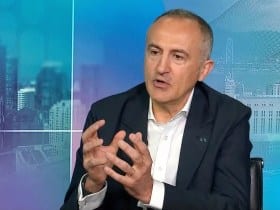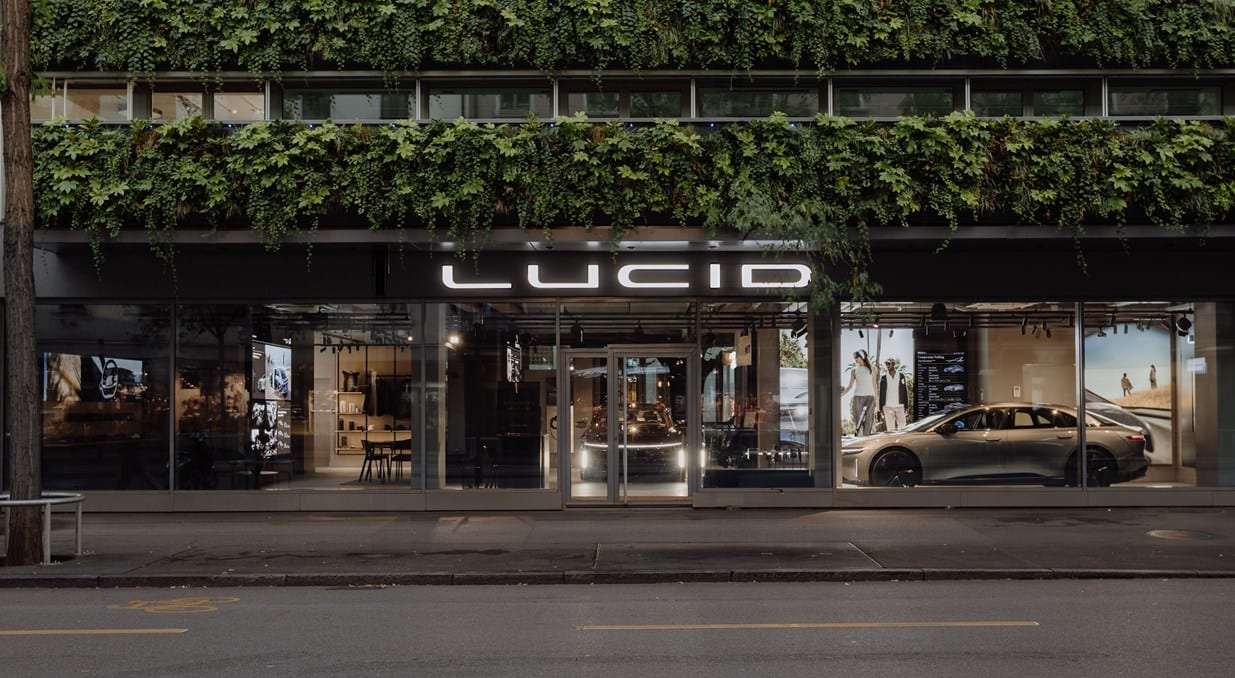

Citi analyst Michael Ward lowered the price target on Lucid Motors on Friday by 17.6% — to $14.00 — just two months after the firm reinitiated coverage of Lucid with a Buy rating.
Despite the reduction, the revised target still implies roughly 123% upside from the stock’s closing price of $6.27 on Thursday.
Lucid‘s stock has been under continued pressure throughout the first four months of the year — down roughly 44% year to date.
As of publication time, Lucid‘s market capitalization stood at approximately $2.43 billion.
Last summer, the company executed a 1-for-10 reverse stock split while trading in the $2.00 to $3.00 range on a pre-split basis.
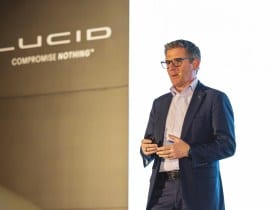
By the time Lucid announced the split, interim CEO Marc Winterhoff guaranteed that the move was not intended to avoid delisting risk, but rather to attract investment from institutional shareholders that do not invest in companies trading below $5.00.
The stock has lost over 60% of its value since the split, however.
The company saw its stock reach consecutive all-time lows last month, trading as low as $5.62 on April 29 — which represented a drop of over 98% from its 2021 peak.
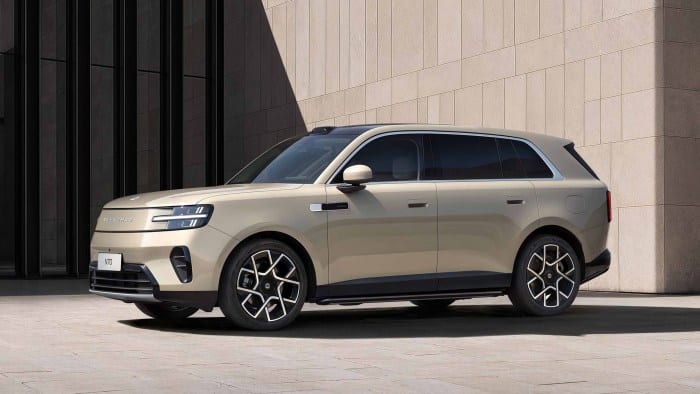
Shares plunged as the EV maker disclosed a first-quarter delivery miss amid a recall that affected all produced units of its Gravity SUV.
Two months ago, Citi analyst Michael Ward had described Lucid as being at a “positive inflection point,” citing the Gravity SUV ramp, the upcoming Cosmos midsize platform, the Uber robotaxi partnership, and continued backing from the Public Investment Fund (PIF).
The $3.00 reduction in the price target likely reflects the turbulent quarter Lucid has reported since then.
Q1 Results Missed Estimates
Lucid reported first-quarter results on May 5 that highlighted both production progress and delivery setbacks.
The company produced 5,500 vehicles during the quarter — up 149% year over year — but delivered just 3,093 units, roughly flat compared to the same period a year earlier and well below the Visible Alpha consensus estimate of 5,237.
The shortfall was driven by a supplier quality issue with second-row seats manufactured by Camaco, which forced a 29-day stop sale on the Gravity SUV during February.
The defect prompted a recall of more than 4,000 Gravity units — every customer vehicle built before February 14 — due to improperly welded seat belt anchors.
The gap between production and deliveries pushed inventory to $1.5 billion, with $200 million in impairments recorded during the quarter.
Revenue came in at $282.5 million, up from $235 million a year ago but below analyst expectations. The net loss was approximately $1 billion.
Lucid suspended its full-year production guidance of 25,000 to 27,000 vehicles — guidance it had reaffirmed as recently as early April.
Management attributed the suspension to a governance decision, noting that incoming CEO Silvio Napoli would need time to review the outlook before committing to updated targets.
Citi Stands Apart From WS
Ward’s decision to keep the Buy rating places Citi firmly in the minority among analysts covering the stock.
In the days following the first-quarter report, several firms moved to cut their targets.
Morgan Stanley slashed its price target in half to $5.00 from $10.00 on May 6, with an Underweight rating on the stock.
Robert W. Baird lowered its target to $6.00 from $12.00 with a Neutral rating, and TD Cowen also maintained its Hold rating, despite cutting the target to $7.00 from $10.00.
Evercore ISI followed with a $6.00 price target.
Benchmark downgraded Lucid from Buy to Hold — removing what had been one of only two bullish calls alongside Citi’s.
With Benchmark’s downgrade, Ward is now the sole remaining bull among major Wall Street analysts covering Lucid.
Uber Deal and Capital Raise
The long-term thesis behind Citi’s stance appears anchored to developments that unfolded in April.
On April 14, Lucid announced that Uber expanded its purchase commitment from 20,000 to at least 35,000 vehicles — spanning both the Gravity SUV and the upcoming midsize platform — for use in Uber‘s planned global robotaxi service.
Uber also committed an additional $200 million in investment, bringing its total to $500 million and giving it an 11.5% ownership stake.
The same announcement included a $550 million investment from Ayar Third Investment Company, an affiliate of the PIF, in convertible preferred stock.
Combined with a $300 million public stock offering, the company raised approximately $1.05 billion in total new capital.
Lucid ended the first quarter with approximately $3.2 billion in liquidity.
Including the April capital raise and an additional $500 million draw from a PIF credit facility, total liquidity stood at approximately $4.7 billion — enough to fund operations into the second half of 2027.
On the robotaxi front, Nuro received California DMV approval for driverless testing of the Lucid Gravity during the quarter.
Uber and Nuro employees began testing the end-to-end customer experience in San Francisco, ordering robotaxis through the Uber app.
Lucid said it is targeting commercial robotaxi operations by late 2026, with regular production of robotaxi vehicles expected to begin later this year at its Arizona facility.
Leadership Transition
The appointment of Silvio Napoli as Lucid’s permanent CEO, also announced on April 14, introduced a new variable.
Napoli, the former chairman and CEO of Swiss industrial firm Schindler Group, has no prior automotive industry experience.
His start date remains contingent on US work visa approval. Interim CEO Marc Winterhoff is continuing as chief operating officer.
In his first interview as incoming CEO, Napoli said his top priority would be deciding “what we don’t do,” signaling a push toward capital discipline and strategic focus.
During the first-quarter earnings call, Ward asked about volume targets for the midsize vehicle in 2027, with Winterhoff confirming the targets shared at Lucid‘s March 12 Investor Day remain unchanged.
Citi’s Coverage History
Citi has covered Lucid intermittently over the years.
Analyst Itay Michaeli initially initiated coverage in January 2022 with a Buy rating and a $57 price target — one of the most bullish calls on Wall Street at the time.
Coverage was subsequently adjusted, including a Neutral/High Risk rating in April 2024 when Citi resumed coverage with a $2.90 price target (pre-reverse-split equivalent), praising the upcoming Gravity SUV while flagging execution risks.
Citi’s take on Lucid appears to have lapsed before Ward’s March 2026 initiation, which represented the most bullish Citi call on the EV maker since the original 2022 note.
Institutional Ownership
Citigroup is one of Lucid’s institutional shareholders, having disclosed earlier this week in a new filing with the SEC that its stake in the EV maker has jumped by 67% in the first quarter.
The New York-based firm held 1.6 million shares in Lucid by the end of March, valued at $15.3 million then. The position’s value has since declined to $10 million.
BlackRock — the world’s largest asset manager — increased its position in Lucid by 3.43% during the first quarter of 2026, raising its stake to slightly over 6.2 million shares — valued at $59.7 million by March 31.
The stake is currently worth $39.3 million, according to Nasdaq.
Lucid is primarily held by Saudi Arabia’s PIF, which holds a majority of the outstanding shares. The ride-hailing giant Uber follows after the recently increased investment.