Tesla has won a U.S. Patent and Trademark Office review of four of the six electric vehicle charging patents that a Texas patent-licensing company is asserting against it in federal court, according to a new USPTO notice.
USPTO Director John Squires rejected Tesla’s challenges to the other two patents, which cover transmitting information about a battery’s charge threshold.
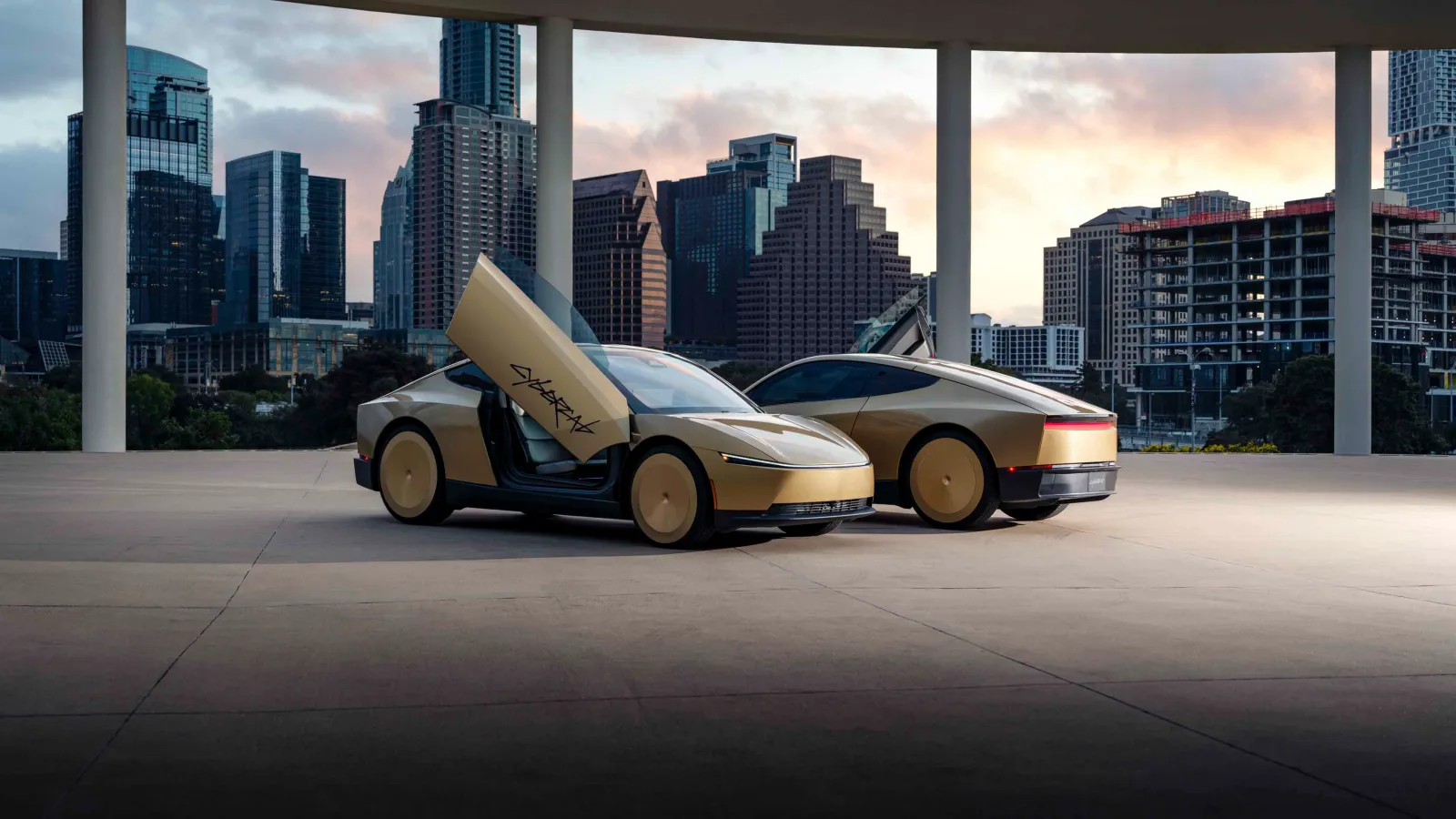
All six patents belong to ChargeLogic LLC of Midland, Texas, which sued Tesla in March. The suit claims that charging features in the Model 3, Model Y, Model S, Model X, Cybertruck and Semi, as well as the Cybercab, infringe the patents.
The decision sends the four patents to the USPTO’s Patent Trial and Appeal Board (PTAB), which will rule on whether the challenged claims are unpatentable. The infringement case continues in Texas in the meantime.
What the Notice Says
For the four petitions it granted, the notice says that “after review of the merits, the petitioner has shown a reasonable likelihood of prevailing with respect to at least one of the claims challenged in the petition, and no other non-discretionary considerations warrant denial of institution.”
In two others, it says Tesla “failed to show a reasonable likelihood of prevailing” on any challenged claim. The notice gives no further reasons for either outcome.
The same notice turned down two unrelated petitions on discretionary grounds and referred nine other cases for review of their merits.
The decision came on the day a November 10 memo from Squires and USPTO General Counsel John Duffy took effect. Under it, PTAB judges decide on the Director’s behalf whether to institute reviews based on the merits, while Squires keeps reviewing discretionary and other non-merits issues.
The new process applies only to cases that had not yet been referred for merits review. Squires had referred the Tesla petitions in an October 19 notice, and he decided them himself.
The Patents
The oldest of the six was issued in October 2018 and is now under review. Tesla’s petition describes it as covering user-defined charging schedules that take into account factors such as the time of day and the cost of electricity.
U.S. Patent 11,508,996 covers inductive charging in which an in-car display control is disabled while the car’s charging core is misaligned with the charger’s and enabled once they line up.
ChargeLogic’s complaint ties it to “the wireless charging and vehicle positioning system of the Cybercab.”
U.S. Patent 11,909,010 covers calculating the time needed to charge the battery and displaying it on an in-car display, while U.S. Patent 11,909,011 covers starting a charge from a portable device and repeatedly displaying the remaining charge time and the battery’s charge level.
Tesla failed to get review of U.S. Patents 11,258,107 and 11,721,844. Both are titled “Vehicular Battery Charger, Charging System, and Method for Transmitting Battery Charge Threshold Information.”
The Lawsuit
ChargeLogic filed suit on March 23 in the U.S. District Court for the Western District of Texas, Midland-Odessa Division. Judge David Counts is presiding, and Magistrate Judge Derek Gilliland is handling pretrial matters. A court disclosure names Kidon IP Corporation as ChargeLogic’s corporate parent.
The complaint targets features such as scheduled and off-peak charging, the charge-limit setting and its alerts, time-to-charge displays and starting or stopping a charge from Tesla’s mobile app.
“In the early days of EVs, charging was a ‘dumb’ process,” the complaint says. It adds that the patents “embody the technical architecture of this intelligent charging ecosystem.”
ChargeLogic accuses Tesla of willful infringement.
It says Tesla had actual notice of the ‘567 patent at least as early as August 15, 2024, when a patent examiner cited the patent’s published application in rejecting two claims of a Tesla application.
The complaint asks for damages “in no event less than a reasonable royalty,” enhanced damages, a compulsory ongoing royalty and a permanent injunction. ChargeLogic is represented by Susman Godfrey and the Waco firm Cherry Johnson Siegmund James.
Tesla said on its Robotaxi account on X on November 13 that select customers are being invited to buy the Cybercab for personal use. The order page it posted lists a price of $29,990 and a separate $299 monthly Autonomy Subscription required to operate the car.
In an August brief to the USPTO, ChargeLogic said the parties had jointly proposed a January 18, 2028, trial date. The court entered a scheduling order on October 14. ChargeLogic also told the USPTO that a Tesla motion to transfer the case to another venue was pending.
Tesla’s Case
Tesla filed the six petitions in June, less than three months after it was sued. Its lawyers at Erise IP argued that every challenged claim was obvious in light of earlier patents and publications.
“The Challenged Claims broadly encompass well-known features for managing an electric vehicle’s battery charging,” Tesla wrote in its petition against the ‘996 patent.
Some of the prior art is Tesla’s own. Every ground in the petition against the ‘011 patent, one of the four now under review, relies on U.S. Patent 7,698,078, “Electric vehicle communication interface.”
Its inventors, including Kurt Kelty, who was Tesla’s Director of Battery Technology until he left in 2017 after 11 years, assigned it to Tesla Motors in 2007.
Tesla also argued that ChargeLogic had no long-standing reliance on the patents. It said Austin assigned the family to ChargeLogic only after December 2025, “not to commercialize Austin’s purportedly crucial inventions, but to sue Tesla.”
“While Austin sat by, Tesla was busy,” Tesla wrote. It also invoked a March 11 Squires memo on U.S. manufacturing, arguing that its “unparalleled investments in American manufacturing” supported review.
ChargeLogic’s Bid to Block Review
ChargeLogic asked Squires to reject all six petitions without reaching their merits. It cited “strong settled expectations” in the family’s first patent, in force “since at least 2018,” and the parallel Texas case.
“The merits of all six are very weak,” ChargeLogic wrote.
In October, ChargeLogic pointed to invalidity contentions Tesla had served in the Texas case. It said they called 50 claim terms indefinite, including terms Tesla had expressly construed in its petitions, at odds with how Tesla read those terms before the USPTO.
Tesla said the indefiniteness contentions were included because of “an internal miscommunication” and that it served amended contentions dropping them less than 24 hours after the originals. “Tesla apologizes for the mistake and the additional briefing it has caused,” it wrote.
In his October 19 notice, Squires declined to deny the six petitions on discretionary grounds and referred them for review of their merits.
ChargeLogic also fought on the merits. In its response on the ‘107 patent, one of the two Tesla lost, it called Tesla’s “maze-like” petition “a textbook example of improper hindsight.” The November 16 notice does not say which arguments, if any, carried the day.
What Comes Next
Under federal law, the PTAB must generally issue a final decision within one year of starting a review, a deadline that can be extended by up to six months.
Tesla has stipulated that, if a review is instituted, it “will not advance” in the Texas case “the specific grounds asserted in the instituted IPR(s)” or “any ground that reasonably could have been raised” in them.
Under USPTO rules, Tesla has 30 days from a decision not to institute a review to ask for a rehearing on the two patents it lost. No rehearing request appeared on either docket as of November 18.
The company separately asked the U.S. Supreme Court in July to decide whether courts can review the USPTO’s refusals to hear patent challenges. The petition, in Tesla v. Granite Vehicle Ventures, is scheduled for the justices’ December 4 conference.