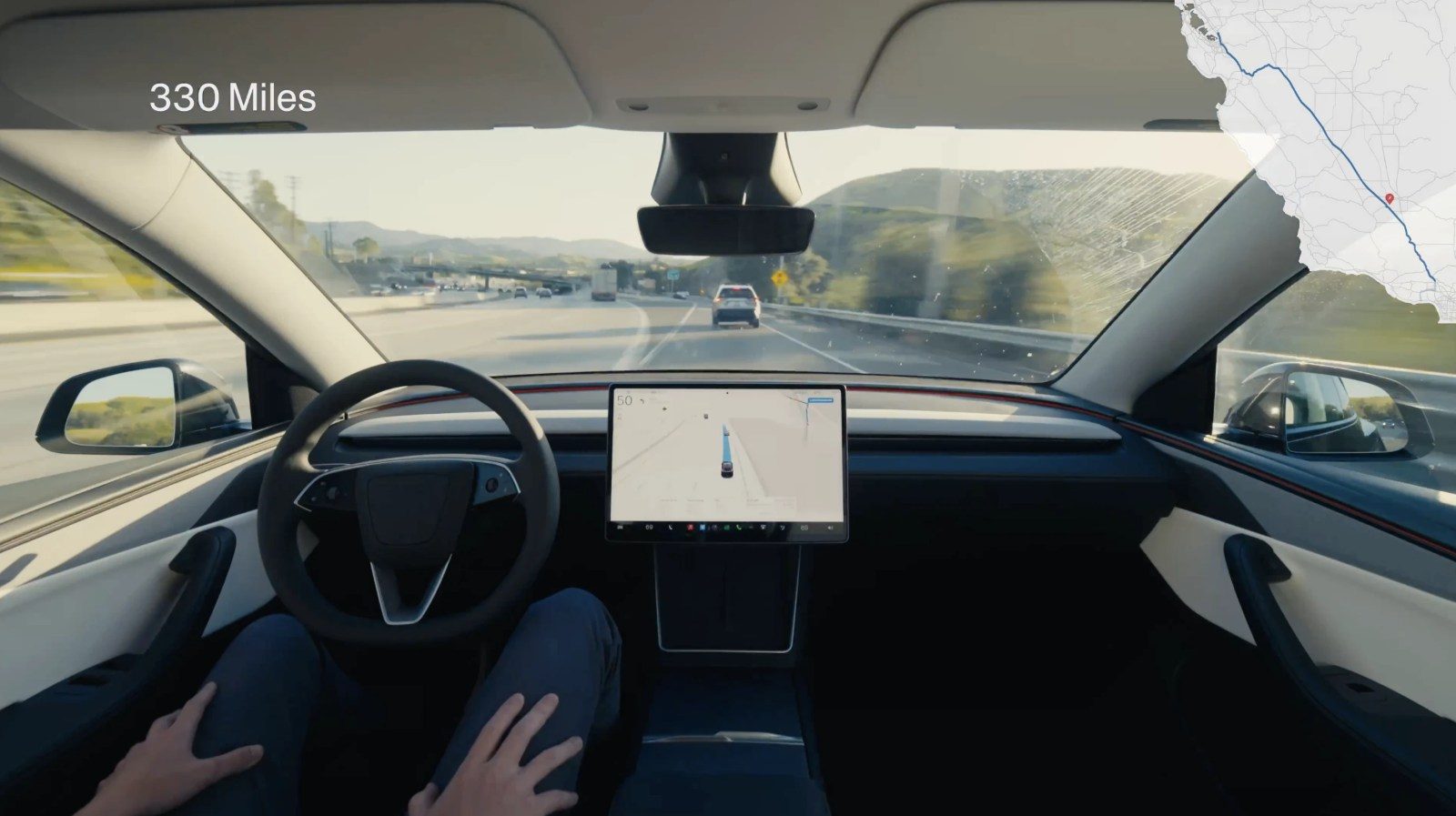

Tesla began offering unsupervised Robotaxi rides in Dallas and Houston on Saturday, officially expanding the service to two more Texas cities after the initial release in Austin.
Reacting to the announcement, Morgan Stanley analyst Andrew Percoco wrote in a new client note that the expansion represents meaningful progress for the company’s autonomous driving ambitions.
“In our view, this represents tangible progress at a time when the market was growing increasingly skeptical about Tesla‘s robotaxi expansion timeline,” Percoco wrote.
Several analysts have noted that the absence of autonomy-related news in recent weeks — ahead of Tesla‘s earnings call on Wednesday, April 22 — had been weighing on the stock.
Morgan Stanley has a $415 price target on the Elon Musk-led company, implying a 3.6% upside based on Friday’s closing price of $400.62.
The stock returned to trading levels around $400 on Friday after a turbulent stretch.
Tesla shares hit an all-time high of $498.83 on December 22, 2025.
In the first two months of 2026, the stock shed more than $100 — amid an escalation of NHTSA’s probe into the company’s FSD software, a first-quarter delivery miss, and broader market pressure from the Middle East conflict.
Evolution From Austin
Percoco described the Dallas and Houston rollout as “a material evolution from the Austin rollout, where Tesla initially relied on human safety monitors for several months before beginning to phase them out.”
The Houston zone covers approximately 25 square miles around Willowbrook and Jersey Village, while the Dallas zone spans a similarly sized area near Highland Park and parts of downtown.
Tesla launched its Robotaxi service in Austin in late June 2025 with a fleet of approximately ten Model Y vehicles and a safety monitor seated in the passenger seat.
The company began testing rides without safety operators in December 2025, initially with employees, before transitioning to unsupervised public rides in January 2026.
The Dallas and Houston launches appear to have skipped the supervised phase entirely.
A video shared by the company showed a 360-degree view of the vehicles’ interior with no one seated in the front.
Tesla has not disclosed fleet size, pricing, or detailed operational metrics for the new cities.
The Dallas and Houston launches are part of Tesla‘s plan to expand its Robotaxi service to seven additional cities in the first half of 2026, as outlined in the Q4 2025 earnings presentation published in January.
The remaining five target cities are Phoenix, Miami, Orlando, Tampa, and Las Vegas.
Across Austin and the Bay Area combined, Tesla reported nearly 700,000 paid Robotaxi rides as of the fourth quarter of 2025.
The ‘Flywheel’ Thesis
The Morgan Stanley analyst framed the robotaxi expansion as part of a broader feedback loop that could benefit Tesla’s entire business.
“We believe a successful robotaxi rollout has the potential to create a powerful flywheel across Tesla‘s ecosystem,” Percoco wrote.
“Incremental unsupervised robotaxi miles driven improve the underlying autonomy model, which accelerates the path to personal unsupervised FSD.”
That improvement in the Full Self-Driving software, in turn, supports higher FSD subscription rates, improves demand for Tesla’s vehicles, and strengthens cash flow generation, according to the analyst.
In the context of Tesla‘s rising capital expenditure — estimated by Morgan Stanley at $8.5 billion — Percoco argued that FSD advancements are “a key lever to re-invigorate auto sales and margins to fund Tesla’s longer-term ambitions in physical AI.”
Percoco on Tesla’s Robotaxi
Sunday’s note is the latest in a series of Robotaxi-focused research from Percoco, who took over Tesla coverage at Morgan Stanley after Adam Jonas moved to a broader AI and robotics role last August.
In December 2025, Percoco published a note laying out the firm’s fleet expansion expectations, forecasting that Tesla would operate 1,000 Robotaxi vehicles by the end of 2026, up from a handful at the time, and reach 1 million by 2035.
In that note, Percoco called the removal of safety monitors “the single most important NT catalyst in validating its robotaxi strategy” and added that a “robust and reliable robotaxi fleet should serve as a clear precursor to the accelerated deployment of fully unsupervised personal FSD.”
The Dallas and Houston launches mark a step toward that 1,000-vehicle target, though Tesla has not disclosed how many vehicles are currently operating across its three active Texas cities.
New details are expected to be provided by Elon Musk later this week at the earnings conference call.
Morgan Stanley on Tesla
Percoco has maintained an Equalweight rating on Tesla since the firm downgraded the stock from Overweight in December 2025.
In early April, following Tesla’s first-quarter delivery miss, Percoco reiterated his rating and described the energy storage shortfall as likely timing-related rather than a structural issue.
At the time, the firm slightly raised its annual delivery forecast to 1.6 million vehicles for 2026, noting it expected auto demand to reaccelerate with a mid-teens compound annual growth rate through 2030.
In February, Morgan Stanley also highlighted Tesla’s solar manufacturing push as a potential source of $20 to $50 billion in additional equity value, linking it to CEO Elon Musk’s vision of deploying solar-powered data centers in space.