
Tesla executives said that the company is not ruling out a future return for the Model S and Model X, even as it shifts resources toward next-generation products like the Cybercab robotaxi, the Optimus humanoid robot and the Semi truck.
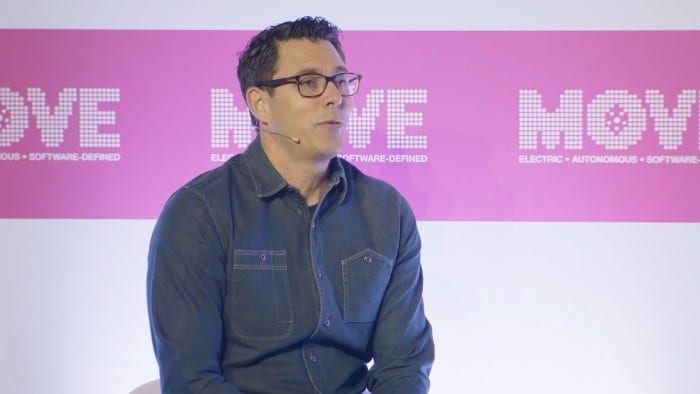
Speaking on the Ride the Lightning podcast, recorded May 22 at the company’s Fremont factory, VP of Vehicle Engineering Lars Moravy declined to close the book on the two cars that built the brand.
“It was just like, now is not the right time to keep this one going. It doesn’t mean it goes away forever. I never say never,” the executive said during the episode.
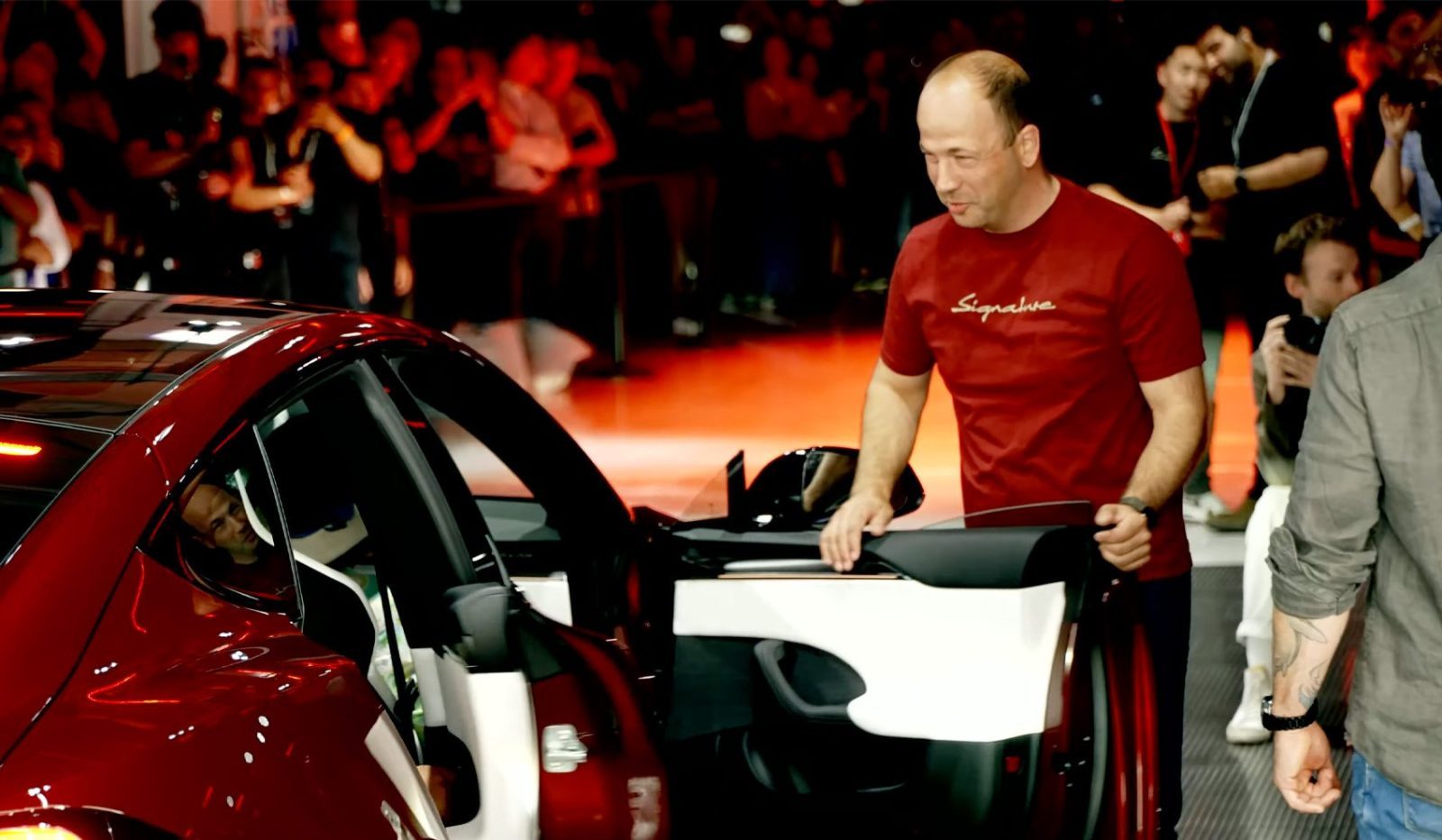
The comments arrived on the same week that Tesla held its delivery event for the final produced, special units of both models.
CEO Elon Musk confirmed the decision on the company’s fourth-quarter 2025 earnings call in January, framing it as an “honorable discharge” for the sedan and SUV.
“I think S and X have done a great job for us, and what they needed to do. But I think when we look forward, there’s always new opportunities,” Moravy added on Friday.
The executive appeared on the podcast alongside Tesla Chief Designer Franz von Holzhausen.
The Decision
Questioned about whose idea it was to end production of the models, Lars Moravy said there was “no argument.”
“I think we were all aware of the challenges, you know, of continuing. Like, you know, this platform—I mean, we started designing it in what, 2008?,” he said, turning to Chief Designer von Holzhausen. “14 years later, it’s basically the same car with some upgrades along the way.”
The executive flagged regulatory issues as one of the reasons for the pullback, alongside the upcoming production of Tesla‘s autonomous projects.
“Every five years or so, Euro NCAP updates its protocols,” Moravy noted. “We passed five-star crash safety protocols with Model S and Model X when we did the refreshes a few years back, and looking forward, they’re getting more and more stringent.”
According to the executive, Tesla added what he described as “band-aids along the way” in an effort to make the vehicles as safe as possible, before ultimately realizing the models would require “a massive overhaul.”
Moravy noted that, at the same time, conversations around the Optimus humanoid robot started to take place.
“And it was like, well, we’ve got to spend many hundreds of millions of dollars to redo this in this factory, but we also need a pilot factory for Optimus. And it just kind of was serendipitous. I think the two things went hand in hand,” he stated.
According to Moravy, the idea was first brought up by former Tesla VP of Finance Sendil Palani, who had been with the company since 2009 and left earlier this year.
Asked about whether the decision was made by “the money guy,” the VP of Vehicle Engineering backed it, saying that “Sendil wasn’t just a money guy, he was always a product guy too. He loved it.”
“I think he was bringing up the option of maybe we should use Fremont for Optimus — not we should get rid of S and X — and then it kind of snowballed into, you know, the future is autonomous,” Moravy clarified.
He noted that “these cars were the first ones we designed, they’re the least ready for that world. So we’ve got to move forward.”
A Major Redesign Was Considered
Moravy said Tesla had considered a full redesign six years ago before the program was retired.
“In like 2020, we started talking about doing a complete refresh,” he said.
However, last year, the conversation had changed. The plan lost momentum as Optimus and the CyberCab moved up the priority list and absorbed engineering resources.
Recreating the cars from scratch would mean starting at zero with the manufacturing technology built for newer products, Moravy said.
He pointed to the efficiency gap between the aging S and X line and Tesla‘s latest vehicles, estimating the older line produces roughly one-tenth the vehicles per square foot of the Cybercab line.
“If when we redo a vehicle, it’s like you want to make a huge impact,” he said. “To do these, it would be to start from zero and start with the Cybercab type of technology and make a new one.”
According to Moravy, Tesla “transitioned a lot of people to Optimus to work on that and to Cybercab.”
“Those are big programs,” he declared, mentioning the upcoming production of the Semi truck is also “coming this year.”
Signature Edition
Tesla closed custom orders for both models at the end of March and ceased regular production in early April.
By then, the company raised prices by $15,000 across all remaining standard inventory, pushing the Model S AWD to $109,990, the Model S Plaid to $124,900, the Model X AWD to $114,900, and the Model X Plaid to $129,900.
The ‘Signature Edition,’ announced on April 11, was priced at $159,420.
Tesla built the final units of its discontinued models — 250 Model S and 100 Model X — as a limited-edition farewell to the two models that established the company as a luxury automaker.
The Model S launched in June 2012 and was the world’s best-selling electric vehicle in both 2015 and 2016, with over 50,000 units delivered in 2015 alone.
The Model X followed in September 2015 as Tesla’s first SUV.
Asked about why the company chose to produce 250 Model S’s and only 100 X’s for the final edition, Moravy stated that they’ve “actually sold more S’s than X’s,” despite the assumption that the X was “more popular in recent years.”
Chief Designer Franz von Holzhausen noted that the sedan has also been around longer.
“It’s been a long couple of years, but we kind of looked at the population of who we thought might want to buy these cars and what they had previously bought,” Moravy explained. “And we’re just like, we think it’s going to be more S’s. And you know what? They sold out roughly at the same time. So our math was pretty accurate.”
Model Breakdown
Tesla stopped reporting Model S and Model X deliveries as separate line items in 2023, combining them with Cybertruck and Semi into an “Other Models” category.
Questioned about the total units delivered since 2012, however, Moravy said “it’s just over 755,000” between the two flagship models.
The executive also provided a breakdown by model, noting that “so we’re 400,000 S’s and over 300,000 X’s. That’s a lot of cars.”
In the final quarter of production, the two flagship models were included in a sum of 13,775 vehicles that also includes the Cybertruck.
According to Cox Automotive’s Kelley Blue Book EV Report, first-quarter deliveries of the Model S reached 1,172 units, while the Model X accounted for 2,346.
The two best-selling Model 3 and Model Y represented 31,672 and 78,591 units, respectively, while the Cybertruck accounted for 3,519 EVs.