

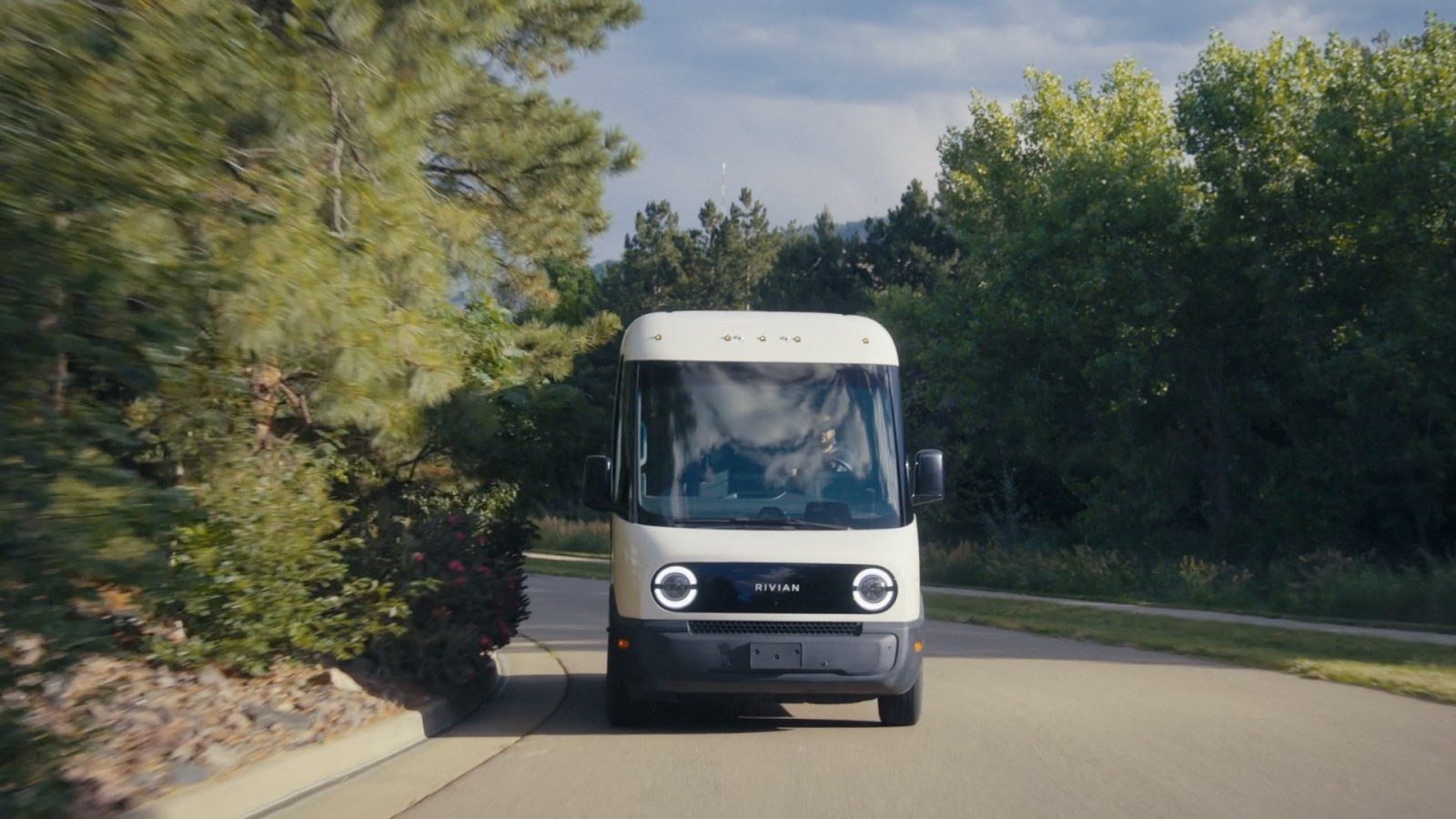

A Texas EV finance company has taken delivery of a Rivian commercial van, in what it called the first non-Amazon example of the model in Dallas.
Such deliveries remain uncommon more than a year after Rivian opened orders to outside fleets.
Xcelerate Auto said in a video posted to X on Friday that the van, an RCV 500, had been delivered a day earlier.
Most of the company’s commercial vans have gone to Amazon, which co-developed the vehicle and has deployed more than 30,000 worldwide, Rivian has said.
Last April, founder and Chief Executive Officer RJ Scaringe said there were “lots of other opportunities we see” beyond Amazon.
An early backer of Rivian, Amazon has committed to buy 100,000 of the vans by 2030.
First offered to outside fleets in early 2025, the vans are sold as the RCV 500 and RCV 700, after being built for Amazon under the EDV name.
A Rare Delivery
Xcelerate Auto said it would use the van as a “traveling bodega,” a mobile pop-up shop fitted with clothing racks and product shelves.
Built on the smaller of two body sizes, the RCV 500 offers about 487 cubic feet of cargo space, Rivian has said.
On delivery, the van showed 164 miles of range at 99% charge, with about 150 miles expected on a full charge, Xcelerate said.
Geofencing limits the vehicle to the Dallas-Fort Worth area, keeping it near charging stations, the company said.
Lacking a NACS port, the van cannot use Tesla Superchargers, but it can charge at a Rivian site and on Tesla wall connectors, Xcelerate said.
Three Amazon-branded utility keys came with the van, and an Amazon team demonstrated its features, according to the new owner.
Buyers can order and finance the vans through the company’s website.
Building Out the Customer Base
Rivian has spent the past year trying to widen its buyer pool beyond Amazon.
The company opened van orders to outside fleets in early 2025, pricing the RCV 500 from $79,900 and the larger RCV 700 from $83,900.
Each RCV 700 carries around 652 cubic feet of cargo and about 160 miles of range, Rivian has said.
Since then, the company has signed HelloFresh as its first major fleet client and added the pizza-delivery firm Slice.
Vans bearing a Cintas logo and at least one bought by Illinois service firm Wm. Masters have been spotted on the road.
DHL was seen testing the vans in 2024 without disclosing a purchase.
Disclosed fleet customers still number only a handful.
Until last year, the vans had gone only to Amazon, Rivian‘s largest shareholder, which has backed the program since 2019.
An initial 70-van order from HelloFresh, the meal-kit provider, opened the outside business in early 2025.
Larger logistics operators have yet to commit publicly, despite earlier interest in the vans.
Delivery, trades and service fleets are the main targets for the vans, Rivian has said.
Lower running costs make the vans cheaper over time, Rivian has argued.
Those wins remain small next to Amazon, but point to a commercial business that is slowly broadening.
Management Points to Amazon First
Rivian has framed demand from other fleets as a longer-term opportunity rather than an immediate driver.
On the company’s first-quarter earnings call in April, Chief Executive Officer RJ Scaringe said there were “lots of other opportunities we see” beyond Amazon.
He added that the near-term focus remained on Amazon and on ramping production to support it.
In May, Scaringe described Amazon‘s deployed fleet as a billboard that shows other operators the vans work.
Chief Financial Officer Claire McDonough grouped the commercial vans with the R1 line in guidance, rather than breaking them out.
The company expects full-year deliveries of 62,000 to 67,000 vehicles across the R1, R2 and commercial vans, McDonough said.
She said the R1 and commercial vans together would be “roughly flat relative to our 2025 delivery results.”
Demand for the vans within the Amazon network is growing meaningfully, Scaringe has said, citing years of joint work.
Volumes for outside fleets are not broken out, leaving their scale unclear.
McDonough reaffirmed the full-year delivery guidance on the same call, the company said.
Commercial-EV adoption has lagged earlier expectations, Rivian executives have said.
New Variants and 2026 Volumes
Rivian is also developing new commercial-van variants with Amazon, adding a larger battery and all-wheel drive.
The bigger pack lifts range by about 30%, while all-wheel drive is meant for routes with mud and snow, the company has said.
Scaringe has told investors the new versions will help unlock specific use cases within the Amazon network.
Current vans are front-wheel drive with a standard battery, according to the company.
To run the next phase, Rivian recently rehired Aaron Hensler as commercial-van chief engineer, eight months after he left for General Motors.
Friday’s delivery adds another small name to a still-short list of outside buyers.
Production of the new variants has not been given a firm public date, the company said.
For now, Amazon remains the program’s anchor, Rivian has made clear.
Whether outside fleets adopt the vans at scale will shape the program’s path beyond Amazon.


