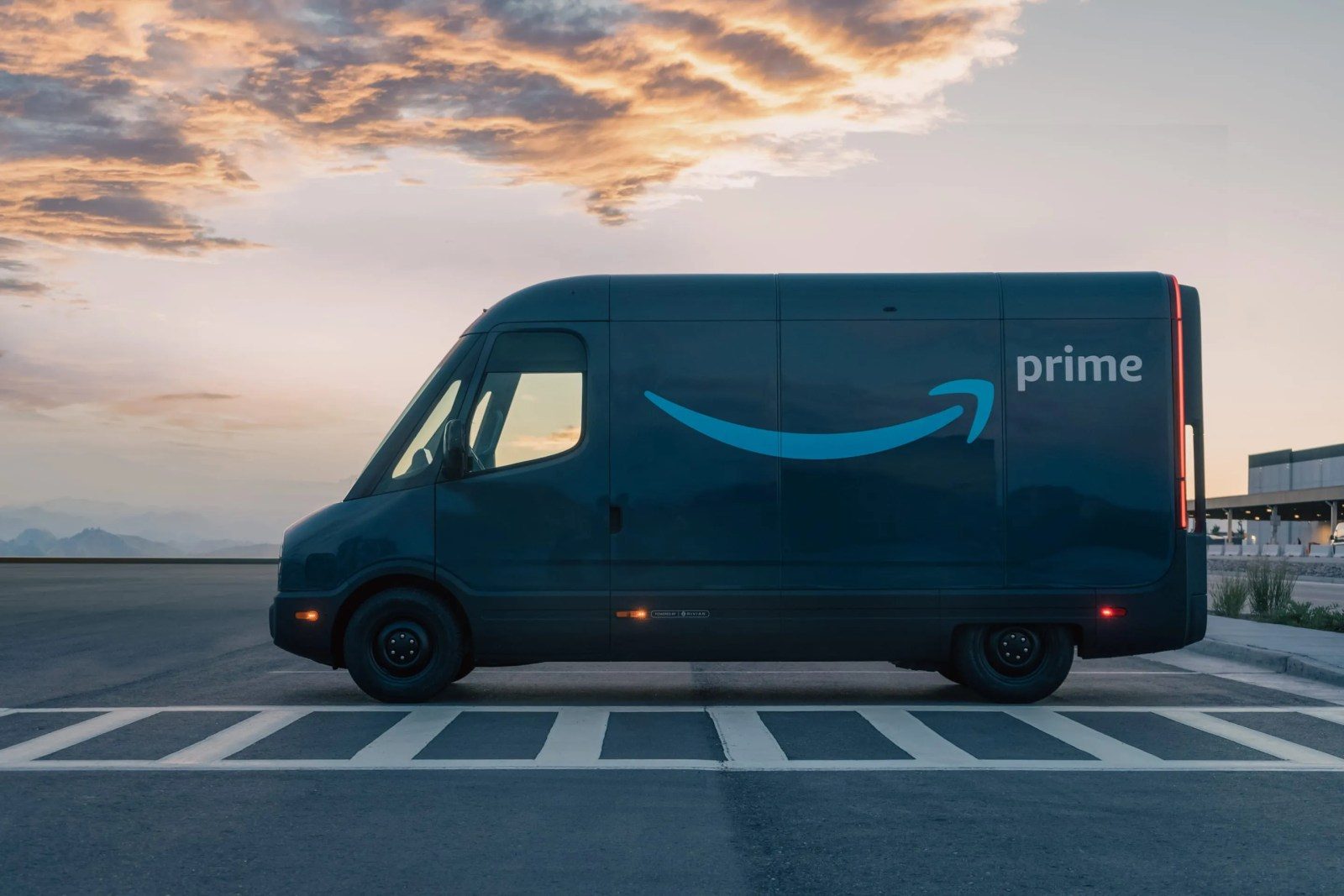

Rivian has issued a software update for its largest commercial van that adds a Google Maps navigation system and fixes a fault that could damage the drive unit during cold-weather fast charging.
The update, version 2026.07.90, covers the Commercial Van 700, the larger of the two delivery vans Rivian builds.
The release notes were first reported by the Rivian owner and X user Chris Hilbert.
(Almost Entirely) Amazon Fleet
Amazon operates more than 30,000 of the vans, up from about 20,000 a year earlier, according to Rivian‘s most recent shareholder letter.
The vehicles are deployed almost entirely in the US and have delivered more than 1.5 billion packages to date, Amazon said in October.
Rivian opened commercial van orders beyond Amazon in February 2025, but external demand remains small.
The company has announced only two fleet customers since: meal-kit firm HelloFresh, which took 70 vans in April 2025, and pizza-delivery technology company Slice, disclosed in November.
Other vans, including ones bearing Cintas and DHL markings, have been spotted in the field without confirmed orders.
Rivian sold 3,213 of the vans in the US in the first quarter, more than double a year earlier, according to Cox Automotive — a total dominated by Amazon.
The Charging Fix
The drive-unit item is the only change in the update that addresses a hardware failure.
Rivian said the update resolves a rare issue that could “cause drive unit damage during DC fast charging” after a cold ambient soak, the period a parked vehicle spends in low temperatures long enough to chill the battery.
Two other charging changes target the same turnaround.
Rivian raised the DC fast-charging heating setpoint so the battery accepts higher currents in cold and mild temperatures, shortening charge times, and fixed a fault that kept battery conditioning from starting when a van was plugged in shortly after parking.
A further change activates a sensor to improve charging times and more accurately gauge state of charge.
Google Maps
The update’s banner feature is Rivian Navigation with Google Maps, which Rivian first unveiled in July 2025.
Built on Google’s Maps Auto SDK, it replaces the Mapbox system the vehicles previously used, layering Google routing, live traffic, road incidents, search and satellite imagery beneath Rivian‘s interface and charging tools.
The company moved to Google after criticism of its in-house navigation.
Navigation was “one of the areas where we had some level of criticism,” Rivian software chief Wassym Bensaid told TechCrunch at the launch.
The overhaul reached the consumer R1T and R1S last year. Version 2026.07.90 extends it to the Commercial Van.
Amazon’s drivers navigate with the company’s own routing software, not the vans’ built-in system, leaving the new maps largely unused on the trucks that make up nearly the entire fleet.
The navigation system is aimed at the prospective fleet buyers Rivian is courting.
Smaller Changes
The update adds a notification and chime when the van detects seat-belt misuse and lets heating, ventilation or air conditioning stay active after the driver exits.
Rivian also reduced cargo-fan service notifications on the center display and added circuit protections for the cargo fans and clearance lamps.
A connectivity item adds smart Wi-Fi, letting the van switch between Wi-Fi and cellular networks to manage app responsiveness and data usage.
Amazon-Centered Roadmap
Rivian‘s next vans point the same direction.
The company said in its latest shareholder letter that it is developing larger-battery and all-wheel-drive variants that will “expand EDV route coverage in Amazon’s network,” adding roughly 30% more range and improved traction.