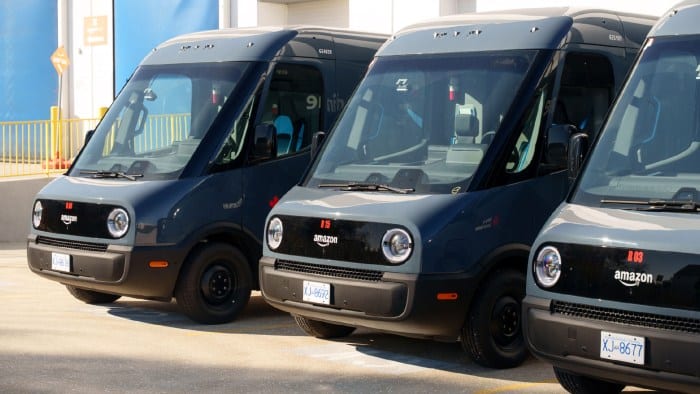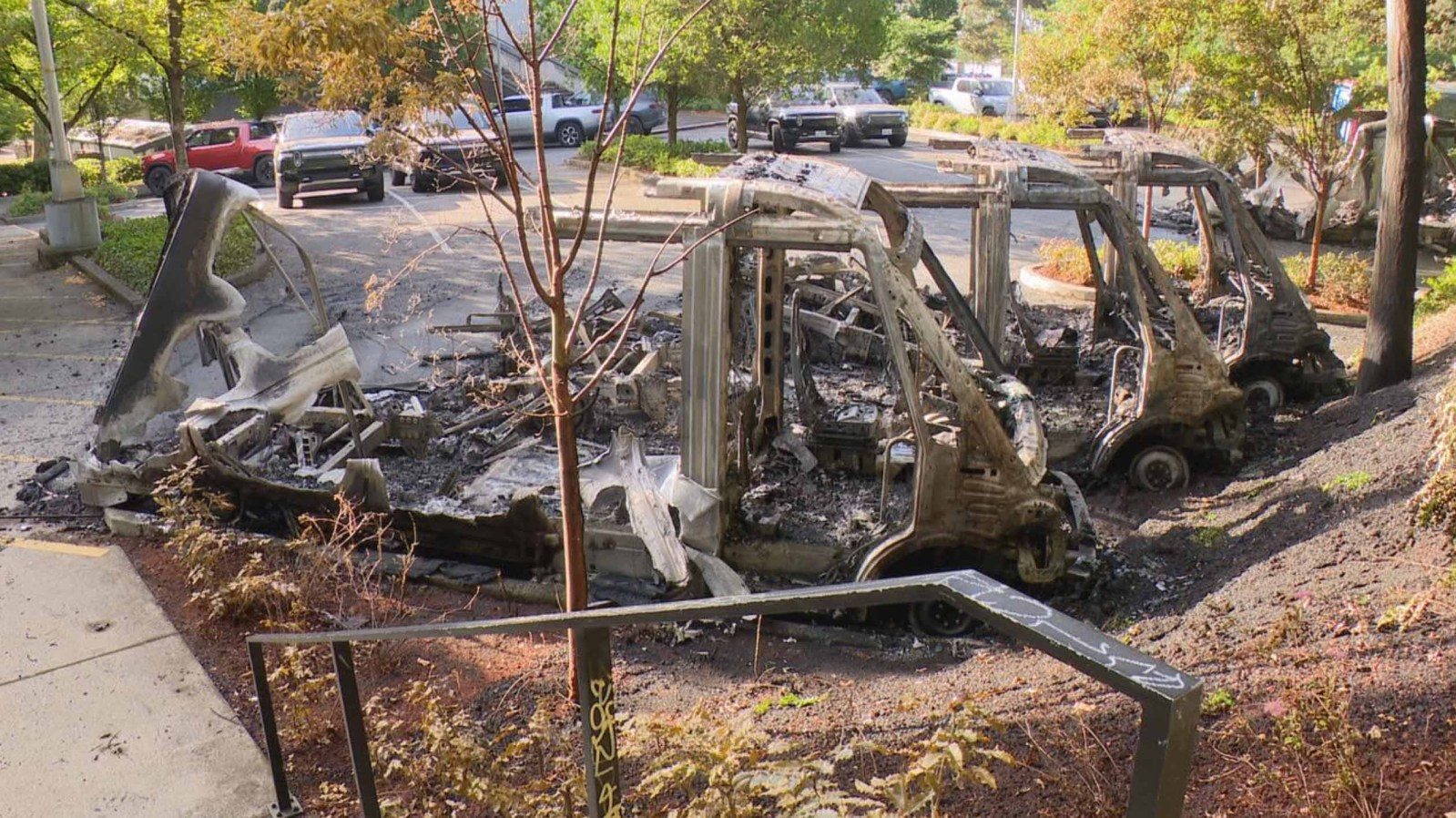

Four Amazon electric delivery vans, co-developed and built by Rivian, were destroyed in a fire that investigators believe was deliberately set in Southwest Portland, Oregon.
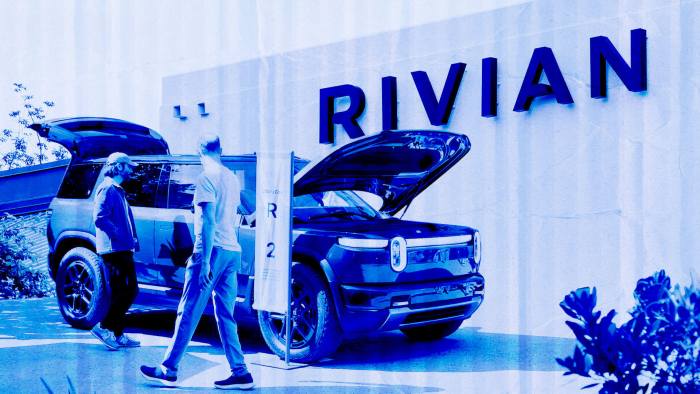
The blaze broke out shortly before 2:30 a.m. on Monday at a lot beside the Rivian service center on Southwest 1st Avenue.
A single engine was sent at first, but crews arrived to find multiple vans fully engulfed and an early belief that as many as five were involved — according to Portland Fire & Rescue.
Firefighters held the fire to the four vans and reported no injuries.
An arson case with no suspect named
Investigators from the Portland Fire & Rescue and Portland Police Bureau arson unit determined the fire was intentionally set.
Fire officials said they reached that conclusion in part after reviewing video that showed behaviour suggesting the blaze was deliberate, though they declined to share further detail.
No suspect, arrest or motive has been made public as of early Tuesday.
Authorities asked anyone with information to call the fire information line or email the police arson tips address.
Officials have not tied the fire to any broader pattern, and nothing in the early reports indicates the vans were targeted for being electric or for carrying Amazon branding.
Why an electric fleet burns differently
The vans’ lithium-ion batteries turned what looked like a routine vehicle fire into a far more hazardous one.
Portland Fire & Rescue spokesperson Rick Graves told KATU that the packs were already so compromised by the time crews could act that water could not be applied safely, leaving responders to let the cells burn out.
The only way to fully extinguish such a fire, Graves said, is to allow the batteries to be “completely consumed by the fire that is present.”
Lithium-ion cells can enter thermal runaway, a self-sustaining reaction that generates its own heat, releases toxic and flammable gases, and can reignite long after a deluge of water.
Crews carry a specialised nozzle built to pierce a battery compartment and flood it from the inside, but found the vans too far gone to use the tool effectively.
After about 90 minutes, the fire left the vehicles as little more than aluminium shells.
Amazon said it was cooperating with investigators and was grateful no one was hurt.
The vans at the centre of the blaze
The destroyed vehicles belong to the electric delivery van programme that binds Rivian to its largest customer.
Amazon ordered 100,000 of the custom vans from the Irvine, California-based company in 2019 and has taken delivery of more than 30,000, a figure that makes four burned vehicles a negligible slice of the fleet.
Rivian founder and chief executive RJ Scaringe has said the 100,000-unit target remains on track and that the company is already weighing what comes after the initial contract.
Amazon’s weight in the business has only grown.
In the first quarter, Rivian recognised $468 million in Amazon-related revenue, up from $99 million a year earlier and equal to roughly half its automotive revenue, according to its quarterly filing.
That 373% jump underscores how central the retailer remains even as deliveries to other buyers begin.
The anchor customer may soon lean on the vans harder still, having signalled in March that it would cut its reliance on the US Postal Service and push more parcels through its own delivery network.
Building out the customer base
Rivian has spent the past year working to widen the buyer pool beyond Amazon.
The company opened van orders to outside fleets in early 2025, pricing the EDV 500 from $79,900 and the larger EDV 700 from $83,900.
Each EDV 700 carries around 652 cubic feet of cargo and about 160 miles of range, while the EDV 500 offers roughly 487 cubic feet.
Since then it has signed HelloFresh as its first major fleet client and added the pizza-delivery firm Slice.
Vans bearing a Cintas logo and at least one bought by Illinois service firm Wm. Masters have been spotted on the road, while DHL was seen piloting the vans in 2024 without a disclosed purchase.
Those wins remain small next to Amazon, but they point to a commercial business that is starting to broaden.
New variants and 2026 volumes
Rivian is also co-developing new EDV variants with Amazon, adding a larger battery pack and all-wheel drive to a line-up that is currently front-wheel drive with a standard pack.
The bigger battery lifts range by about 30%, while all-wheel drive is meant to handle routes with mud and snow.
Scaringe has told investors the new versions will “help unlock specific use cases within the Amazon network.”
To run the next phase, the company has recently rehired Aaron Hensler as commercial-van chief engineer, eight months after he left for General Motors.