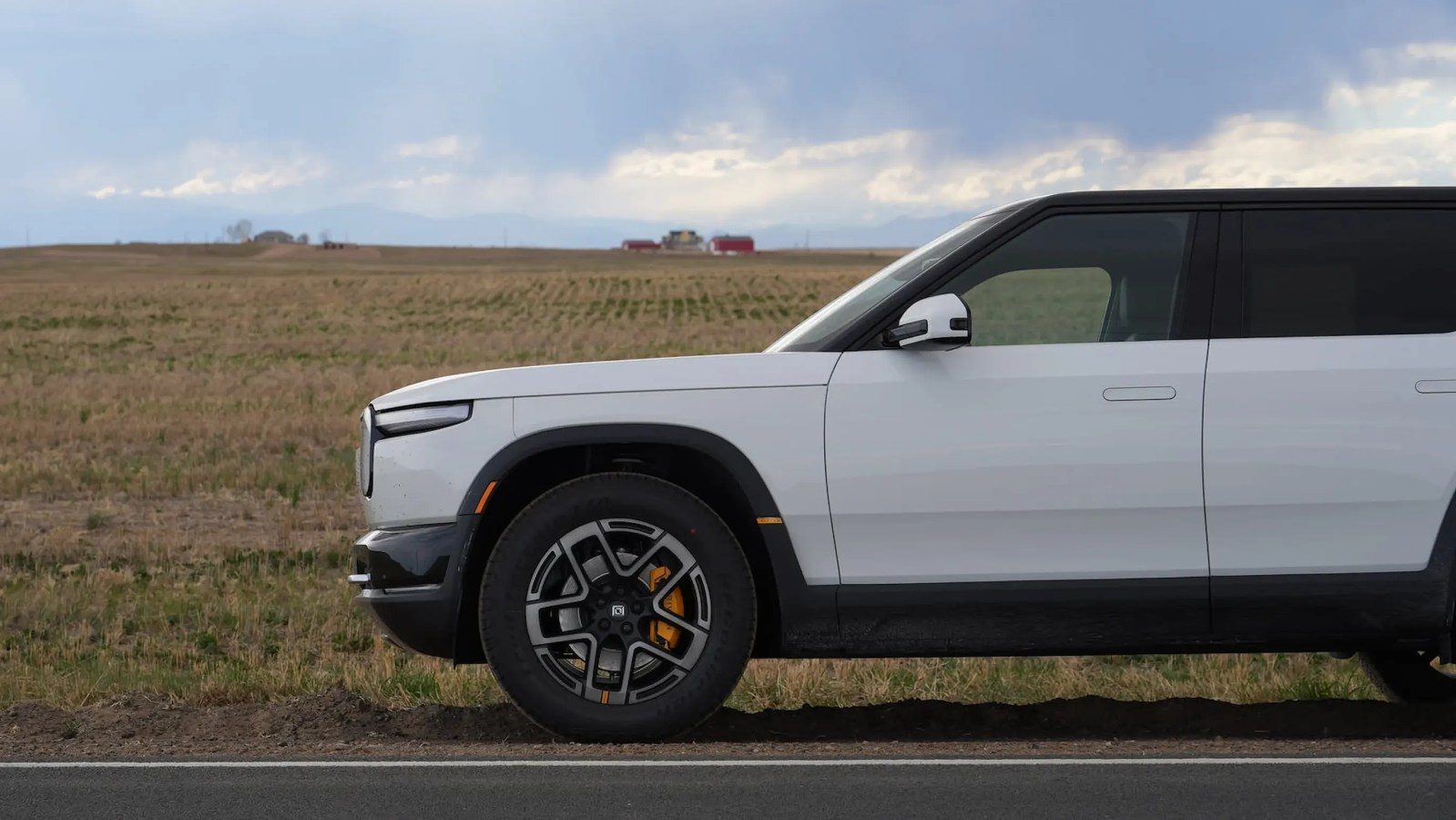

A second independent range test has found Rivian‘s R2 Performance falling short of its 330-mile EPA estimate — this time by 7.9% rather than the 23.3% shortfall recorded at highway speed a week earlier.
In results published on Thursday, a 2027 R2 Performance on 21-inch wheels traveled 304 miles in the Edmunds EV Range Test, 26 miles below the figure on its window sticker.
The result equals 92.1% of the SUV’s EPA rating — a markedly better outcome than the 253 corrected miles, or 76.7% of the rating, the same configuration delivered in Out of Spec Reviews‘ constant 70 mph run on July 29.
Taken together, the two tests indicate that the R2’s real-world range depends heavily on speed.
In mixed driving the SUV lands within reach of its rating, while at a sustained 70 mph the gap widens to nearly a quarter.
Edmunds described the shortfall as “surely disappointing but not really a deal-breaker,” arguing the R2 offsets its range deficit with acceleration, towing capacity and off-road hardware that longer-range rivals do not match.
How the Two Tests Differ
The Edmunds methodology is built to reflect everyday use rather than a highway stress case.
Each vehicle follows a fixed route split 60% city and 40% highway at an average speed of 40 mph, stays within 5 mph of posted limits, runs in its most efficient drive setting and keeps the climate control on auto at 72 degrees Fahrenheit.
Out of Spec held a GPS-verified 70 mph from full charge until the vehicle could no longer sustain the speed.
That contrast extends to one caveat from the July result.
The 70 mph run took place in 98-degree ambient heat, imposing a heavy air-conditioning load; Edmunds holds the cabin at 72 degrees as part of its protocol, though the outlet does not disclose ambient conditions during its test.
Both outlets tested the configuration that carries the SUV’s highest range estimate — 21-inch wheels, which Edmunds notes ride on all-season tires. The 20-inch wheel and all-terrain tire combination is rated at 307 miles.
Efficiency and Charging
Consumption came in above the official figure as well.
The EPA rates the R2 at 32 kWh per 100 miles; the Edmunds team observed 33.6 kWh per 100 miles, a deficit the outlet puts at 4.7% and which largely explains the lower range result.
Charging performance partially offset the gap. The test recorded a peak rate of 187 kW and an average of 133 kW across the session, with the R2 adding 100 miles of range in 15 minutes and 9 seconds.
Rivian says the R2 charges from 10% to 80% in 29 minutes.
How Rivals Compare
The 304-mile result trails the road-focused electric SUVs Edmunds has run through the same route.
Chevrolet‘s smaller 2025 Equinox EV 2LT covered 356 miles, a 52-mile advantage, while the all-wheel-drive 2026 Tesla Model Y Long Range Launch Series reached 327.
Against quicker all-wheel-drive rivals, the result reads differently. The R2 traveled 11 miles farther than the 2026 Model Y Performance and 22 miles farther than the 320-horsepower Hyundai Ioniq 5 Limited AWD.
On the specification sheet, the R2’s two motors produce 656 horsepower and 609 lb-ft of torque, good for a 3.6-second sprint to 60 mph, alongside 9.6 inches of ground clearance and a 4,400-pound towing rating.
By comparison, the Model Y Long Range takes 4.1 seconds to reach 60 mph, offers 6.6 inches of clearance and tows 3,500 pounds.
Edmunds praised the R2’s composed ride, spacious cabin, supportive seats and responsive infotainment, while flagging light, slow steering, tire noise on some surfaces and a loud air-conditioning blower that struggled to cool the cabin quickly.
Buyers of the $58,000 Performance version, the outlet concluded, should expect closer to 300 miles in real-world driving.
Context
The July highway test drew a sharper contrast because a Model Y Performance running simultaneously on the same road exceeded its own 306-mile rating, finishing 27 percentage points ahead of the R2 as a proportion of each car’s sticker figure.
Out of Spec founder Kyle Conner attributed that gap to the certification system rather than to either manufacturer, arguing the two vehicles were rated under different EPA test cycles.
The same outlet published a separate efficiency comparison finding the R2 consuming between 18.4% and 26.5% more energy than the Model Y at every speed measured.
Chief executive RJ Scaringe has said the R2 matches Model Y efficiency, and Needham last month called the R2 the first legitimate competition the Tesla crossover has faced.
Rivian reported second-quarter results on July 30, narrowing its adjusted EBITDA loss to $379 million, while disclosing no R2 build or delivery count alongside a company-record 57,000 demo drives.
The Performance remains the only R2 trim buyers can currently take delivery of. Scaringe said three times on the earnings call that the remaining trims would arrive in early 2027.
Contacted by EV about the Premium trim delay, the company said its plans remain unchanged, with deliveries of the second trim starting later this year and the Standard trim following in 2027.
The scrutiny arrives as R2 volume builds.
Rivian’s US sales hit a 2026 high in July, the model’s first full month on sale, after Cox Automotive data implied roughly 789 R2 units reached US buyers in the second quarter.
Competition on price has intensified as well — a 2026 Lucid Gravity Touring can now be leased for less per month than the R2 Performance despite a $23,000 sticker gap.