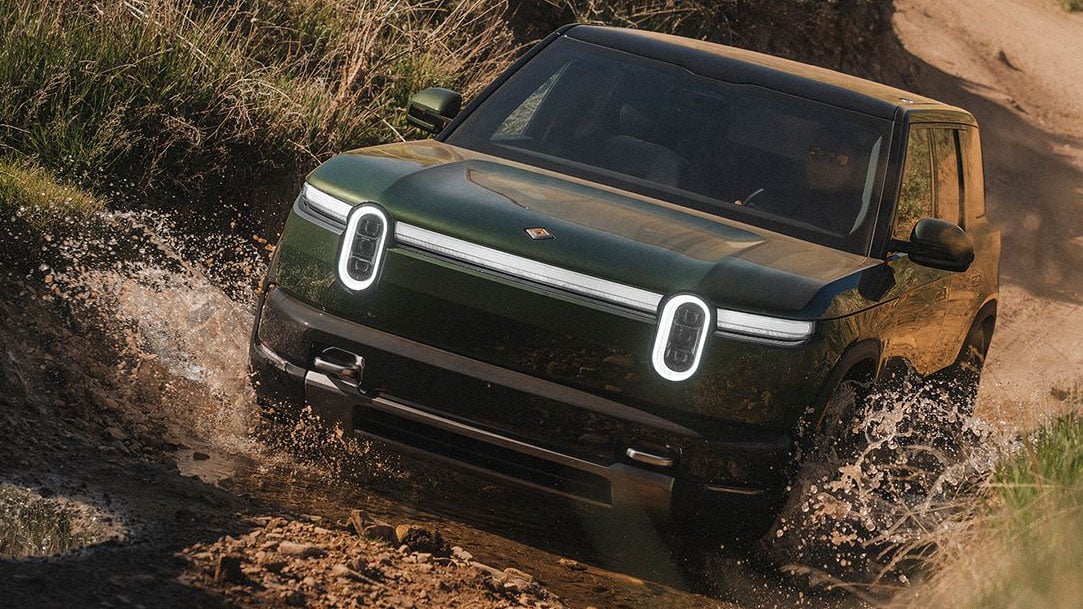
Rivian‘s R2 Performance covered 212.3 miles at a steady 70 mph in a cool-weather highway test published on Tuesday, about 69% of its EPA rating, adding to a wave of complaints from reviewers and owners about the SUV’s range as temperatures fall.
The result, from Kyle Conner’s Out of Spec Review channel, put the R2 about 70 miles behind a Tesla Model Y L that used less energy, and well behind a BMW iX3 that went 339.7 miles, in a side-by-side run that started at about 58°F and dropped into the 40s overnight.
“This thing sucks on range. There’s no way around it,” Conner said in a comparison of the three SUVs posted on Monday, adding that “it’s a pain in the ass to get places because it doesn’t have the range.”
“I really think this thing needs 100, 110 kWh battery pack to be acceptable,” he said.
In the same video, the iX3’s result was described as “60% better for the same money,” and one host said “I could not live with the range of the R2,” calling it “a non-starter” after the overnight run, although the hosts also said “a lot of people just charge at home though and they can live with the R2 just fine.”
The Numbers
The team set all four SUVs to their door-card tire pressures, DC fast charged them to 100% and preconditioned the batteries before driving a loop on Interstate 64 at a GPS-set 70 mph until each car ran out of energy.
The R2 was a Performance borrowed from an owner, with just over 1,500 miles on it, and Conner said the team “could not find” one on the 21-inch road wheels for the test.
The R2 in the test ran Rivian’s optional 20-inch all-terrain tires, a setup the EPA rates at 307 miles and 99 MPGe combined, against 330 miles and 105 MPGe for the same trim on 21-inch all-season tires, according to its window-sticker ratings.
The R2 displayed 311 miles of estimated range at 100%, reached 50% after 109 miles at 2.42 miles per kWh and 25% after 164 miles at 2.46.
Against the EPA’s separate highway-only range estimate of 276 miles for the all-terrain R2, the result equals 76.9%.
It averaged 2.45 miles per kWh over the full run, which implies about 86.7 kWh drawn from a pack that Conner said Rivian rates at about 88 kWh.
The Model Y L showed 286 miles on its trip meter, which Conner said was “probably closer to 280” because its speedometer reads optimistically, on 81.1 kWh, or about 3.5 miles per kWh, so the Tesla used about 7% less energy and still went approximately a third farther.
The iX3 used 112.7 kWh, the largest pack in the group, at about 3 miles per kWh, while Toyota‘s Lexus RZ 450e went 189 miles on just under 70 kWh, a shorter distance than the R2 but at higher efficiency.
“Under 2 1/2 miles per kilowatt hour in the Rivian R2 at 70 mph. That’s rough,” Conner said, adding that road tires “probably would have” helped “a little bit” but “it wouldn’t have made a major difference.”
“At the end of the day, the R2 in my opinion for highway driving just feels 10, 20, 25 kilowatt hours short on battery capacity,” he said.
One of the drivers reported temperatures of 48 to 49°F and crosswinds of around 10 mph for much of the run, which he said the loop format could not counteract, while another said at the halfway mark that “it’s not even that cold out.”
The cars’ speed was set by GPS, but the distances came from their trip meters rather than a GPS log, despite a widely shared post on X describing the run as “GPS-verified.” “We really should GPS log these. We’re working on it,” Conner said on camera.
Two Tests, Two Seasons
The cool-weather figure is the second Out of Spec highway result for the R2 to circulate widely.
In a warm-weather run on July 29, an R2 Performance on the more efficient 21-inch tires covered a corrected 253 miles at 70 mph, or 76.7% of its 330-mile rating, while a Model Y Performance beat its own rating, and Edmunds’ range test later found 304 miles, 92.1% of the rating.
MotorTrend recorded 263 miles at a constant 70 mph in a test published on August 6, calling it “a big 20 percent miss,”while Tom Moloughney’s State of Charge channel reported just over 259 miles at 70 mph in Colorado in July on the same 20-inch all-terrain setup tested this week.
Conner’s latest run is not a like-for-like comparison with July, since the tires and temperatures both changed, and the EPA rates the all-terrain setup 23 miles lower.
Car and Driver‘s 75-mph highway test, published on October 14, put the gap from the tires alone wider, at 260 miles for an R2 Performance on 21-inch wheels and 220 miles on the all-terrains, which suggests the road tires would have made more difference than Conner estimated.
He also said Rivian recommends 70% for daily charging against 80% for Tesla and BMW, while Rivian’s own R2 charging guide tells owners to “set a charge limit of 70 to 80 percent for everyday driving and go to 100 percent for road trips.”
Conner was positive on charging, saying the R2 reached about 230 kW in his testing, held its power “for quite a long time” and charged from 10% to 80% in “well under 30 minutes,” beating Rivian’s own estimate.
The reviewer said he “still loves the R2” and would “personally probably want it over a lot of its competition,” he said, but “it comes with the caveat of knowing that it’s not going to be the highway range cruiser.”
Owners Report Cold Behavior
The test followed an owner-run cold-weather video by David Vaught, who drove his R2 in temperatures in the high 40s and low 50s and wrote that “what I observe during this test does not inspire much confidence in the behavior of the car and the BMS, especially when thinking of actual cold temperatures some people may experience.”
“I drive the R2 in pretty mildly cold weather and experience some concerning behavior and not great efficiency results,” he wrote on X on October 17, linking a video titled “Rivian R2 ‘Cold’ Weather Testing (Range + Charge Tests)” with a chapter labeled “Really Weird Battery Behavior.”
Vaught covered 90.1 miles, mostly at a GPS-set 75 mph, and logged 2.00 miles per kWh, which he called “impressively poor” for the conditions, against 2.53 on the same route on an 80-degree day.
He also said the battery temperature readings dropped by “10 or 15°” within seconds during the drive, which he said “almost seems like a sensor issue,” and that the car did not appear to warm the battery.
Vaught said he hoped the behavior was not representative and that most of it was “programming” Rivian had yet to address because it had not been very cold in many places, and another owner replying to him described the HVAC failing to deliver warm air in the high 30s.
Coleton Guerin of Out of Spec Detail, part of the same media group, wrote on Tuesday that the “R2 is going to easily be a sub 200 mile range car in the dead of winter.”
Rivian’s support pages say that “when your battery gets cold, you may see some energy become temporarily unavailable,” shown by blue shading on the battery graphic, and advise keeping the vehicle plugged in when possible.
The Model Y Claim
The criticism lands harder because Rivian has pitched the R2 as matching the Model Y on efficiency.
“If you were to compare it to, let’s say, a Model Y, it’s as efficient on a watt-hours per mile or miles per watt-hour basis despite the capabilities it has and despite the form factor that we’ve intentionally chosen,” Founder and Chief Executive RJ Scaringe told media at the R2 launch, in remarks Out of Spec replayed.
The EPA figures support him on paper, with both the R2 Performance and the Model Y Performance rated at 105 MPGe and 32 kWh per 100 miles, but Out of Spec’s July comparison found the R2 using up to 26.5% more energy than the Tesla at every speed tested, after which Conner said “everyone needs to stop saying that it’s matching the efficiency of Model Y.”
Rivian sold 3,456 R2s in the US in the third quarter, according to Cox Automotive estimates, and has pushed its second R2 trim to early 2027, leaving the Performance as the only version on sale as winter arrives.
The company reports third-quarter results on October 29, with its shares at a 14-month low this week.