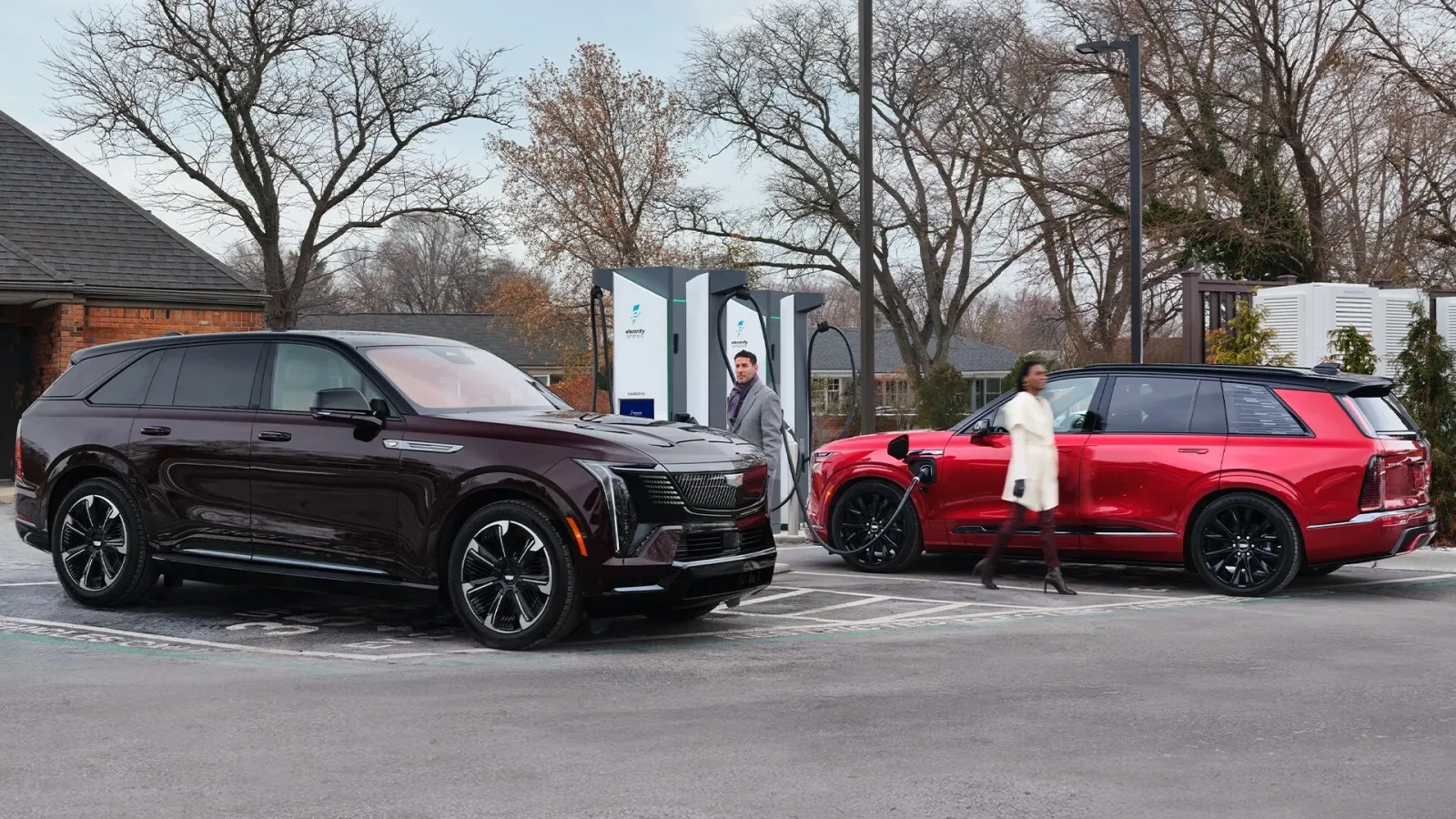
California had 224,438 EV charging ports at public and limited-access sites as of June 30, putting the state 47% of the way to the network it says it will need by 2030, according to data released by the California Energy Commission (CEC).
California added 7,993 charging ports in the first half of 2026, a 3.7% increase from the 216,445 the CEC reported as of December 2025. The 200,000 mark was passed three months earlier, in September.
The charger figures were released alongside the CEC’s third-quarter sales data, which showed Californians bought 80,392 new zero-emission vehicles (ZEVs) in the period, or 19.1% of new light-duty vehicle sales.
That data also showed Rivian registering 2,083 R2 SUVs in the state in its first full quarter of deliveries, while Lucid’s California sales fell 11.6% from a year earlier.
Fast Chargers Outpace Level 2
DC fast charging ports rose to 22,995 from 21,283 in December, an 8.0% increase. The CEC says DC fast chargers can deliver almost a full charge in 15 to 45 minutes, depending on the vehicle and charger.
Level 2 ports rose 3.2% to 201,443 over the same period, and DC fast ports now make up 10.2% of the public and limited-access network, up from 9.8%.
Most of the growth came at fully public sites, where Level 2 ports climbed 7.0% to 76,091 and DC fast ports rose 8.5% to 21,861.
Since the CEC started tracking charging ports in 2021, public and limited-access ports have increased 186% and DC fast ports 221%, the commission said.
The headline total excludes 787 Level 1 ports listed in the same dataset, as well as an estimated 1,179,497 chargers at single-family homes and residential properties of up to four units, which the CEC reports separately.
LA Holds Over 40%
Los Angeles County had 92,992 public and limited-access ports, or 41.4% of the state’s total, according to EV’s analysis of the data.
It also led in DC fast charging with 4,486 ports, or 19.5% of the statewide figure.
In April, Rivian agreed to deploy more than 150 public DC fast chargers across developer Caruso’s properties in Los Angeles.
Santa Clara County ranked second with 36,556 ports, 71.4% of them at limited-access sites rather than fully public locations.
San Diego County, with 14,340 ports, and Orange County, with 12,245, followed, and the four counties together held 69.6% of all ports in the state.
San Bernardino County ranked only eighth by total ports but fourth for DC fast ports, with 1,582, and 83.2% of its ports were fully public. Two of California’s 58 counties, Alpine and Sierra, had no DC fast ports.
Almost Halfway to 2030
The CEC’s third Assembly Bill (AB) 2127 Electric Vehicle Charging Infrastructure Assessment, a staff report also published last Friday, projects California will need 478,000 public and limited-access charging ports to support 6.8 million light-duty EVs in 2030.
That total includes 53,000 DC fast ports, 136,000 ports at large multifamily housing and 289,000 public and nonresidential limited-access Level 2 ports, the report said.
“With 224,438 currently installed, the state is almost halfway to its estimated 2030 charging need,” the CEC said in its press release.
To reach the 2030 projection, California would need to add roughly 253,600 ports, including about 30,000 DC fast ports.
Under a lower “Federal Obstacles to EV Adoption” scenario of 4.4 million EVs in 2030, the need falls to 342,000 ports, including 42,000 DC fast ports.
The CEC expects that much of the charging for light-duty EVs will happen at single-family and small multifamily homes, according to the report.
Projected Need Cut by More Than Half
The new projection is 52.7% below the 1.01 million public and shared private chargers that the CEC’s second AB 2127 assessment, published in 2024, said would be needed to support 7.1 million plug-in EVs in 2030.
The CEC attributed the change to scenarios with fewer vehicles and to assumptions about charging away from home that are “shifted substantially toward DCFC and away from L2 charging.”
The third report also groups small multifamily buildings of up to four units with single-family homes, which it said reduces the multifamily port count compared with prior assessments.
California has installed DC fast ports “in larger numbers than state goals set in Executive Order B-48-18,” the report said.
That 2018 order set a goal of 250,000 chargers, including 10,000 DC fast chargers, by 2025, according to the CEC.
As of June 30, the state’s 22,995 DC fast ports were more than double the fast-charging goal, while the overall count remained below 250,000.
Fleet and Funding
By the end of 2025, California had 2,200,984 fully electric and plug-in hybrid light-duty vehicles registered in the state, according to CEC.
That equals about 10.2 plug-in vehicles per public or limited-access port at the end of 2025.
The assessment notes that light-duty EV sales fell in the fourth quarter of 2025 and early 2026 after federal incentives were eliminated, a drop that hit California registrations late last year.
The state has since launched the MyFirstEV rebate, which the CEC said has helped put 12,000 new clean cars on the road since it began in August.
In August, the CEC also approved a $95.2 million investment plan for fiscal year 2026-2027, including $48 million for light-duty EV charging focused on DC fast charging and at-home or near-home charging.
The CEC updates its charging port counts on a semi-annual basis, using CEC voluntary surveys, grant recipient data, the US Department of Energy’s Alternative Fuels Data Center (AFDC), PlugShare, publicly available reports and other online sources.