
Nio’s management on Friday commented that staff departures at the electric vehicle maker are part of a broader operational restructuring, as the company targets profitability in the final quarter of the year.
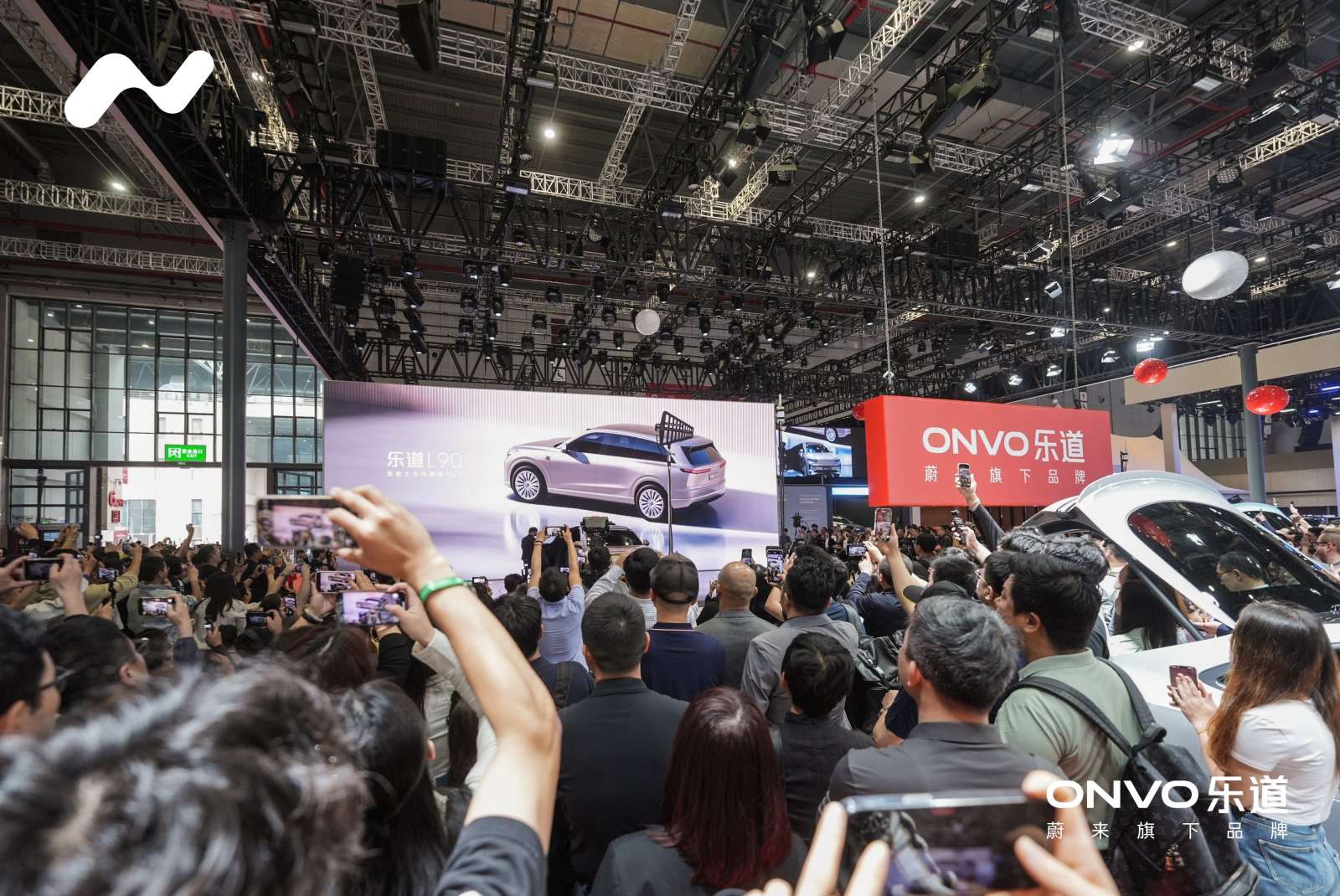
Speaking at a media Q&A held less than a day after the pre-sale launch of the Onvo L90 SUV in Hefei, Li was joined by co-founder and president Lihong Qin, and senior vice president and Onvo’s head Fei Shen.
Asked about recent layoffs, which affected teams in China but also in Europe and the US — Nio’s CEO said that the company is deepening the implementation of its Core Business Unit (CBU) model.
Under the model implemented earlier this year, each team is responsible for delivering user value and overall business performance.
“Anything that doesn’t create user value should not be pursued,” he stated. “Based on these principles, some colleagues have left the company — either voluntarily or involuntarily,” Li added.
The CEO said some former Nio employees still reach out to him with their best wishes for the company.
“We are deeply saddened by their departure. They are all outstanding, and I often receive messages from former employees wishing the company well in overcoming its current challenges,” he stated.
“Nio represents the effort and hope of many people,” Nio’s chief added. “Our responsibility is to run the company well and prove to both current and former employees that Nio can emerge from this low point through its own capabilities.”
Fei Shen, a Nio veteran who was appointed to lead the Onvo brand last April, was asked about the morale in the team after the job reductions.
“I wouldn’t call it layoffs,” he stated. “It’s more about adjusting and aligning the team with our current strategy. At least within Onvo, morale is steadily improving.”
“Sales are rising, and the new product launches are bringing clarity to our operations,” Fei added, according to the Q&A transcript shared by Cnevhome.
In March, Nio’s CEO said that “more than 20” vice presidents had either voluntarily departed or been asked to leave since the company’s founding in late 2014.
Under the CBU structure implemented earlier this year, departments are required to calculate their own return on investment, and company executives say cost control will remain a top priority.
The automaker has committed to reducing research and development spending to between 2 billion and 2.5 billion yuan ($279 million–$349 million) per quarter — a 20% to 25% year-on-year decline.
The company expects a sequential reduction in selling, general and administrative (SG&A) expenses beginning in the second quarter.
Back in March, Li had stated that Nio would no longer implement top-down layoffs.
In an interview with China Entrepreneur Magazine, he said the company had “paid a lot of tuition” over the past decade.
“If we could do it all over again, we definitely could have saved a lot of money,” he said. “But we do what needs to be done, and we’ll do it very quickly.”
As part of its ongoing strategic review, Nio has suspended projects deemed unlikely to deliver near-term returns and postponed others.
The previously announced expansion into the U.S. market — a plan first unveiled in January 2021 as part of its ambition to enter more than 25 countries and regions by 2025 was halted last month.
In June, EV reported that Nio had laid off Saurabh Bhatnagar, its Chief Business Officer for the US organization, as part of the retrenchment.
The decision to halt U.S. expansion has been accelerated by worsening trade tensions and new tariffs introduced earlier this year by former US President Donald Trump, a person familiar with the matter told EV.