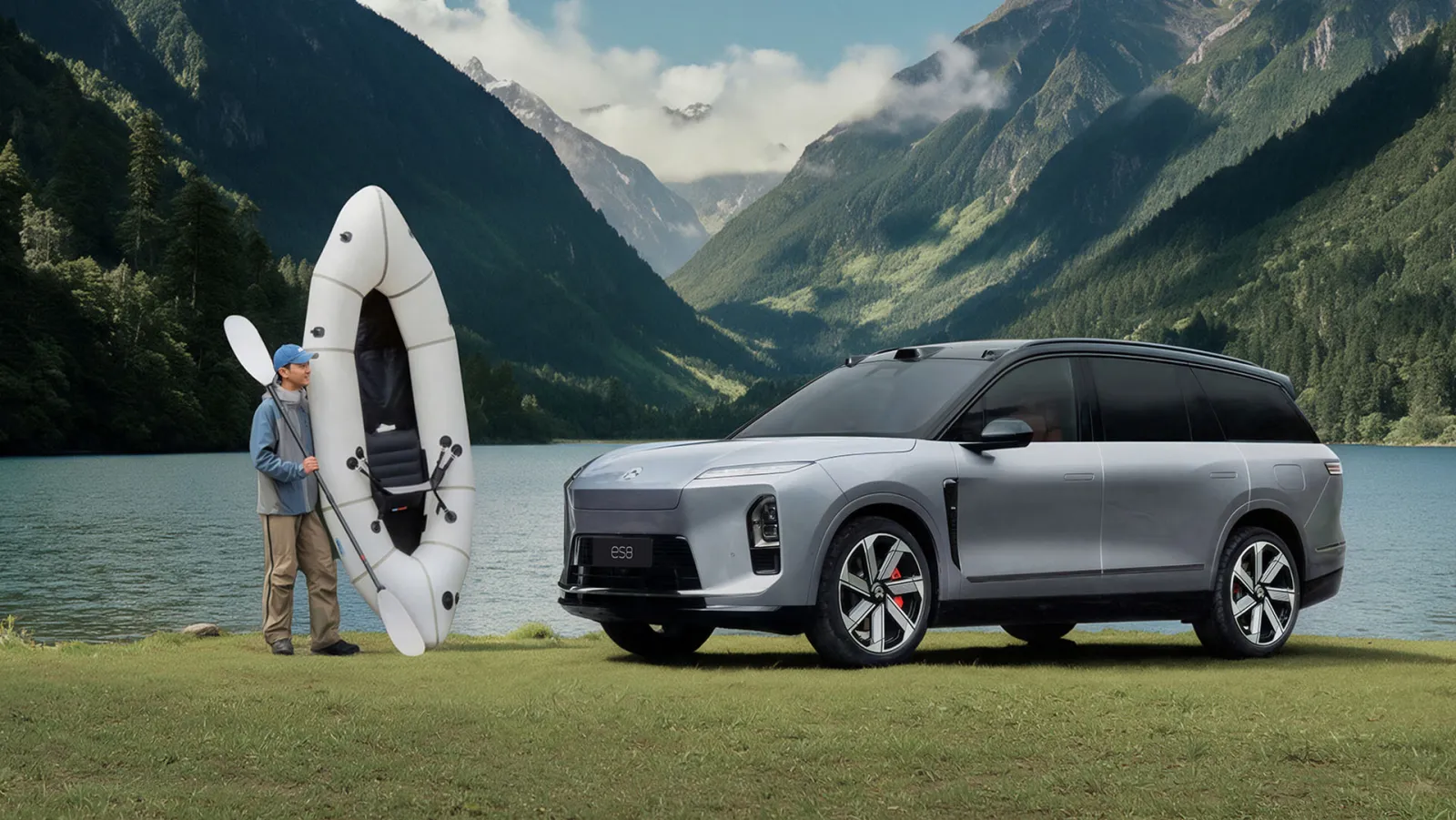
Nio did not register a single new car in Germany in October, according to data published on Wednesday by the Federal Motor Transport Authority (KBA), down from 16 a year earlier.
It is the first month without a new registration for the Chinese EV maker in Germany since at least January 2023, and it follows a single registration in September.
Nio has registered 20 vehicles in Germany in the first 10 months of the year, down 91.2% from 227 in the same period of 2025. Its 2026 total is now below the 47 it registered in July 2025 alone.
The premium EV brand has not reached double digits in any month this year.
It registered one vehicle in January, five in February, two in March, one in April, three in each of May, June and July, and one in each of August and September.
That compares with an average of almost 23 a month in the first 10 months of 2025, when its weakest month was October, at 16.
Nio registered 325 vehicles in Germany in 2025, down from 398 in 2024 and 1,263 in 2023, its first full year in the market. That 2025 total included 89 in December alone.
KBA counts first registrations only. Nio sells its remaining discounted stock in Germany as cars with a short-term registration, meaning they have already been registered once, so a sale to a customer does not appear as a new registration. The data may therefore understate how many cars Nio is handing over.
Nio’s European registration figures have also been distorted by its subscription model since 2022, as vehicles are registered once they enter the subscription fleet.
Rivals Accelerate
Nio’s zero came in a month when fully electric cars took 37.0% of the German market, above September’s record 34.5%. Battery electric registrations rose 79.5% to 94,086 out of 254,492 new cars, the KBA said.
BYD remained the largest Chinese brand, with 5,173 registrations, up 54.3% from a year earlier but down 14% from 6,040 in September. MG Roewe, owned by SAIC, registered 4,140, up 48.5%.
Leapmotor registered 3,661, up 288.6% from a year earlier and 38% from September. XPeng registered 1,380, up 284.4% and 10% more than in September.
Over 10 months, BYD has registered 47,961 vehicles in Germany, MG Roewe 31,503, Leapmotor 19,705 and XPeng 8,403, against Nio’s 20.
Geely, which the KBA has listed as a separate brand only since this year, registered 981 cars. Among its other brands, Lynk & Co registered 174 and Zeekr 80, while Polestar fell 48.0% from a year earlier and 36% from September to 292.
Smart, the Mercedes-Benz and Geely joint venture, registered 772, up 59.5%.
Tesla registered 2,932 cars, up 290.9% from a year earlier but down 77% from September’s 12,552, its strongest month since 2022.
Lucid, which sells only in small volumes in Germany, registered 42 cars, up from one a year earlier and 26 in September. Its 10-month total of 208 is more than 10 times Nio’s.
One Hub Left
October was the first full month since Nio closed two of its three German sales and service hubs.
The company told users it would shut its sites in Cologne and in Weiterstadt, near Frankfurt, by the end of September, leaving Munich as its only combined sales and service hub in the country.
“It is not a retreat,” Nio said at the time. “NIO is leaving neither Europe nor Germany.”
In its message to owners in the Nio app, a company representative described the closures as “a planned optimisation in response to a European market that is changing for all manufacturers, through tariffs, more competition and slower market development,” electrive reported.
Xiaomi representatives have visited the Munich hub several times as part of talks between the two carmakers about the site, a person familiar with the matter told EV in October. It is not known whether they reached an agreement.
The Hamburg Nio House closed in July, the first of the company’s flagship European showrooms to shut.
Nio’s German unit has had no General Manager since February, when it dismissed David Sultzer after registrations fell to one in January. His deputy, Christian Wiegand, left at the end of July and joined XPeng. Germany is now managed by Nio’s European team.
The dismissal came as Nio restructured its European business, moving to distributors and dealers in every market except Norway.
Old Stock, No New Models
The cars Nio sells in Germany are from the 2023 and 2024 model years. Nio told European owners in May that no updated models will reach Europe until late 2027.
In early October, Nio’s German offers page listed the ET5 sedan at 30,850 euros ($34,700) and the EL6 SUV at 51,000 euros ($57,400), after cuts of up to 37% made in March.
The Firefly small car, which the group sells in other European markets, is not offered in Germany.
Nio’s family-focused Onvo brand will not reach Europe before 2028 or 2029, the company told EV in September, delaying its launch from the 2027 date Chief Executive Officer William Li gave in November 2025.
“We continue to believe strongly in Europe’s long-term potential,” Li said in the memo. “That is why we will take our next steps in Europe deliberately, with the necessary discipline and at a pace that enables sustainable growth, rather than pursuing expansion for its own sake.”
Chinese-built Nio cars face a combined 30.7% tariff in the European Union, made up of the standard 10% duty and a 20.7% countervailing duty.
Nio still invests in the network that serves its existing German owners. It opened a battery swap station near Kassel on October 26, its 22nd in Germany and its first new one in Europe in more than 13 months.
Elsewhere in Europe and China
Germany’s slump contrasts with smaller markets run by distributors. Nio registered 46 vehicles in Denmark in October, its best month ever there.
Across eight European markets, Nio Inc. registered 238 vehicles in September.
Globally, Nio Inc. delivered 34,246 vehicles in October, down 15.2% from a year earlier and its first year-over-year decline since February 2024. The Nio brand delivered 18,125, Onvo 8,383 and Firefly a record 7,738. The company does not break down deliveries by country.