
Nio Inc. will not repurchase its shares, founder and Chief Executive Officer William Li told a closed-door meeting with European owners in Amsterdam on Tuesday, according to one of the customers who attended.
“There will not be a buyback,” Marnix Billiau, a Belgian member of Nio’s European User Advisory Board, wrote on X on Wednesday, answering questions from other shareholders about what was discussed.
He repeated it an hour later, asked directly whether a repurchase or anything else that might support the share price had come up. “He said that there will no buy back.”
Nio has not commented or made any announcement on the topic.
The company’s US-listed shares reached an all-time high of $66.99 in January 2021 and have fallen 94.7% since, as of Wednesday’s closing price.
What He Said Was Discussed
Asked what Li had been most excited about, Billiau pointed to China rather than Europe. “Sales in China, and the achievement that ES8 and ES9 have a profit above 20% now,” he wrote.
Nio reported a vehicle margin of 18.5% for the second quarter across its whole range.
Billiau said battery swap vehicles from partner brands are in the pipeline, and that Nio’s Hong Kong listing was not raised at all.
Asked separately whether the listing might be approved by the end of the year, he replied that he was not sure and that it had not been discussed.
‘Difficult to Convince’
Li set out his position on the share price in Shanghai on September 4, at a media briefing after Nio’s second-quarter results.
“It is difficult to convince investors,” he said, as EV reported. “Many people simply lack imagination about the business we are in.”
The founder described Nio as an energy company and an AI company operating under manufacturing constraints, and said the market had yet to recognise either.
He said its services and community business generated more than 10 billion yuan in revenue last year, grew through the first and second quarters, and is profitable. “This is a source of relatively predictable earnings based on our vehicle ownership base.”
William Li also rejected the comparison with the stock’s peak. “In 2021, our market capitalisation was very high, but our company is definitely healthier now than it was then,” he said. “The automotive industry is still somewhat undervalued today.”
His answer then was that the company would have to persuade investors through its operating results. The Amsterdam refusal, twelve days later, is that position applied.
The shares closed at $3.86 on September 3, the day before those remarks, and at $3.58 on Wednesday.
The Question Behind the Question
Shareholders have been asking Nio for a buyback for months, and the company has been moving in the other direction.
Its one-year share buyback ratio stood at minus 11.60 as of March, on GuruFocus figures, meaning shares outstanding rose about 11.6% over the year, from about 2.246 billion to about 2.506 billion.
Nio last sold stock in size in September 2025, raising $1.16 billion through 209.1 million Class A shares, with the American depositary shares priced at $5.57.
That is about 55% above Wednesday’s close, and it accounts for about 80% of the year’s increase in shares outstanding. The company has not bought any of them back.
Rival carmaker Li Auto announced a $1 billion repurchase on March 24. It held 101.24 billion yuan of cash, restricted cash and time deposits at the end of 2025, about $14.9 billion, and 85.61 billion at the end of June.
Nio’s balance sheet explains the answer better than the answer does.
At June 30 it held 17.45 billion yuan of cash, 13.51 billion of restricted cash and 25.63 billion of short-term investments, a liquid position of 56.60 billion yuan, about $8.34 billion, of which almost a quarter is restricted.
Against borrowings of 17.61 billion yuan that leaves net cash of about $5.75 billion.
But current assets of 89.25 billion yuan sit against current liabilities of 87.62 billion.
Working capital is 1.63 billion yuan, about $240 million, on a current ratio of 1.02. Trade and notes payable alone are 60.39 billion yuan, about $8.90 billion, which exceeds the entire liquid position.
Li Auto’s balance sheet at the same date shows what the difference looks like. Current assets of 98.47 billion yuan against current liabilities of 54.48 billion give it working capital of 43.99 billion, about $6.48 billion, and a current ratio of 1.81.
The Shares
Nio closed 0.58% lower at $3.58 on Wednesday, down 29.8% this year and 51.4% over twelve months.
That is 42.8% below the $6.26 at which it listed in September 2018 and 94.3% below its record closing high of $62.84, reached in February 2021.
What Else He Said
Billiau posted further points from the session on Wednesday.
He also wrote that Nio-brand models are being paused, with no new models, and that Onvo’s next phase starts in the second half of 2028.
That last point is separate from the European timing sent to media in a briefing.
Nio confirmed to EV on Wednesday that Onvo’s launch in Europe has slipped to “2028- 2029.” Billiau’s reference is to the brand’s product cadence and the two should not be read as the same thing.
The Meeting
EV reported on Saturday that he was due in Amsterdam on Tuesday, citing Billiau’s own post the previous Friday.
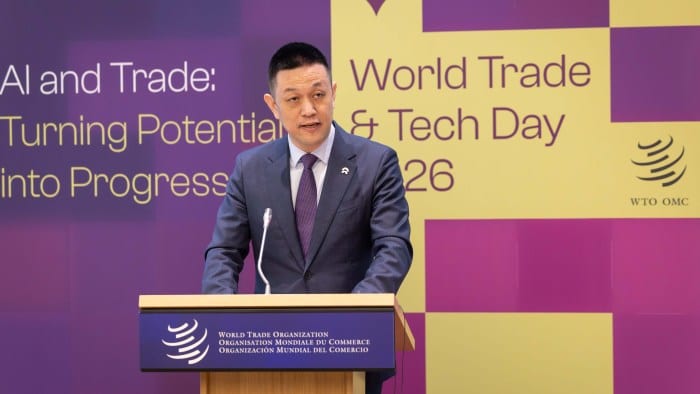
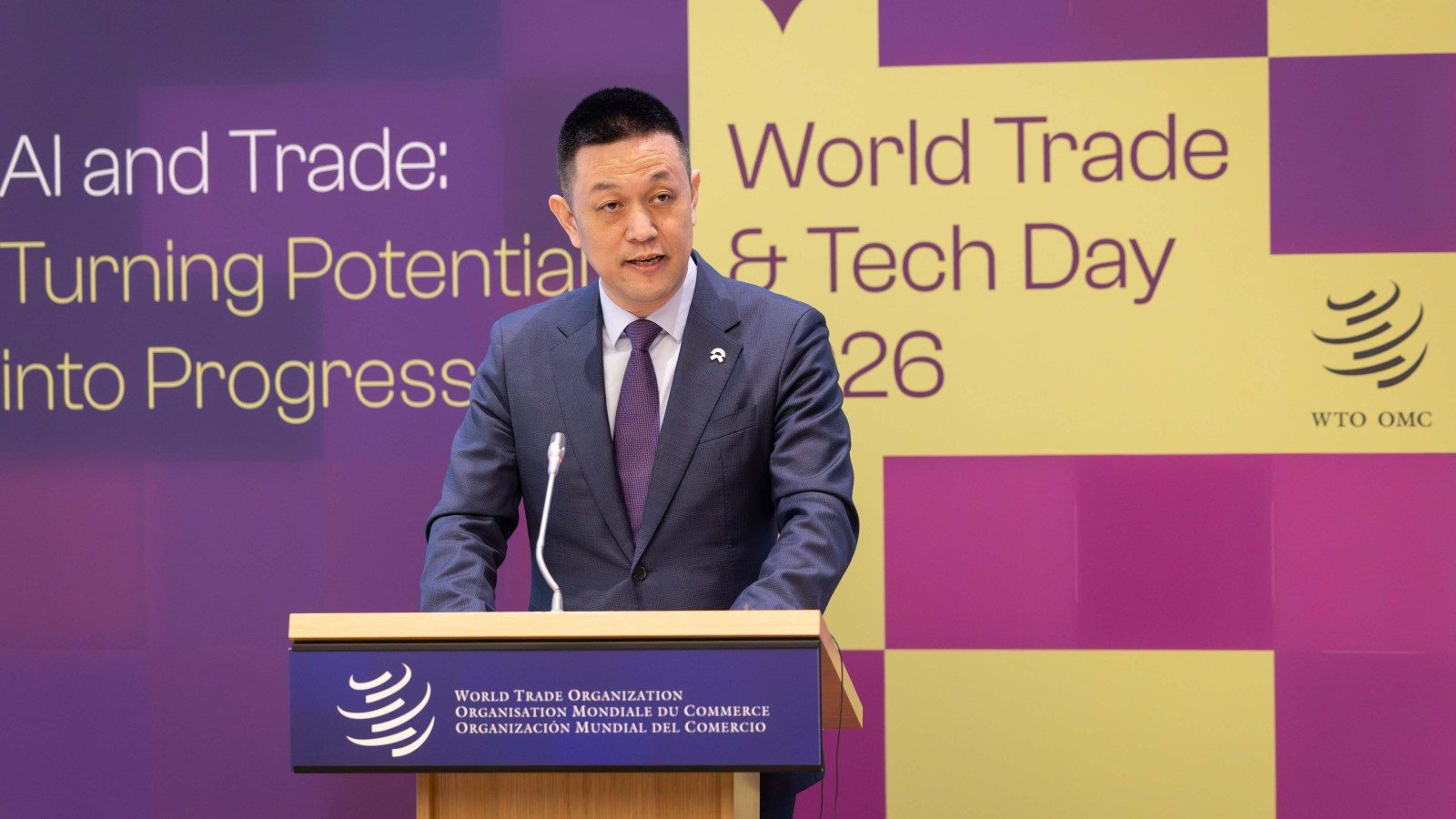
Li gave a keynote at the World Trade Organization in Geneva on Monday.
On Wednesday Nio confirmed to EV that the European launch of its Onvo brand has slipped to 2028 or 2029, from 2027.
Billiau was the company’s first customer in Belgium, and has attended Nio’s annual user gathering in China at least twice.