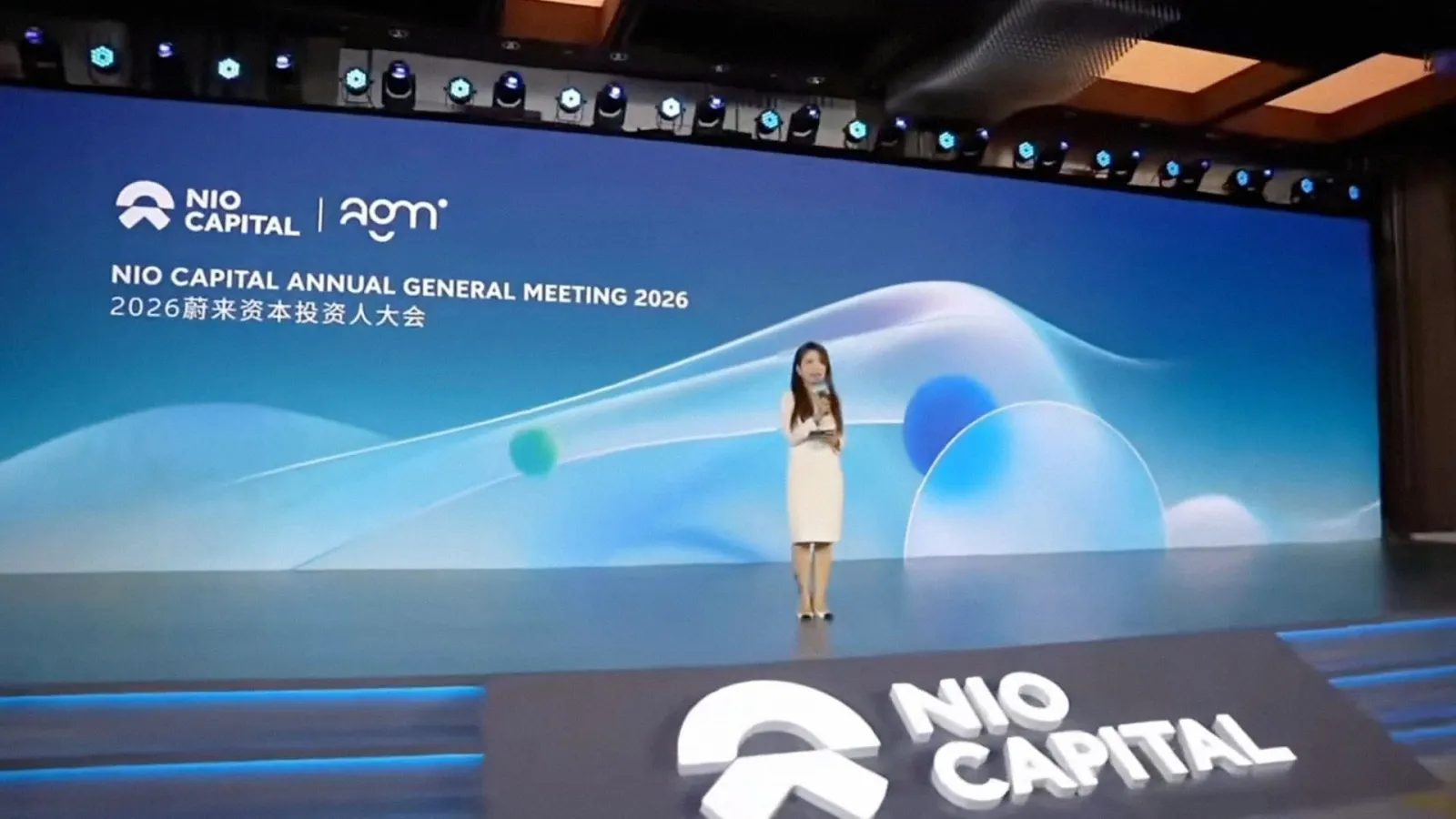

A Nio Capital fund has become a shareholder in Wuxi Gongwang Sensing Technology, a Chinese maker of the position sensors used inside robot joints, taking about 10.87% in a registration change reported on Monday.
The buyer is Hefei Nio Industrial Development Equity Investment Partnership, the same vehicle the fund used in August last year to invest in Xinxin Hangtu, the chip subsidiary of the autonomous driving company Momenta.
Gongwang’s registered capital rose to about 3.78 million yuan ($563.5 million) alongside the change, according to the corporate database Tianyancha, as reported by the Sina Finance affiliate Investment Time Network.
The filing follows a Series A round last month of close to 100 million yuan ($14.9 million), with investors including Nio Capital, Xiamen Tungsten and Sungrow.
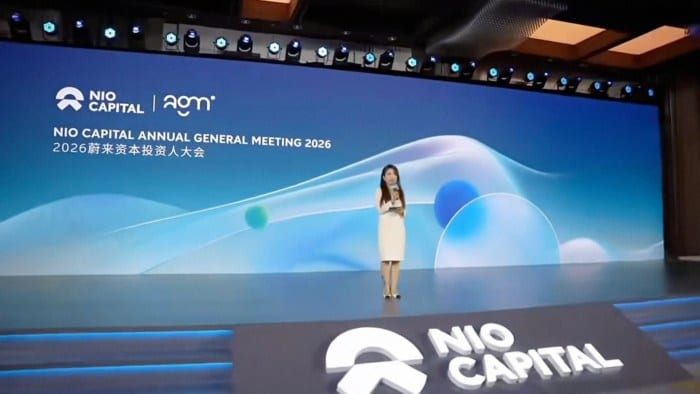
Nio Capital is an independent private equity firm founded in 2016 by the Chinese EV maker Nio Inc. founder and CEO William Li and Ian Zhu.
The company lists Li as a Managing Partner.
As of August last year it had raised five funds, three in dollars and two in yuan, with about 15 billion yuan ($2.2 billion) under management.
What Gongwang Makes
Inductive rotary encoders, which report angle and position inside joints, servo motors and machine-tool turntables.
The Wuxi company was registered in January 2023 and is led by Deng Gaoqiang. It wholly owns two subsidiaries, Shanghai Gongwang Electronic Technology in Minhang district and Hangzhou Gongwang Sensing Technology.
Honghui Fund, which invested in 2024, described Gongwang at the time as the first company in China to mass-produce inductive position sensors, with founders from the drive maker INVT and the German encoder manufacturer Heidenhain carrying close to twenty years in servo systems and position sensing.
Three technologies compete in the segment. Optical encoders are accurate but vulnerable to dirt, moisture and vibration, and are costly to seal and hard to build thin with a large hollow bore.
Magnetic encoders are cheap and robust but suffer interference inside a joint crowded with permanent-magnet motors, brakes and power cables. Inductive designs sit between them and are inherently immune to stray magnetic fields.
They also contain no permanent magnets.
That matters in a market where rare-earth supply has become a strategic question and where the steer-by-wire and brake-by-wire systems now arriving on cars all need position feedback, though neither the filing nor the Chinese coverage makes that argument.
Sequoia China has backed the company since its angel round in March 2023. It added to its position in a Pre-A round in May 2024 of tens of millions of yuan, alongside SMIC’s Zhongxin Juyuan, Honghui Fund, Shanghai Dianke and Chengdu SBI.
The Second Book
Nio Capital runs more than one portfolio and this belongs to the newer one.
The first is Nio’s own supply chain. It holds the battery makers CATL and CALB, the lidar company Seyond, the American suspension firm ClearMotion, whose technology is fitted to Nio’s ET9, and several component suppliers for the Onvo L90, according to the fund’s own portfolio disclosures reported by EV.
Last week a separate fund it manages agreed to buy 19.5% of the listed trim supplier Guangzhou Jinzhong Auto Parts for about 586 million yuan ($87 million), with a profit guarantee and interest-free founder loans attached.
The second is expansion beyond the car. In November last year the fund led the Series A of the robotics startup Dexmal, with Alibaba taking the following round in a two-stage raise of $138 million.
It has also put $20 million into the used-car retailer Uxin and set up a consulting partnership with an Anhui government fund.
The portfolio runs wider still.
In its August newsletter the fund led on Ruyuan Technology, a consumer hardware company founded by Brett Wang, a former DJI vice president of research and development, whose new desktop ultraviolet printer raised more than $9 million on Kickstarter in 48 hours.
Gongwang belongs to the same theme as Dexmal rather than to the Jinzhong bucket. Dexmal builds software and robots, Gongwang makes the sensor that goes in a joint.
There is no ownership link between them and no announced supply arrangement, and nothing in the filing or in Chinese coverage indicates that Gongwang supplies Nio’s cars.
Nio’s Own Position
The carmaker has kept its distance from robotics as a business while investing around it.
Nio Inc. has registered robot trademarks in China.
The 21st Century Business Herald reported in early 2025 that it had formed a team of about 20 people to work on four-legged robots under Xu Kang, previously an algorithm specialist at Momenta.
Its F2 plant in Hefei runs 310 automated guided vehicles and 941 industrial robots, and a factory livestream in July 2024 showed humanoids and robot dogs training for inspection work.
William Li has said repeatedly that the company is not in a hurry to compete directly with rivals further along in robotics.
XPeng and Xiaomi have both put humanoid programmes at the centre of their strategies.