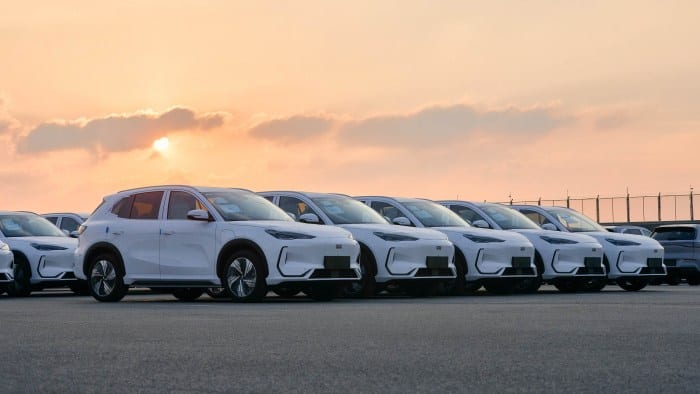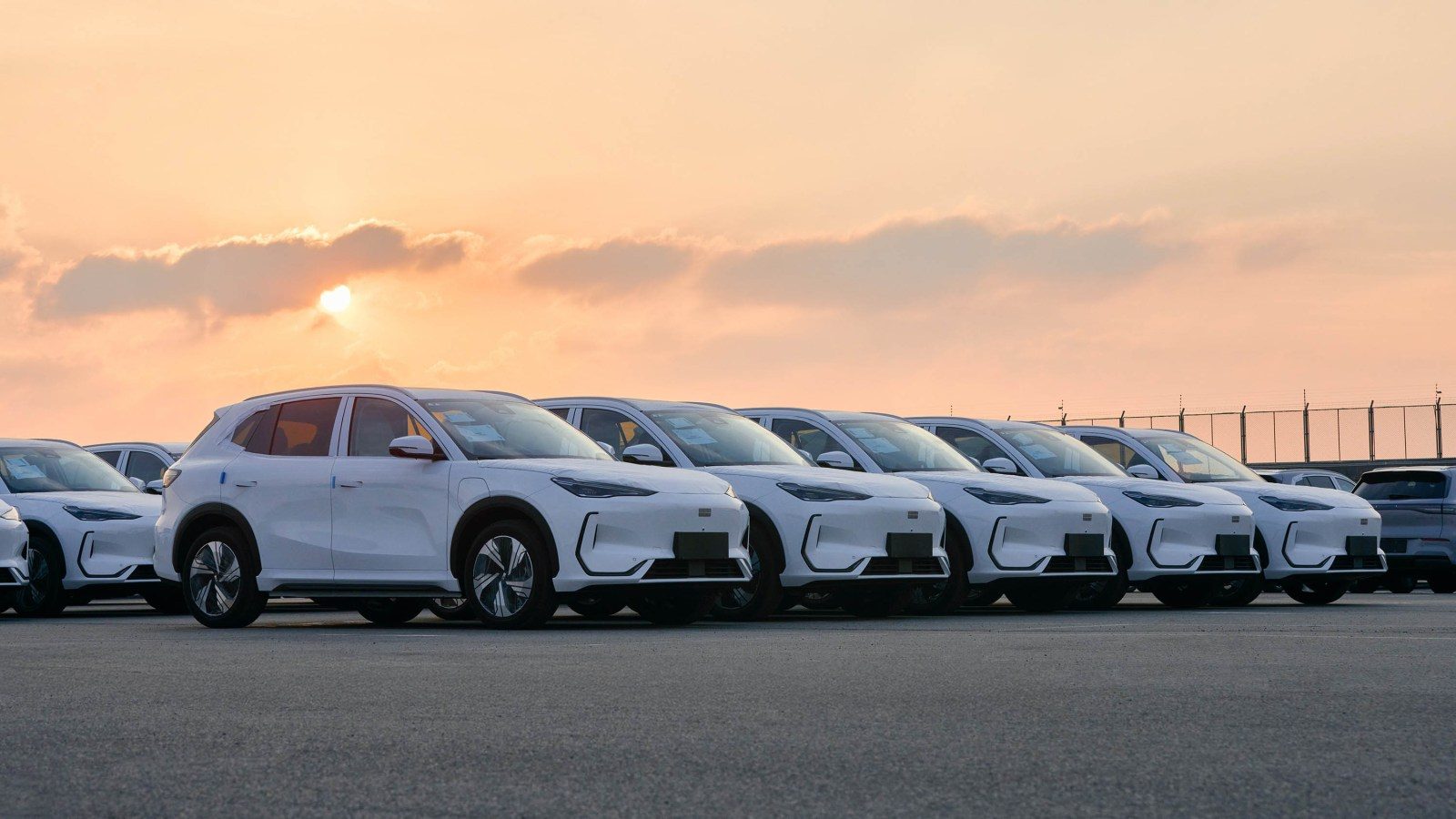

The European Union is asking China to voluntarily limit its hybrid car exports to Europe at the moment Chinese manufacturers most need the market, with domestic sales in China falling for an eleventh consecutive month and BYD, Geely and Chery each shipping record volumes abroad.
The Financial Times reported on Thursday, citing three people familiar with the matter, that Brussels wants Chinese hybrid sales limited to about 15% of the market.
“If they will not limit their exports to our market then we will,” the paper quoted an EU official as saying. “It’s about managed trade.”
Chinese Vehicles in Europe
Registration data from the European Automobile Manufacturers’ Association, ACEA, show how the Chinese position has built.
Plug-in hybrids took 9.8% of the EU market in the first half of 2026, from 8.5% a year earlier, with registrations of 577,735 vehicles.
Growth was steepest in Italy at 84.3%, Spain at 39% and Germany at 17.9%. Conventional hybrids, which need no charging, remained the single largest powertrain at 37.3%.
The five largest Chinese-owned groups, BYD, SAIC, Chery, Leapmotor and Geely Group, registered 791,958 vehicles across the EU, EFTA and the United Kingdom in the first half, about 11% of the market.
BYD registered 174,144 vehicles in the six months, overtaking Tesla’s 170,351 for the first time, on a range that pairs battery-electric cars with a growing line of plug-in hybrids including the Seal U DM-i, the Atto 2 DM-i and the Dolphin G.
Its EU market share rose to 2.4% from 1.0%.
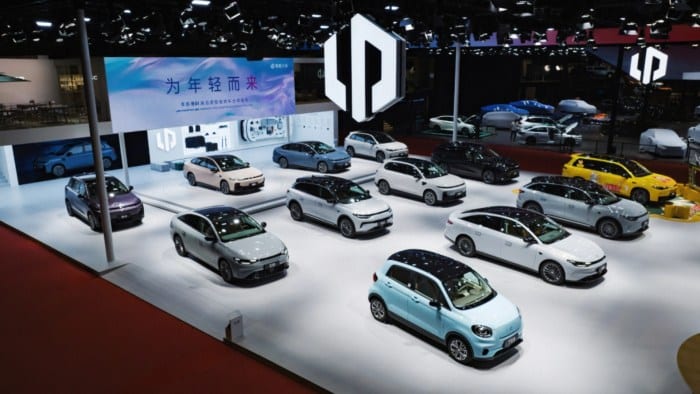
Chery’s volume is overwhelmingly combustion and plug-in hybrid. The Jaecoo 7, sold in both, was Britain’s best-selling car in March. Leapmotor’s European registrations rose 558% in the first half to 56,005 through its Stellantis venture.
Chinese brands accounted for around 6% of EU registrations between January and April, from 3.2% a year earlier. JATO Dynamics projects Chinese brand registrations in Europe will exceed 1.3 million vehicles in 2026, from about 50,000 in 2020.
Why They Are Coming
The domestic market is collapsing under them.
Passenger car sales in China fell 23.7% in August to 1.55 million, according to the China Passenger Car Association, the eleventh consecutive monthly decline. Exports rose 77.5% in the same month to 894,000.
The association forecasts 12 million exports this year.
BYD’s domestic sales are down 33% in the first eight months, to 1,505,755 vehicles, while its overseas sales rose 86% to 1,162,260. It shipped a record 189,466 vehicles abroad in August, up 134.5%, and generated more than half its first-half revenue outside China for the first time.
It raised its 2026 export target to 1.5 million from 1.3 million in March.
Geely Auto exported 110,094 vehicles in August, up 205%, its eighth consecutive monthly record, while its domestic sales fell 25.2% to 160,100. Exports were 41% of its total. Its eight-month exports of 691,000 are up 170%.
Chery exported 196,984 vehicles in August, 70% of its group sales, and became the first Chinese manufacturer to pass seven million cumulative exports. Leapmotor delivered more than 100,000 vehicles for a second consecutive month.
Every one of them is now selling more cars abroad as a share of output than it was a year ago, and Europe is where the hybrids go.
The Tariff That Made the Hybrids
Brussels imposed anti-subsidy duties on China-built battery-electric cars in October 2024, ranging from 7.8% for Tesla to 35.3% for SAIC on top of the standard 10%, giving totals up to 45.3%.
Hybrids were not covered. They pay the 10%.
Chinese hybrid imports into the EU rose from about 3,800 vehicles in October 2024 to 50,000 in July 2026, according to the FT, a thirteenfold increase that begins in the month the battery-electric duties took effect.
The Commission publicly denied having an active investigation into Chinese hybrids in January.
Managed Trade
The precedent the FT’s sources are reported to invoke is the 1986 voluntary export restraint between Japan and the European Community, under which Tokyo capped car shipments rather than face quotas.
Its lasting effect was Japanese plants in Europe: Nissan’s Sunderland, Toyota’s Burnaston, Honda’s Swindon.
That outcome is already under way without an agreement. Chery is due to start building at a former Nissan plant in Barcelona this year.
Geely took 34% of Ford’s Valencia plant in July, with production from 2028. Leapmotor builds on Stellantis lines. BYD has plants in Hungary and Turkey. XPeng assembles through Magna in Austria.
What Brussels Said
The request itself is unconfirmed. Ursula von der Leyen’s State of the Union address on Wednesday is not.
“Some say the second China shock is looming. But it’s already here,” the Commission President told the European Parliament. “It shows in our communities and factories. It leads to de-industrialisation in the industrial heartlands of Europe. This is unsustainable.”
She put the goods deficit with China at €360.6 billion ($424 billion) for 2025, widening by about €1 billion a day in the first half of this year, and said it had “reached a tipping point.”
“We will use all the tools at our disposal to rebalance our relationship,” she said. “Words are good. But deeds are better.”
Trade Commissioner Maros Sefcovic, who leads the Trade and Investment Consultations forum created with China in June, was due to speak with Commerce Minister Wang Wentao by videoconference on Thursday ahead of a visit to Beijing in early October.
He has said he wants results by then.
Beijing has rejected the overcapacity argument as protectionist. On September 1 China’s Commerce Ministry and two other agencies issued compliance guidelines for overseas competition in the car industry, and BYD, Chery and Geely pledged to follow them.