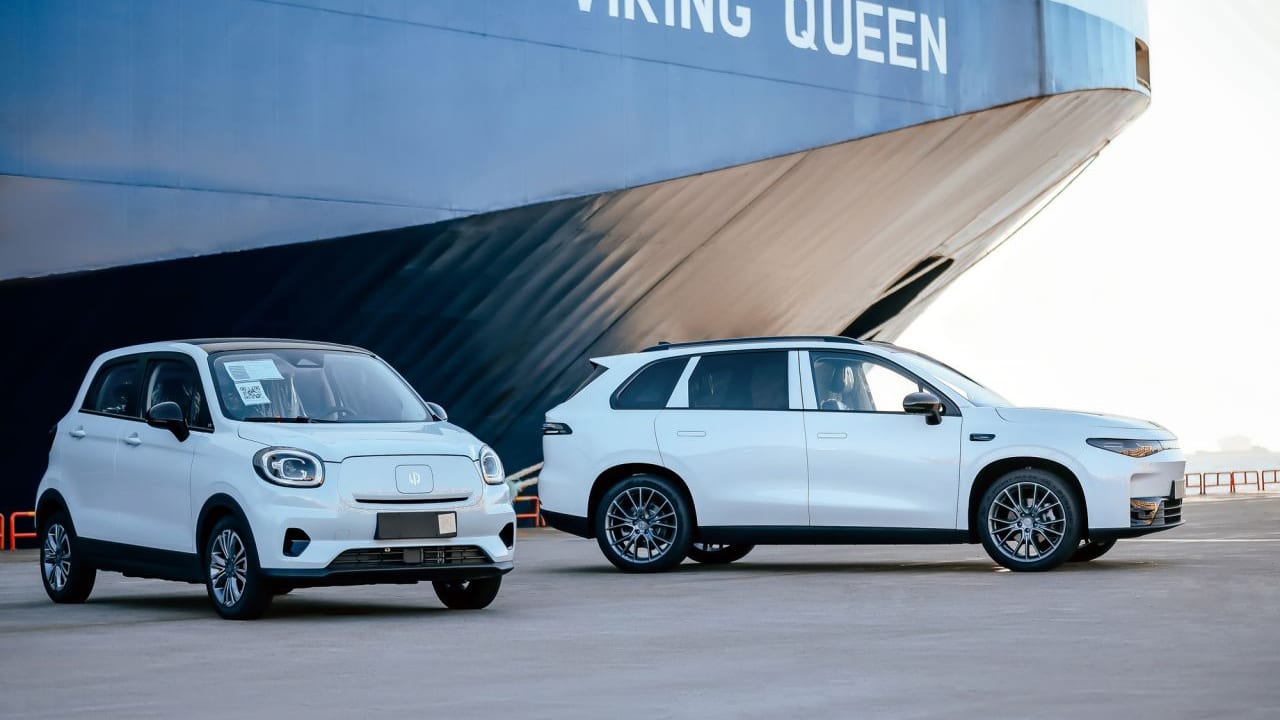

Chinese carmaker Leapmotor delivered 81,569 vehicles globally in May — a new record for the Stellantis-backed brand.
The figure represents an 81% increase from the same month a year ago and a 14.3% rise from April, when the company delivered 71,387 units.
May’s result marks the second consecutive month of record-breaking deliveries for the Hangzhou-based automaker.
The result further extended Leapmotor‘s lead among China’s new energy vehicle startups in monthly delivery volume.
A breakdown of domestic deliveries and exports for May has not yet been released, as such data is typically published later by the China Passenger Car Association (CPCA).
1 Million Unit Target
From January through May, cumulative deliveries reached 263,111 vehicles, up 51.5% year on year.
Earlier this year, Leapmotor has set a full-year 2026 target of one million vehicle deliveries.
Through the end of May, the company has completed approximately 26.3% of that goal with five of twelve months elapsed.
At its current run rate, Leapmotor would need to average roughly 105,270 deliveries per month over the remaining seven months of the year to hit the one-million mark — which would require output to double from May’s already high numbers.
The company’s monthly breakdown so far in 2026 shows a clear acceleration.
January started at 32,059 units. While February dipped to 28,067 during the Chinese New Year slowdown, Leapmotor rebounded to 50,029 units in March.
The company also targets 5 billion yuan ($736.9 million) in net profit for 2026, after posting its first annual profit of 540 million yuan in 2025.
Leapmotor delivered nearly 600,000 vehicles in 2025, up 103% year on year, and became the second Chinese EV startup after Li Auto to achieve full-year profitability.
Lineup Expansion
The delivery acceleration has been supported by a rapid expansion of Leapmotor‘s product lineup in 2026.
The A10 compact SUV, which launched in late March, has been a key volume driver. The company has said daily production of the A10 exceeds 1,000 units.
Priced below 100,000 yuan ($14,800) in its top-trim configuration, the A10 brought LiDAR-equipped driver-assistance technology to China’s budget EV segment for the first time.
At the same time, the flagship D19 large SUV began deliveries in April.
Priced from 219,800 yuan ($32,500), it surpassed 15,000 firm orders within its first 15 days on the market.
Two additional models — the A05 compact hatchback and the D99 luxury MPV — are scheduled to launch in the summer window between late June and early July.
The company’s management has said the four new 2026 models are expected to contribute around 60% of full-year sales, with the remaining 40% coming from existing models.
At the Beijing Auto Show in April, Leapmotor debuted the Lafa5 Ultra — known globally as the B05 Ultra — a rear-wheel-drive compact EV developed in collaboration with Stellantis‘ European engineering team.
The company showcased its full ABCD product portfolio at the event.
European Footprint
Internationally, Leapmotor is on course to surpass 100,000 vehicle sales in Europe this year.
The brand registered 30,521 vehicles across 13 European markets between January and April, averaging roughly 7,630 units per month.
In Germany, Leapmotor‘s sales more than quadrupled year on year through April, reaching 4,523 vehicles. Chinese brands in the country can tap into a €3 billion EV subsidy program introduced this year.
Leapmotor International, the 51/49 Stellantis-led joint venture with exclusive rights for Leapmotor sales and manufacturing outside Greater China, has expanded to more than 850 European points of sale and service.
The EV maker’s overseas trajectory stands out among China’s expanding roster of globally ambitious EV brands, mostly because of the infrastructure it benefits from with Stellantis.
Rather than building a global distribution and service network from the ground up — as BYD and XPeng are doing — Leapmotor plugs directly into one of the world’s largest automotive groups.
The partnership has allowed Leapmotor to scale in Europe faster than any other Chinese startup, reaching 13 markets within roughly 18 months of its first European deliveries.
The European push is backed by a deepening industrial partnership.
Earlier this month, the two automakers announced that the Leapmotor B10 compact SUV would be manufactured at Stellantis‘ Figueruelas plant in Zaragoza, Spain.
The same site will also produce a co-developed all-electric Opel C-segment SUV, with a potential start of production in 2028.
A future Leapmotor model has been allocated to Stellantis‘ Villaverde plant in Madrid starting in the first half of 2028.
Ownership of the site is under discussion for potential transfer to Leapmotor International’s Spanish subsidiary.
Second Brand Planned
Beyond the current lineup, the Chinese EV maker confirmed during its first-quarter earnings call last month that it is planning to launch a second brand targeting the premium segment above 300,000 yuan (around $44,000).
Chief Financial Officer Li Tengfei said the first products from the new brand are expected to debut between late 2026 and early 2027, with market launch planned by mid-2027 at the latest.
Leapmotor‘s current lineup covers a price range from 65,800 yuan to 269,800 yuan ($9,700–$39,700).
Its weighted average selling price in 2025 was approximately 125,000 yuan ($18,500), with a net profit per vehicle of roughly 905 yuan.
Separately, FAW Group acquired a 5% stake in Leapmotor in December 2025.
The two companies are jointly developing a model for FAW’s luxury brand Hongqi, targeted at overseas markets, with mass production planned for the second half of 2026 at Leapmotor‘s Hangzhou plant.