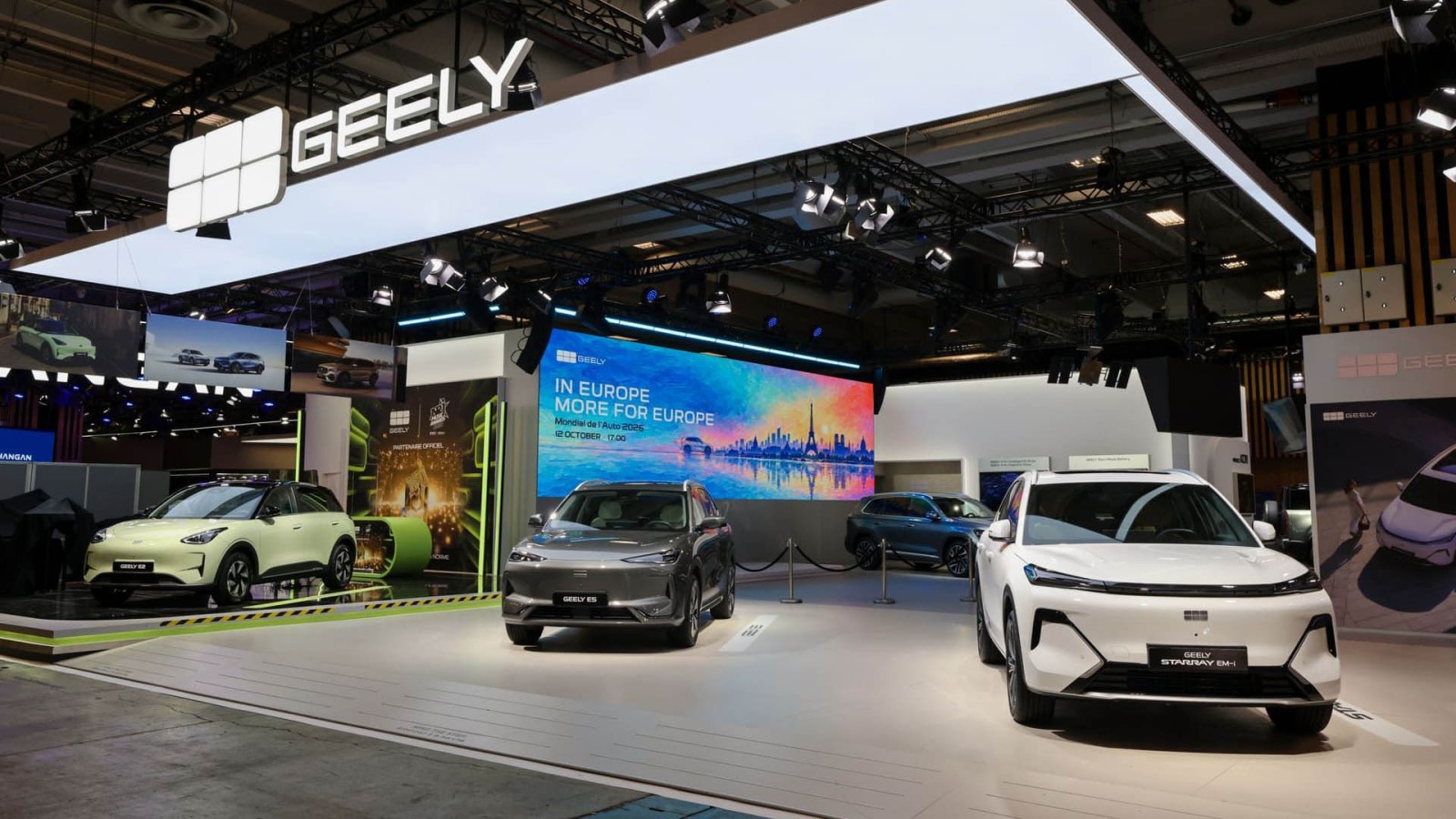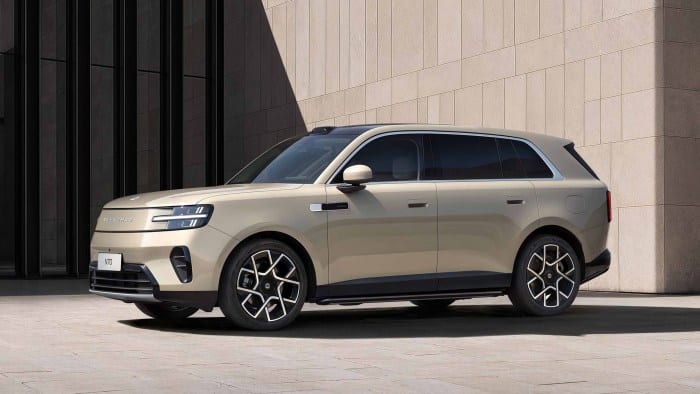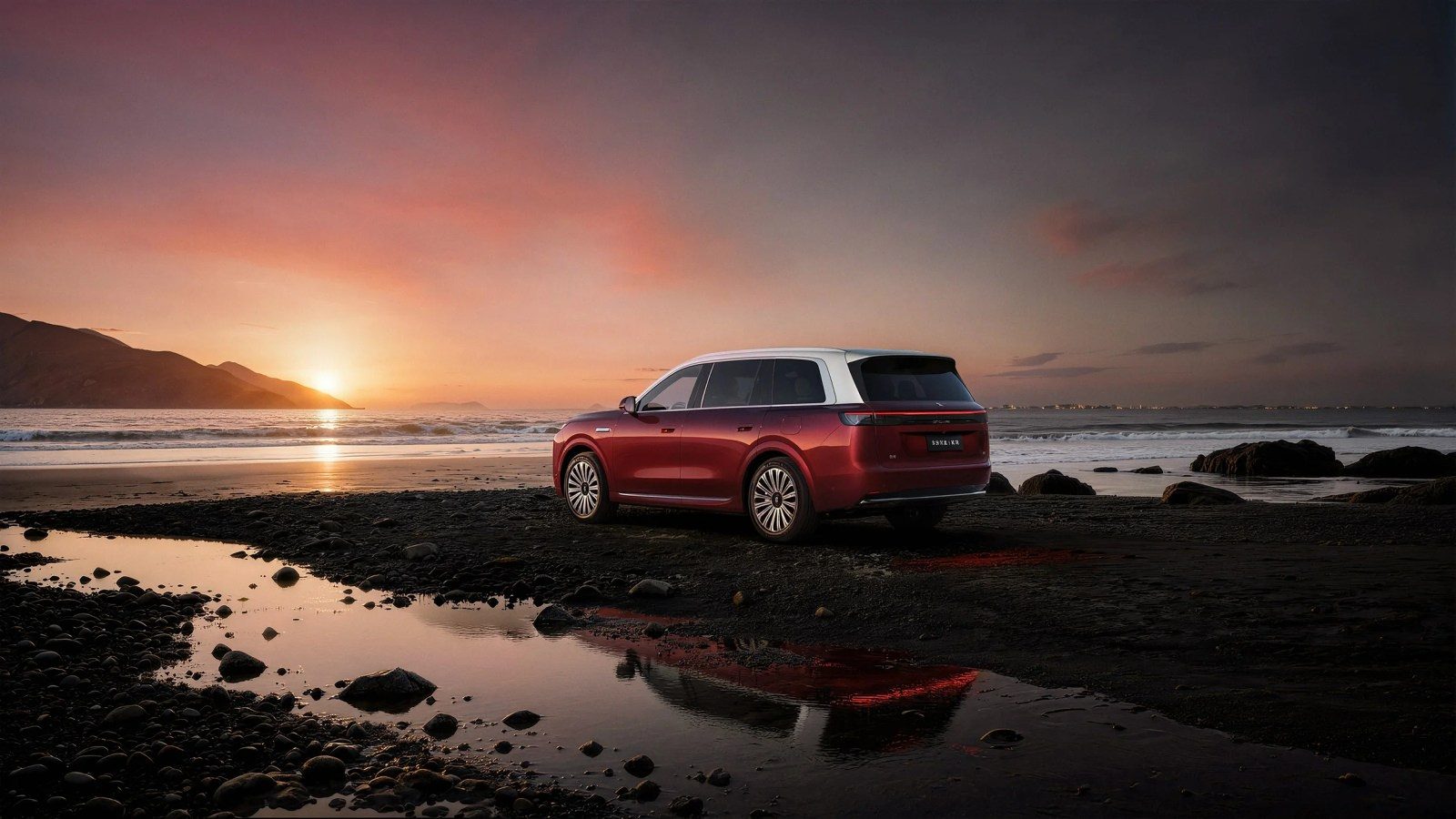

Epicland, the EV brand Dongfeng Motor and Huawei launched together last November, is considering a battery-swap version of its second model, 21st Century Business Herald reported on Friday.
The project is at pre-research stage, the newspaper said, citing multiple independent sources. No partner, battery standard, station plan or timeline has been settled.
The reasoning set out in the report is competitive rather than technical, and it turns on a problem inside Huawei’s own ecosystem.
Huawei’s car business now runs through seven partner brands.
Epicland was named at Huawei’s Qiankun ecosystem conference on November 20, 2025.
It belongs to Huawei’s “境” series, in which partner carmakers lead product definition and channels while Huawei supplies the technology stack — distinct from the “界” series brands including AITO and Luxeed, where Huawei defines the product and controls distribution.
Models across that system share similar intelligence, the newspaper writes. The Qijing GT7, the AITO M9 and the Luxeed V9 all carry the same ADS 5 and HarmonySpace 6 despite spanning 200,000 to 500,000 yuan. ($29,800—$74,400).
It also notes that the Qijing GT7, a GAC partnership delivered from July, was the first production model in China to ship with ADS 5.
Epicland general manager Zeng Qinglin has said publicly that “the best Huawei is at Dongfeng,” citing first or early access to ADS 5, the 896-line LiDAR, HarmonySpace 6 and the Chitu platform.
The report’s argument is that with those systems standardised across the group, refuelling architecture is one of the few areas where a partner brand can still differentiate itself.
The Price Argument
The second reason is cost, and the report gives two illustrations.
Batteries account for between 30% and 60% of an electric vehicle’s cost. Separating them from the vehicle price through a battery rental model removes that from the sticker.
The Aion RT Super lists at 128,800 yuan ($19,200) with a battery and 88,800 yuan ($13,200) without — a 31% reduction. BAIC Arcfox’s Beta S3 swap version starts at 59,800 yuan ($8,900) on a rental plan.
Zeng has said three new models will follow the X9 during 2027. A swap variant would allow one of them to price below the AITO M9 and Li Auto L9 rather than compete with them directly.
The Most Likely Route
CATL supplies Epicland’s cells, which the report identifies as the most direct interface into the battery maker’s Chocolate swap network.
Dongfeng and CATL have prior history here.
The two built Chocolate swap infrastructure together in Wuhan and Xiangyang during 2025, and Dongfeng’s Shenlong unit co-developed a swap version of the Fukang ES600 with CATL in 2022.
CATL’s network reached 2,000 stations by the end of June, covering 180 cities across 31 provinces, with the company claiming a 99-second swap.
In April it announced that Chocolate stations would carry Shenxing fast chargers as standard, becoming combined charge-and-swap sites, with Changan, Chery, GAC, Seres, SAIC-GM-Wuling and BAIC as the first partners.
In March it led a standards body that issued China’s first interchangeability specification for bolt-type passenger swap systems.
The Constraints
Epicland will either join CATL’s network and accept the standardisation of its battery pack, or build its own and carry the losses. Neither is straightforward.
On the economics, Nio Power Assistant VP Yang Chao said in June 2024 that a fourth-generation station cost under 1.5 million yuan ($223,200) to build, before land rent, grid connection, maintenance and the packs held on site.
Western Securities calculates that a station covers its operating costs at 45 swaps a day and breaks even at 60.
Nio’s network currently averages about 30, which the report characterises as partial profitability against overall loss reduction.
The Wider Contest
On August 18, CATL agreed to buy China Power’s entire 24.87% stake in Shanghai Qiyuan Core Power, the heavy-truck swap leader, for 2.56 billion yuan ($380 million), taking its own holding to roughly 30% and making it the largest shareholder.
Qiyuan holds about 55% of swap-truck deliveries and reported 2025 revenue of 9.53 billion yuan with net profit of 356 million.
Nio remains the passenger leader, opening its 4,000th swap station on August 7 alongside its first fifth-generation site, and recording its 120 millionth swap the same morning.