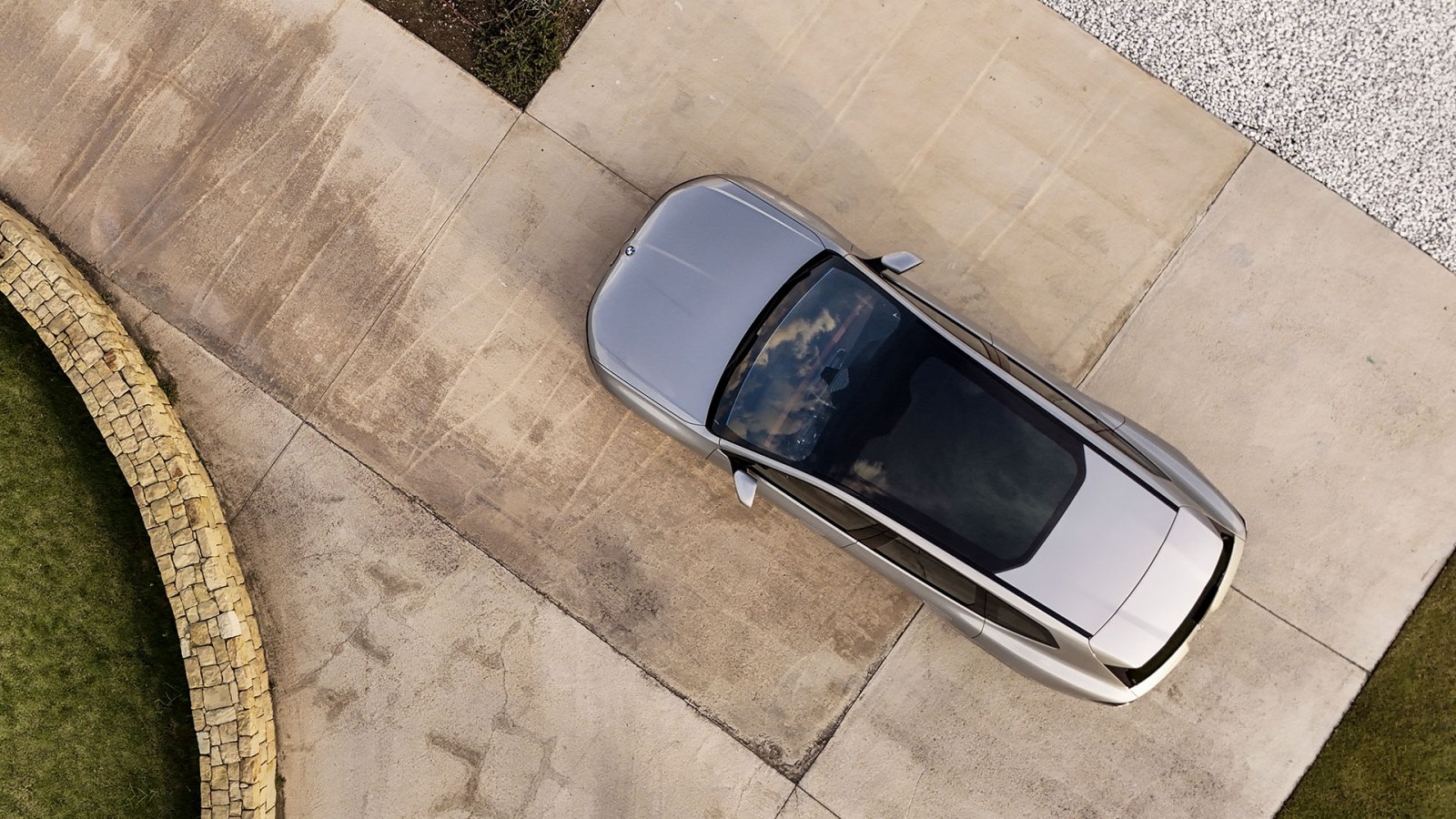
BMW now expects its first fully electric X5, the iX5 60 xDrive, to travel up to 450 miles on a charge under EPA testing, 15 miles more than the preliminary estimate it published when it unveiled the SUV in June.
“We have the Gen 6 technology in this vehicle, up to 450 miles estimated EPA range,” John Kelly, a product manager for BMW’s luxury vehicles, told reporters at the US press launch of the new X5 line on Tuesday, according to InsideEVs.
“The official EPA estimate will arrive in the coming weeks,” Kelly said. The revised figure is still a company projection, not a federal rating.
BMW’s US website continued to list the iX5 at “an estimated range of up to 435 miles” on Saturday, according to its model page. No 2027 iX5 appears yet in the EPA’s fuel economy database.
From 435 to 450
BMW USA introduced the iX5 on June 30 with “an estimated 435 miles of range,” describing it as a “preliminary estimate based on BMW AG testing following EPA testing procedures,” according to its press release.
The SUV uses BMW’s sixth-generation, or Gen6, electric drive system first launched in the iX3, with an 800-volt architecture and new 120-millimeter-tall cylindrical battery cells.
The taller cells raise usable cell energy by almost 30% compared with the 95-millimeter cells in the iX3, and the cell-to-pack design “supports 144 kWh of net usable energy,” the US release said.
BMW’s UK release for the same vehicle gives the battery as “141 kWh (net),” and the two releases do not reconcile the figures.
The UK release quotes a range of up to 525 miles under Europe’s WLTP cycle, which typically produces higher figures than the EPA test.
BMW’s provisional European technical data puts the WLTP range at 645 to 845 kilometers (401 to 525 miles) depending on configuration, with combined consumption of 20.1 to 23.9 kWh per 100 kilometers.
At 450 miles, the US estimate would equal about 3.1 miles per kilowatt-hour of the 144 kWh usable capacity BMW cites for the US car.
The iX5 60 xDrive pairs an electrically excited synchronous motor at the rear with an asynchronous motor at the front, for a combined 570 horsepower and 593 lb-ft of torque in US specification.
BMW says it can charge at up to 460 kilowatts, going from 10% to 80% in 22 minutes, or add an estimated 170 miles in 10 minutes.
It reaches 60 mph in an estimated 4.4 seconds and has an electronically limited top speed of 130 mph, BMW said.
The range comes in a heavy vehicle, with a curb weight of 2,825 kilograms (6,228 pounds) under the DIN standard and 2,900 kilograms (6,393 pounds) under the EU method, according to the European technical data.
The same document lists a drag coefficient of 0.28 and a frontal area of 2.98 square meters, and five seats, with no third-row option.
The Efficiency Hardware
Much of the range comes from how the powertrain avoids wasting energy, according to BMW’s June release.
The front asynchronous motor uses induction rather than magnets, so it “creates no drag loss when de-energized” and can switch off at reduced loads, letting the iX5 drive on its rear axle alone.
The rear motor, the primary drive unit, is an electrically excited synchronous motor developed for the 800-volt system, managed by an inverter that controls rotor excitation to keep it in an efficient operating range.
BMW also fits a model-specific climate system with a heat pump to battery-electric iX5 variants.
Gen6 cells deliver 20% greater energy density than the prismatic cells of BMW’s previous Gen5 system, and the pack is integrated without modules or extra structural elements to save weight, BMW said.
The US car has a standard NACS charging port, can use 400-volt DC chargers through an integrated switching matrix, and supports bidirectional charging.
Michael Ahlers, who leads the X5 project, told reporters that BMW sees 400 miles as the point at which customers stop worrying about range, and aimed for about 450 miles to cover energy-hungry use such as fast highway driving and air conditioning, InsideEVs reported.
Why the Final Number Can Move
BMW has not said which wheel and tire combination the 450-mile figure applies to, a detail that has produced a wide spread on its Gen6 sibling.
The 2027 iX3 50 xDrive is rated at 434 miles on 20-inch summer tires, but at between 383 and 399 miles on its four other wheel and tire configurations, according to EPA data on fueleconomy.gov.
The i3 sedan, BMW’s next Gen6 model for the US, carries a company estimate of 446 to 468 miles based on EPA standards, according to the pricing BMW announced on September 30 and has no published EPA rating yet.
US reservations for the i3 opened at the end of September.
Where 450 Miles Would Rank
If the EPA confirms 450 miles, the iX5 would match the 450-mile rating of the 2027 Lucid Gravity GT, which the Gravity achieves in its two-row configuration on its smallest wheels, according to fueleconomy.gov.
That would put it ahead of the 2026 Rivian R1S Dual Max at up to 410 miles and the 2026 Tesla Model X at 352 miles, according to EPA data.
It would also be well above the iX, BMW’s earlier large electric SUV, whose 2026 xDrive60 version is rated at up to 364 miles on 20-inch wheels.
Lucid’s Air Grand Touring sedan is rated at up to 512 miles.
Price and Timing
The iX5 60 xDrive starts at $79,800 before a $1,450 destination charge, the same price BMW published in June.
It is due to reach US dealers in the first quarter of 2027, after the combustion X5 40 xDrive, whose market launch BMW scheduled for October, according to the June release.
BMW builds the X5 at its plant in Spartanburg, South Carolina, where the iX5 will be the first fully electric vehicle produced, according to the June release, and the iX5’s batteries come from a new Gen6 battery facility in nearby Woodruff.
The iX5 is the second Gen6 SUV after the iX3, for which European orders passed 100,000 in September.
BMW has said a hydrogen fuel-cell version, the iX5 Hydrogen, will follow further ahead.
The company has framed the iX3 and iX5 as central to its electric push.