Ontario’s ban on Chinese-made drones across government ministries and the Ontario Provincial Police (OPP) is the latest move by Premier Doug Ford’s government to restrict Chinese-made technology over data security concerns.
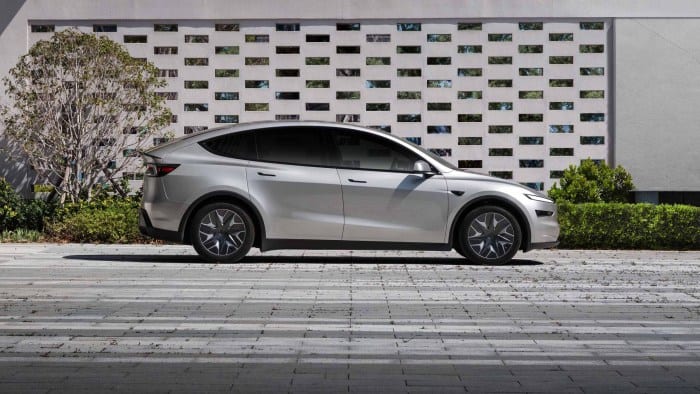
After the premier labelled Chinese EVs ‘spy vehicles’ amid Canada’s EV trade deal with China, the provincial government has now imposed restrictions on the use and purchase of drones for sensitive OPP operations.
A broader phase-out is planned across all provincial departments, with affected units to be replaced by drones built in Canada or other approved jurisdictions.
The move aligns with the province’s Buy Ontario procurement policy and follows similar restrictions already adopted by the Canadian Armed Forces, the Royal Canadian Mounted Police (RCMP).
Several agencies on the other side of the border, such as the US Federal Communications Commission, have also imposed similar bans.
Chinese Law’s ‘Unacceptable’ Risks
Under Chinese law, companies incorporated in China may be compelled to hand over data to the state — even if that data is stored outside the country.
Ford government officials said that creates unacceptable risks when drones are used for tasks involving sensitive information, including policing, emergency response, and infrastructure monitoring.
“Now more than ever, it is critical that we are protecting our province’s data and safeguarding our security against bad actors,” Minister of Public and Business Service Delivery and Procurement Stephen Crawford stated on Wednesday.
According to Crawford, “banning government use and future purchases of Chinese-made drones is another important step in our plan to protect Ontario and better leverage Canada’s world-class drone manufacturing sector.”
The language mirrors Ford’s response to Canada’s EV trade deal with China earlier this year — when the Premier called the agreement a ‘big, big problem’ for the local auto sector.
Ontario currently uses drones in a range of government operations, including law enforcement, emergency management, wildfire monitoring, road and bridge inspections, and environmental monitoring.
The provincial government will begin consultations with drone manufacturers, public-sector agencies, and industry experts in the coming weeks to identify replacement options.
Chinese Drones Ban
Police services across Ontario depend on drones for critical operations. However, according to Solicitor General Michael Kerzner, they cannot ignore the growing security risks associated with foreign-made technology.
“Police services across Ontario rely on drones to support critical operations and protect public safety, but we cannot ignore growing security and privacy concerns tied to foreign-made technology,” Kerzner said.
Therefore, the government is “exploring options to address potential security risks while ensuring police have the reliable tools they need.”
Ontario’s moves follow an already established federal precedent.
Late last year, the RCMP moved to restrict 973 Chinese-made drones — roughly 80% of its fleet — to non-sensitive operations, acknowledging they present “high security risks, primarily due to their country of origin.”
The Canadian Armed Forces had also banned the use of Chinese drones in military operations.
Replacing the RCMP’s Chinese-made fleet was estimated to cost more than C$30 million (US$21.8 million) — roughly double the price of comparable Chinese alternatives.
Ontario has not disclosed the size of the provincial drone fleet or the expected cost of its own transition.
Data Concerns Extend Beyond Drones
Ontario Premier Doug Ford has been one of the most prominent Canadian political voices raising concerns about Chinese technology, particularly in the automotive sector.
Ford has labelled Chinese EVs ‘spy vehicles’ and compared Canada’s EV trade deal with China to the Huawei controversy.
Concerns about data security tied to Chinese-made technology have also grown across Canada in recent months.
At the federal level, Industry Minister Mélanie Joly said the government is developing a regulatory framework to protect personal data collected by electric vehicles, as the arrival of Chinese-made EVs in the Canadian market has drawn mounting scrutiny over surveillance risks.
A recent survey found that while most Canadian consumers are open to Chinese EVs, data collection concerns remain a significant barrier.
At the same time, several Chinese automakers are preparing to enter the country, aided by the lowered tariff of 6.1% on an annual quota of 49,000 vehicles entering Canada from China.
Canada’s Trade Minister also met with BYD, XPeng, and GAC earlier this year, as Ottawa seeks to manage the commercial relationship alongside the growing security debate.
United States Moves
The Ontario ban also tracks with a broader international shift.
In the United States, the Federal Communications Commission added new foreign-made drones — including those from China’s DJI, which controls roughly 70% of the global consumer drone market — to its national security Covered List in December 2025.
The FCC action, triggered by a provision in the 2025 National Defense Authorization Act, effectively blocks new DJI drone models from receiving the equipment authorization required for legal import and sale in the US.
Existing DJI drones already approved before the cutoff remain legal to fly.
Washington’s efforts to restrict Chinese-made technology extend to electric vehicles software.
A connected vehicle rule finalized under Biden bars vehicles containing Chinese-linked software in their connectivity and autonomous driving systems from being imported or sold in the US.
US Trade Representative Jamieson Greer confirmed in April that the administration has no plans to alter the ban. “Those rules are effective,” Greer said.
Tariffs on Chinese-manufactured EVs currently exceed 125%, combining the 100% rate originally imposed under President Biden with Trump’s 25% Section 232 duty on all imported vehicles.
The two provisions make it nearly impossible for Chinese automakers to sell vehicles in the country.
Canada’s EV trade deal with China — seen as a retreat from aligning with the US on similar measures — has drawn criticism from Washington.
US Ambassador to Canada Pete Hoekstra ruled out any path for Chinese vehicles entering Canada to cross into the US market.
Additionally, a bipartisan group of US lawmakers has since introduced legislation that would codify the connected vehicle restrictions into law.