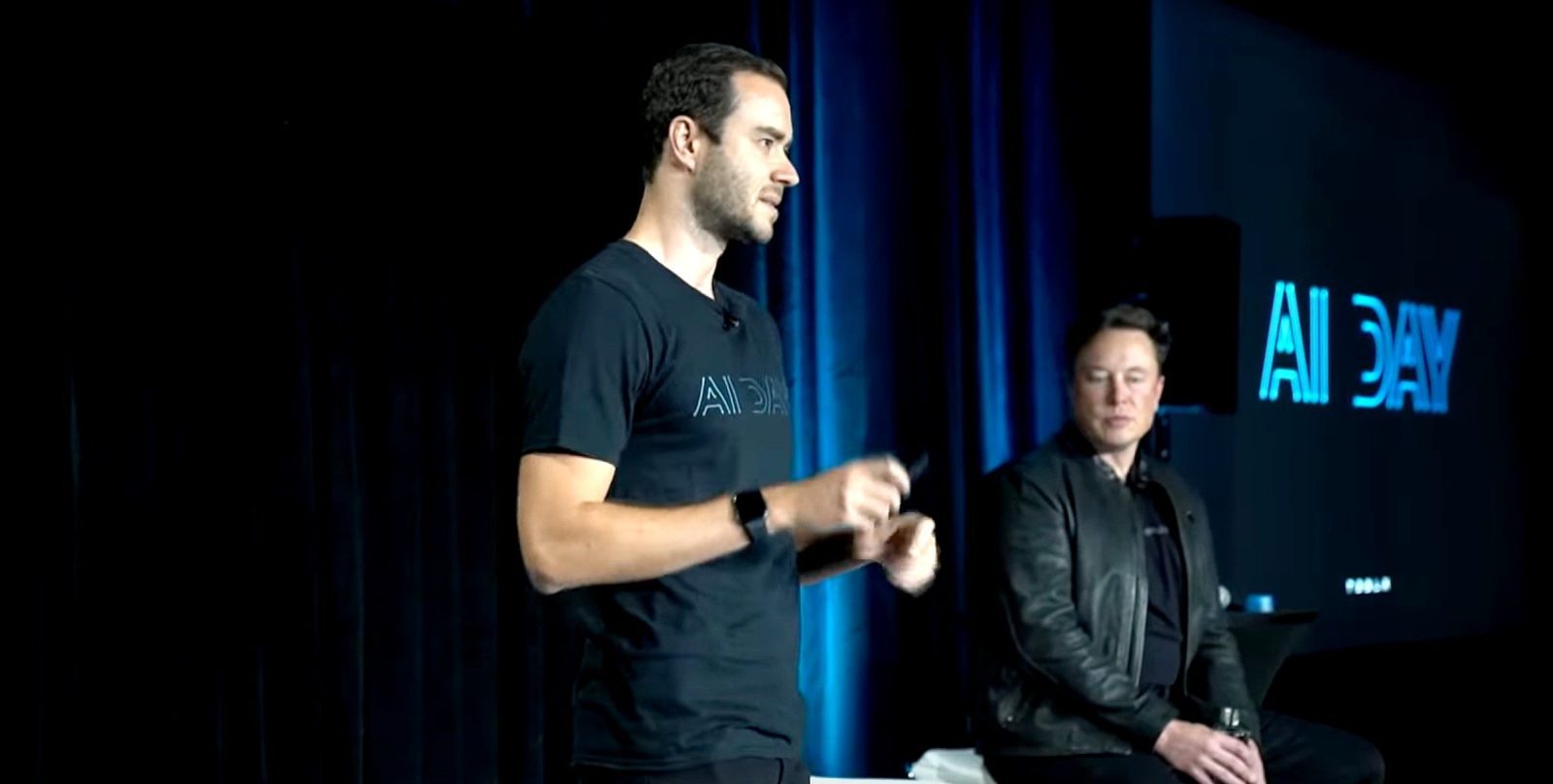

Andrej Karpathy, the former Director of AI at Tesla and a founding team member at OpenAI, announced on Tuesday that he has joined Anthropic to focus on frontier large language model (LLM) research and development.
The Slovak-Canadian computer scientist — widely regarded as one of the most influential AI researchers globally — announced the move via a post on X.
“Personal update: I’ve joined Anthropic. I think the next few years at the frontier of LLMs will be especially formative. I am very excited to join the team here and get back to R&D,” Karpathy wrote.
“I remain deeply passionate about education and plan to resume my work on it in time,” he added.
Karpathy did not disclose his specific role at Anthropic or the start date for his new position.
The move reunites Karpathy with frontier LLM research after his February 2024 departure from the rival OpenAI.
‘Unreasonable Effectiveness of HTML’
Karpathy’s announcement came approximately one week after he publicly praised Claude Code’s “The Unreasonable Effectiveness of HTML” X article — shared by Anthropic Member of Technical Staff Thariq Shihipar, who works on the Claude Code team.
“This works really well btw, at the end of your query ask your LLM to ‘structure your response as HTML’, then view the generated file in your browser. I’ve also had some success asking the LLM to present its output as slideshows, etc.,” Karpathy wrote in an extensive May 11 X post about AI output ergonomics.
The post — which laid out a comprehensive thesis on human-AI input/output ergonomics — argued that audio is the best input modality to AIs while vision (images, animations, video, eventually interactive neural simulations) is the best output because approximately one-third of the human brain is wired for visual processing.
Karpathy advocated for asking LLMs to output HTML — with proper layout and interactivity — instead of raw text or markdown as a near-term default for high-quality AI output.
The Career Trajectory
Karpathy holds a Stanford PhD in computer science under Fei-Fei Li and was part of OpenAI’s founding team in 2015 — joining as a research scientist before being recruited by Elon Musk to lead Tesla‘s artificial intelligence division in 2017.
He served as Tesla’s Director of AI from 2017 to mid-2022, leading the neural network development behind Autopilot and Full Self-Driving (FSD) — including the company’s vision-only autonomous driving approach that removed radar and ultrasonic sensors from later Tesla vehicles.
Karpathy briefly returned to OpenAI in February 2023, working on mid-training and synthetic data, before departing in February 2024 to found Eureka Labs — an AI-native education startup.
His return to a major AI research laboratory marks the first time he has joined a frontier LLM developer since leaving OpenAI in 2024, and aligns him with one of the three companies — alongside OpenAI and Google DeepMind — generally considered to be at the frontier of large language model development.
The Anthropic Editorial Context
Last week, Anthropic announced a $200 million partnership with the Bill and Melinda Gates Foundation focused on global health, education, and agriculture use cases — alongside a broad enterprise deployment with PwC across the consulting firm’s entire business.
Earlier in the week, the company launched “Claude for Small Business” — a packaged product offering out-of-the-box integrations for accounting, sales, and operations tools.
On May 6, Anthropic held its Code with Claude 2026 developer conference, announcing significantly raised usage limits on Claude Code and the API, a new compute partnership with the Elon Musk-led SpaceX’s Colossus cluster, and major enhancements to Claude Managed Agents.
The most recent major model release — Claude Opus 4.7 — was made generally available on April 16, with notable advances in advanced software engineering, long-running multi-step agentic work, vision capabilities supporting high-resolution images up to approximately 3.75 megapixels, and professional creative output for UI design, documents, and presentations.
The Claude Opus 4.7 release was accompanied on April 17 by Claude Design — a new visual prototyping tool from Anthropic Labs that lets Claude generate UI mockups, slides, diagrams, and creative assets.
Karpathy’s Recent X Activity
Karpathy has remained one of the most influential AI commentators on X since leaving Tesla in mid-2022, with his posts routinely reaching several million people each.
Last month, he published an X post on using LLMs to build personal knowledge bases that reached over 21 million views.
In March, Karpathy released the “autoresearch” project — an AI agent framework that autonomously runs machine learning research experiments on a single GPU. The project accumulated over 66,000 GitHub stars and 9,600 forks within a month, with Fortune dubbing the underlying methodology “The Karpathy Loop.”
During an extended autoresearch run on his nanochat repository, the agent found approximately 20 stackable improvements that cut the “Time to GPT-2” benchmark from 2.02 hours to 1.80 hours — an 11% speedup.
In October 2025, Karpathy released nanochat — a full-stack ChatGPT clone in approximately 8,000 lines of clean, dependency-light code that trains a GPT-2-class model for roughly $73 on a single 8xH100 node in three hours.
The Decade of Agents Thesis
In an October 2025 podcast interview with Dwarkesh Patel, Karpathy framed the current AI moment as “the decade of agents” — pushing back against industry framing of 2025 as the “year of agents.”
The interview also captured Karpathy’s broader view that AGI — defined as a human-level remote worker — remains approximately a decade away, with the path framed as “tractable but difficult engineering” rather than requiring paradigm shifts.
He described reinforcement learning as “terrible” — using the metaphor of “sucking supervision through a straw” — and argued that LLMs suffer from “model collapse” when trained on synthetic data.
The interview, titled “We’re summoning ghosts, not building animals,” became one of the most-discussed AI thought-leadership pieces of the period.