
Industry Minister Mélanie Joly said the federal government is developing a regulatory framework to protect personal data collected by electric vehicles, as the arrival of Chinese-made EVs in the Canadian market draws mounting scrutiny over surveillance risks.
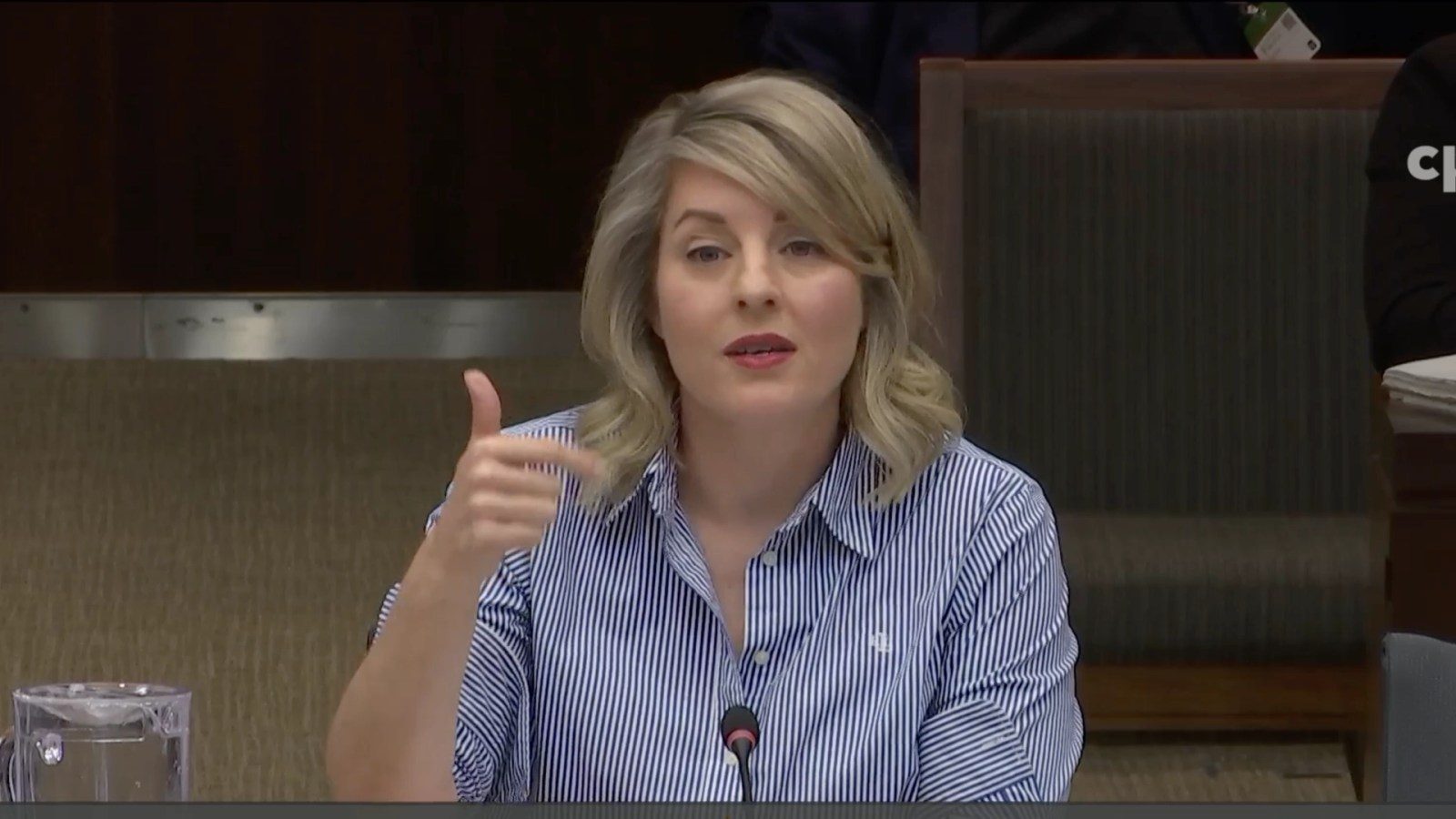
The disclosure came during a parliamentary hearing in which the Conservative Party of Canada’s Shadow Minister for Industry Raquel Dancho pressed Joly on whether she would be comfortable with the Chinese government accessing personal information from the vehicles.
“Electric vehicles, like other vehicles, are able to have a lot of our data, our GPS location, they sync with our phones,” Dancho said during the exchange. “Are you comfortable with the Chinese government having access to that information from, say, yourself if you drove one of these?”
Joly pointed to ongoing work by Transport Minister Steven MacKinnon.
“My colleague, Minister of Transport, is working on a regulatory framework when it comes to protecting people’s data in their cars,” the minister told the committee.
“I’ll make sure that I’ll work with him to improve that regulatory framework and also protect Canadians,” Joly added.
The exchange is the most specific public statement from a cabinet minister on the status of vehicle data regulation since Canada opened its market to Chinese-built EVs under a quota system earlier this year.
Discussions are currently ongoing with several Chinese carmakers.
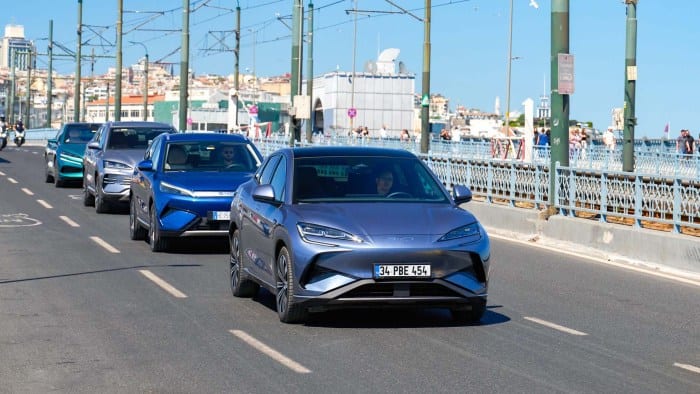
The first Chinese vehicles have already been spotted on Toronto streets — from two sub-brands under the Chery Group, China’s largest car exporter in 2025 with over 1.34 million units shipped overseas.
Data Concerns
The data security question has been a central flashpoint in Canada’s Chinese EV debate, and one that Dancho has raised consistently.
In March, she called the trade deal “frankly incomprehensible” and flagged surveillance risks in Chinese-made connected vehicles.
Later, the shadow labor minister said the Conservative Party was “hearing loud and clear from security experts” that “Chinese electric vehicles have the capability, for all intents and purposes, of being surveillance vehicles.”
The Conservatives have partly based their opposition to the Chinese EV quota on those risks, with party leader Pierre Poilievre pledging to scrap the deal and ban Chinese-connected vehicle software from those sold in Canada.
Experts who testified at the House of Commons Industry Committee have warned that Chinese EVs often use software that can collect camera, microphone, GPS, and phone data — including when the vehicle is off — and that China’s national security laws could compel companies to transmit that data back to Beijing.
Consumers on Chinese EVs
A recent AutoTrader survey found that while 53% of Canadian consumers are interested in Chinese EVs — with pricing being the primary driver — half of those interested have reservations about how their data would be collected, used, and stored by Chinese automakers.
In the United States, the Trump administration has maintained the connected vehicle restrictions finalized under President Biden, which bar vehicles from using Chinese- or Russian-linked software and hardware.
According to Trade Representative Jamieson Greer, these rules alongside the high tariffs on Chinese vehicle imports make it difficult for the companies to enter the US.
Liberal Reversal
The hearing also highlighted the broader reversal within the Liberal government on Chinese EVs.
Dancho opened the exchange by reading from the government’s own September 2024 Gazette order — which Joly helped impose as Foreign Affairs Minister — stating that “increasing Chinese EV imports are expected to undermine the growth and development of the Canadian EV industry.”
“I’m reading this and thinking that you’ve made a deal with China that directly undermines the Canadian auto industry,” Dancho told Joly. “So I’m deeply concerned about this. I’m trying to figure out why you aren’t.”
Joly attributed the shift to a changed trade environment.
“The trade war started, and our North American market was disrupted by 25% tariffs,” the minister noted, adding that, “in these circumstances, what did we do? We made sure that we were able to get a good deal.”
The minister is not the only senior Liberal to have reversed course.
Finance Minister François-Philippe Champagne — who as Innovation Minister repeatedly pledged that Canada would “never” serve as a backdoor for Chinese EVs into North America — has since traveled to Beijing to promote deeper economic ties with China after the trade deal he helped design was replaced with the current quota.
Deal Status
The deal, announced by Prime Minister Mark Carney during a state visit to Beijing in January, allows up to 49,000 Chinese EVs into Canada each year at a 6.1% tariff.
The annual cap rises to 70,000 by 2030.
Negotiations with Chinese carmakers are ongoing, with Beijing’s Ambassador to Canada Wang Di saying earlier this week that both countries are “earnestly implementing” the arrangement.
The progress includes import quota allocations and the certification process for Chinese EVs entering the Canadian market.
Several major automakers — including BYD, Chery, XPeng, Geely, and GAC — have been meeting with Canadian officials as they prepare to enter the market.
Forced Labor
Dancho also raised forced labor during the hearing, quoting Margaret McCuaig-Johnston from the China Strategic Risks Institute, who testified that Canadians do not want to drive vehicles produced under conditions of modern slavery.
The shadow labor minister then pressed Melanie Joly on why she was allowing 49,000 vehicles into the country that may have been partially made with forced labor.
“First and foremost, what we will do is when it comes to forced labour, we will address that through legislation, period,” Joly said, pointing to the Canada Border Services Agency’s enforcement role.
The minister added that any joint ventures with Chinese automakers entering Canada would be subject to three conditions: labor standards, the protection of localized supply chains, and the security of vehicle software.
“We have an entire approach that is very holistic, that will be protecting our workers while bringing in really good technologies,” Joly said. “And at the same time, what we want is affordability.”
The forced labor argument has gained traction following reports of labor abuse at BYD’s factory operations in Brazil and Hungary.
The Canadian Vehicle Manufacturers’ Association has warned that Chinese automakers benefit from weak or non-existent labor rights that distort competition.
Dancho warned that the issue carries trade consequences, noting that the United States has threatened a 25% tariff on all goods from countries found to be importing products made with slave labor.
Joly pushed back on the American pressure. “We won’t accept them and we won’t be threatened, period,” she said. “It’s not just our workers, it’s all of our goods.”