
Canada could lose its entire vehicle assembly industry by 2040 if it cannot restore duty-free access to the US market, the Royal Bank of Canada (RBC) analysts warned on Tuesday.
The bank presented a scenario analysis at an auto industry conference in Toronto outlining four possible futures for the sector.
RBC analysts say outcomes range from a complete shutdown of all assembly plants to a near-doubling of annual production, with the gap between them hinging on the fate of the upcoming USMCA renegotiations.
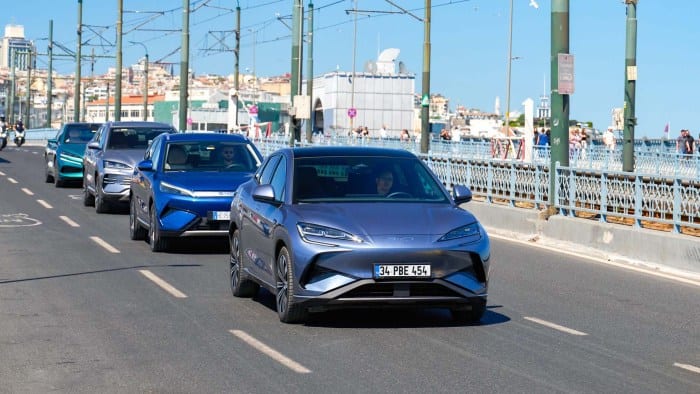
Canada’s approach to Chinese electric vehicles is also a concern — after the government announced earlier this year a trade deal with Beijing to allow for 49,000 vehicles to enter Ottawa for a reduced tariff of 6.1%.
RBC’s Worst-Case Scenario
RBC predicts that the most severe scenario is the USMCA being scrapped or weakened beyond viability.
In that case, US tariffs stay in place, and Canada turns towards Chinese-made EVs in exchange for concessions in other trade areas.
Through January’s deal, Carney expected China in exchange to lower tariffs on Canadian canola seed to a combined rate of approximately 15% — improving market access for approximately C$4 billion of Canadian canola seed exports to China annually.
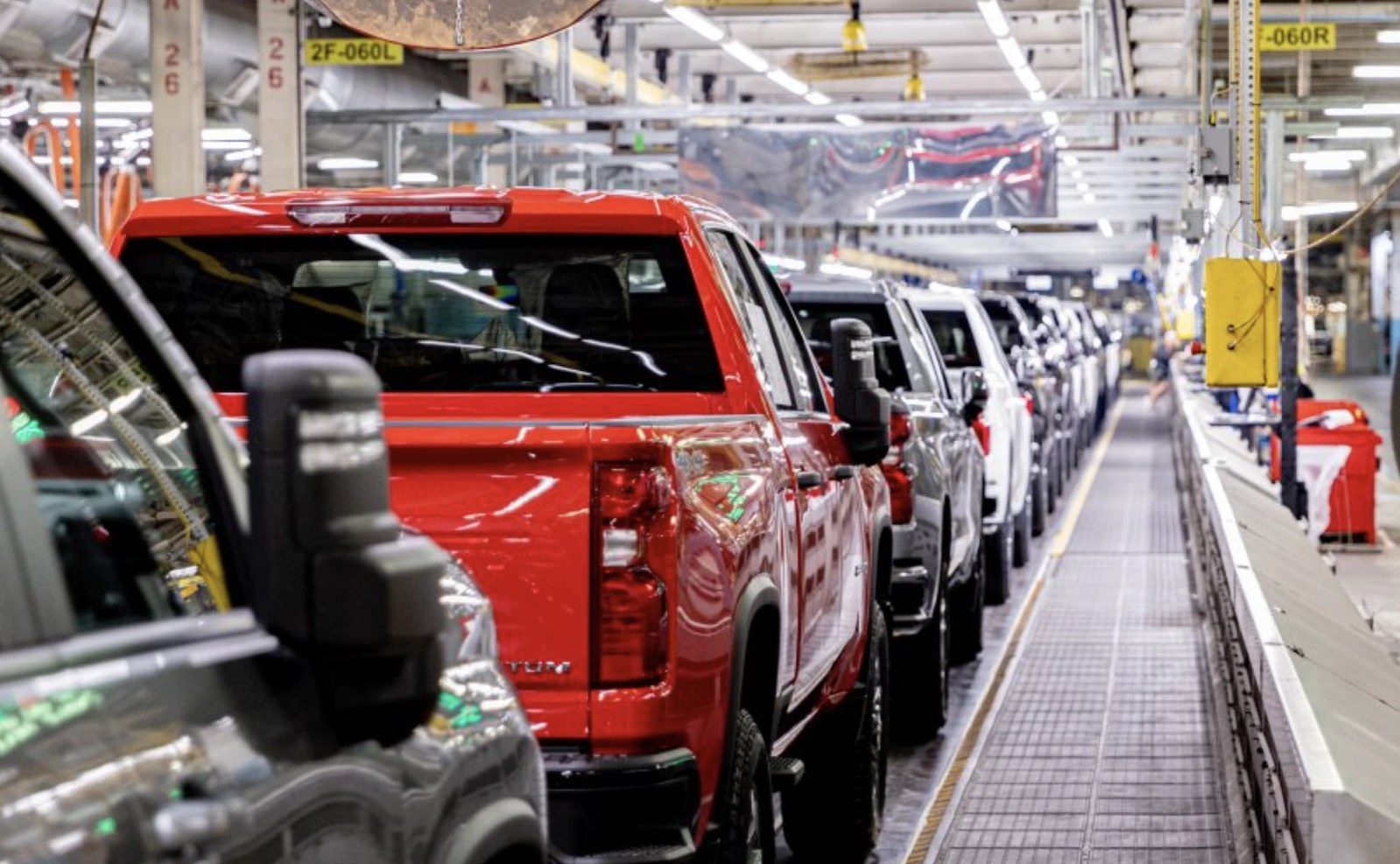
Under those conditions, RBC expects automakers to gradually shut down assembly operations in Canada, with all facilities to be closed by 2040.
“It’s the scenario where Canada is being heavily tariffed, customs are unviable, and export economics are dead,” Jordan Brennan, managing director of RBC Thought Leadership, told the forum.
According to the analyst, at that point, “governments [would] have to subsidize the industry to the point where it becomes politically unpeaceful,” as Chinese-made EVs are generally priced below their Ontario-built competitors.
Brennan cited Australia’s auto industry — which shut down its last assembly plant in 2017 — as a cautionary parallel.
According to data shared by both the Federal Chamber of Automotive Industries (FCAI) and the Electric Vehicle Council, Chinese-manufactured vehicles accounted for approximately 30% of all auto sales during April.
The figure includes not only Chinese brands but also some Tesla and Volvo models assembled in China.
In Canada, Tesla has already moved towards supplying its Model 3 vehicles from Shanghai instead of the US, in the wake of the tariff scenario and the trade deal.
“It’s not a good place to be, Brennan said, referring to Australia’s EV market. “We explored what happens to Ingersoll, Windsor and Oshawa. It would take generations for them to recover if we stop assembling vehicles in this country.”
Best-Case: Two Million Units
On the other end, RBC sees a path to two million vehicles assembled annually by 2040.
The best-case scenario would require the full restoration of free trade with the US, continued tariffs on Chinese EVs, rising EV investment, and greater use of AI and automation, the analysts said.
Canada assembled 1.2 million vehicles in 2025 — a 33% decline from pre-pandemic levels and a 7.8% drop from 2024.
The five major automakers producing locally — GM, Stellantis, Ford, Honda and Toyota — have all been forced to reassess their Canadian operations since US President Donald Trump imposed 25% tariffs on the non-US content of Canadian-made vehicles.
General Motors cut shifts and laid off hundreds of workers at its Oshawa and Ingersoll plants.
Stellantis redirected investment from Brampton toward US production.
Honda‘s C$15 billion EV manufacturing complex in Alliston — which was to include a new assembly plant, a battery facility, and cathode processing — has been effectively frozen for over a year.
Ford scrapped its EV plans for Oakville and is retooling the plant for gasoline-powered F-Series Super Duty trucks, with the government’s financial support.
Two Middle Scenarios
Between those extremes, however, RBC outlined two moderate paths.
In one, CUSMA survives in diluted form — EV adoption slows, Chinese EVs gradually gain share in the Canadian market, and Ontario maintains current production levels, but captures a smaller share of value per vehicle over time.
In the other, Canada remains subject to US tariffs but attracts foreign automakers to set up operations on Canadian soil.
The scenario includes vehicle and parts manufacturing, software development, and testing facilities.
Canada would position itself as an alternative to building in either China or the US and, by 2040, the auto workforce would shift from assembly-line manufacturing to high-skilled STEM roles.
“We pivot and broaden the definition of success. It’s not just units assembled, it is also about the R&D, and we become a gateway for testing and certification in a world that is more fragmented and multi-polar than ever,” Brennan said.
RBC cautioned, however, that the pathway also carries risk, as it could provoke retaliation from the United States.
Policy Divide
The analysis arrives as Canada’s auto policy is being pulled in opposite directions.
After the China deal, the government has also courted South Korean and German automakers and pushed for Chinese EV joint ventures with Canadian suppliers such as Magna International.
Carney unveiled an auto strategy plan that included this pivot towards other international partners and subsidies for EV adoption.
The Conservative Party has taken the opposite position, pushing for a tariff-free auto pact with the US, cancellation of the Chinese EV quota, and a return to continental integration.
The Canadian Vehicle Manufacturers’ Association — representing Ford, GM, and Stellantis — has endorsed that approach.
The CUSMA joint review must be convened by July 1 under Article 34.7.
The three signatory countries must decide whether to extend the deal for 16 years, negotiate revisions, or allow it to enter annual review until its 2036 expiration.