
Polestar sold 1,895 vehicles in the United States during the first half of 2026, a 42.2% decline from 3,280 units recorded in the same period a year earlier, according to estimates from Motor Intelligence.
The Geely-backed brand has posted year-over-year declines in every month of 2026, extending a streak that began in July 2025 and now spans a full year.
January fell 45%, February dropped 42%, March declined 46%, April slid 33%, May plunged 47%, and June fell 39%, according to the data.
June’s 355-unit result was the highest monthly figure of the year but still well below the 581 units Polestar sold in June 2025.
The sustained downturn comes as the brand faces a full ban from the US market starting with the 2027 model year.
Polestar is now offering some of the steepest discounts in the EV market to clear remaining inventory.
A Lineup Without the Sedan
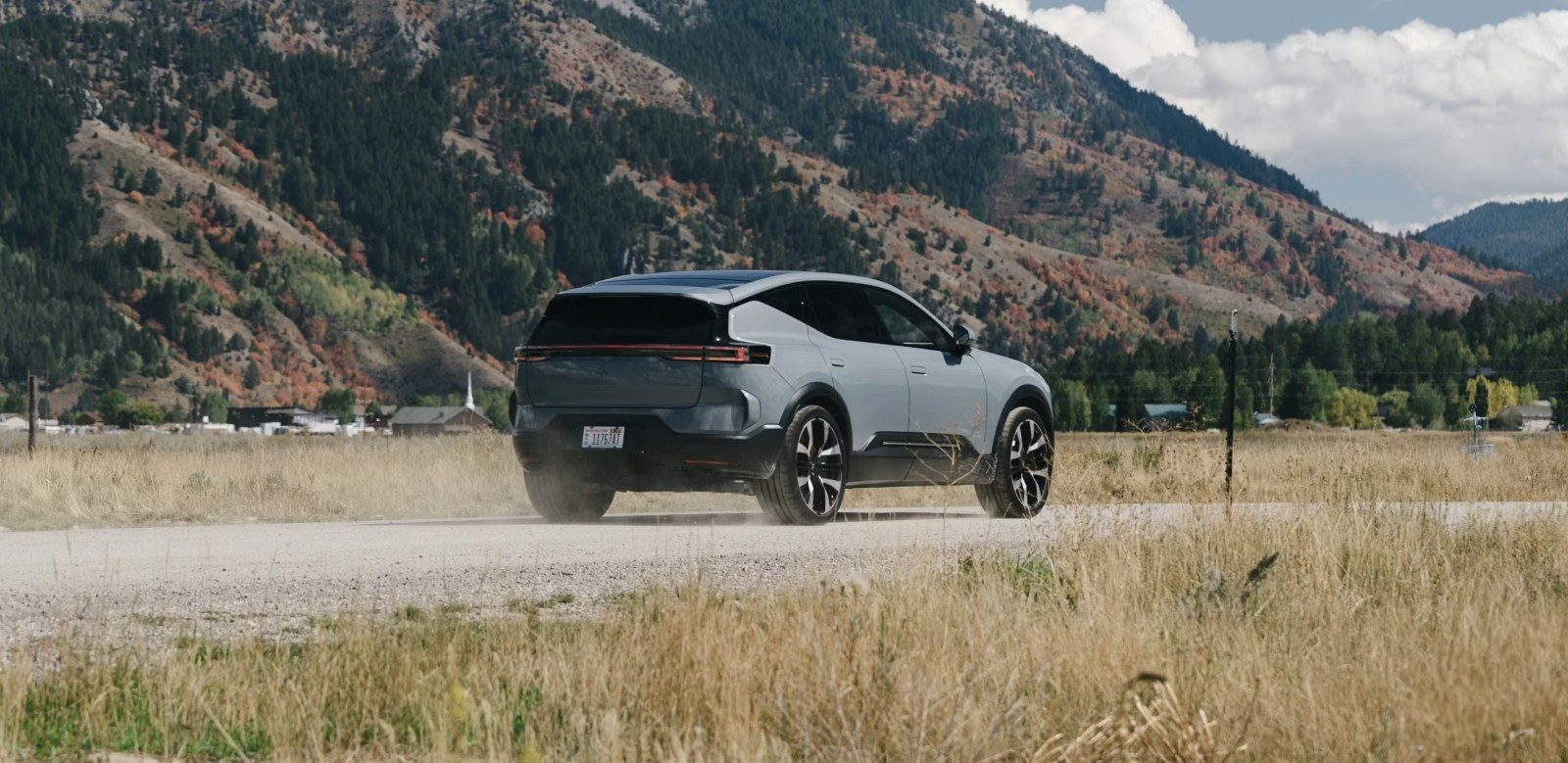
Polestar‘s US configurator now lists only two models, the Polestar 3 SUV and the Polestar 4 coupe-SUV.
The Polestar 2, the brand’s original volume model and its entry point into the American market, is no longer available for purchase.
The company pulled the Polestar 2 from its US configurator in April 2025 as tariffs on Chinese-built EVs made the China-produced sedan uneconomical to import.
Polestar sold through its remaining inventory over subsequent months, and by early 2026 only single-digit units were moving through pre-owned channels.
In February, Motor Intelligence recorded just three Polestar 2 sedans sold.
The loss of the Polestar 2 stripped Polestar of its most affordable and best-known US product.
The sedan had accounted for the majority of the brand’s American registrations since its 2020 launch and was Polestar‘s only model with meaningful brand recognition among US consumers.
A redesigned Polestar 2 is planned for 2027. That model will not, however, be offered in the United States.
Discounts Reach $25,000
With its days in the US market numbered, Polestar has launched aggressive pricing across its remaining lineup.
The brand’s current “limited offer” promotions, visible on its US configurator as of Friday, cut sticker prices by as much as $25,000 per vehicle.
The Polestar 4 coupe rear-motor variant is listed at $31,400, down from a base price of $56,400 — a $25,000 reduction, or 44% off the original sticker.
The dual-motor Polestar 4 is priced at $37,900, reduced from $62,900, also a $25,000 cut.
At $31,400, the Polestar 4 undercuts some mainstream non-luxury EVs.
The Polestar 3, built at Volvo‘s plant in Ridgeville, South Carolina, carries discounts of $23,000 across all three configurations.
Prices for the long-range single-motor variant start at $44,500, down from $67,500, while the dual-motor version is listed at $50,400, reduced from $73,400.
The dual-motor Performance pack version is priced at $56,400, down from $79,400.
Polestar is also advertising lease rates starting at $399 per month for the Polestar 4 and $579 per month for the Polestar 3.
A loyalty bonus offers current or former Polestar owners up to $4,000 toward a new Polestar 3 or $1,000 toward a Polestar 4, valid until July 31.
The bonus may also be applied toward remaining payments on a current lease contract.
Connected Vehicle Rule
The discounts are taking place against the backdrop of a regulatory decision that will shut Polestar out of the American market entirely.
Late last month, the US Department of Commerce declined to grant Polestar an exemption from the Connected Vehicle Rule, which bars manufacturers owned or controlled by China from selling connected vehicles in the US starting with the 2027 model year.
The decision arrived weeks after sibling brand Volvo, which shares Polestar‘s ultimate parent in Geely Holding Group, received the same authorization.
Both brands build vehicles at the same South Carolina plant, but the denial means a US-assembled Polestar 3 rolling off the same line as an authorized Volvo EX90 will be blocked from sale once the 2027 model year begins.
Polestar said it will continue selling existing US inventory of the Polestar 3 and Polestar 4 and will maintain access to its service network for current owners, however new stock will not be replaced once 2027 models would normally arrive.
Financial Pressure Mounts
The US sales decline is one dimension of a broader financial strain on Polestar.
In the first quarter of 2026, the company reported a net loss of $383 million, more than double the $166 million loss a year earlier.
Gross margin swung to negative 3.2% from positive 10.3% in Q1 2025, a 13.5-percentage-point deterioration.
Cash fell 42% in three months, dropping to $676 million as of March 31 from $1.159 billion at the end of December 2025.
The company raised $700 million in new equity during the quarter from financial institutions including Sumitomo Mitsui Banking Corporation, Standard Chartered, and Crédit Agricole CIB.
Volvo Cars and Geely Sweden also agreed to convert approximately $639 million in outstanding loans into equity.
Revenue stagnated at $633 million despite a 7% increase in global retail sales to a record first-quarter 13,126 units, reflecting the pricing pressure that is visible in the US discount campaign.
Europe Steps In, US Steps Out
CEO Michael Lohscheller has framed the regulatory denial as a catalyst to double down on Europe, which accounts for close to 80% of Polestar‘s retail sales.
About 94% of the brand’s first-quarter volume came from outside the United States.
European registrations have been climbing, with first-quarter registrations rising in both the UK and Germany, and May registrations exceeding 3,600 units across 16 European markets.
The company has also named Southeast Asia, Eastern Europe, Latin America, and Canada as growth targets.
Polestar plans to build the coming Polestar 7 compact SUV in Kosice, Slovakia, through a manufacturing partnership with Volvo Cars, marking its first European-assembled model.
The Polestar 5 grand tourer is set for summer deliveries in Europe, while a new Polestar 4 variant is due in the second half of 2026.