XPeng‘s US-listed shares reached a new fifteen-month low on Monday at $14.91 before closing the session at $15.06.
The move extends a slide that has seen XPeng‘s shares lose roughly a quarter of their value since the start of the year.
The Monday $14.91 intra-day low marked an approximately 47% decline from the 52-week high of $28.24 reached in last November, when the stock rallied on the company’s AI Day commitments to roll out three robotaxi models in 2026.
The share price is also beneath the most recent price targets set by major Wall Street firms, including Barclays’ $16 target and Macquarie’s $19 target — both of which were cut in late March.
XPeng is trading 80% below its all-time high of $74.49, reached in November 2020.
Investors are weighing the Guangzhou-based automaker’s persistent delivery declines against an increasingly ambitious — and capital-intensive — expansion strategy spanning new models, robotaxis, humanoid robots, and an international manufacturing push.
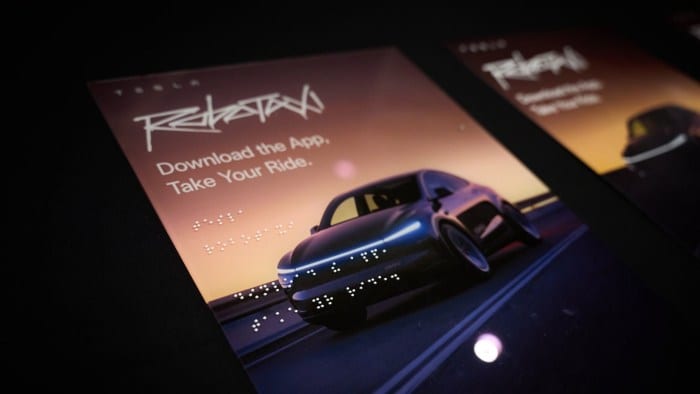
The decline came despite the company’s announcement on Monday that its first mass-produced robotaxi has rolled off the production line in Guangzhou.
Delivery Slump
The stock’s extended slide comes against the backdrop of four consecutive months of year-over-year delivery declines.
The most recent results show a sharp reversal from 2025, when XPeng posted triple-digit annual growth and exceeded its full-year guidance of 380,000 vehicles by 13%, reaching 429,445 units.
XPeng delivered 31,011 vehicles in April, a 7.5% decrease from the 35,045 units sold in the same month a year ago.
While the figure represented a 13% sequential improvement from March, the year-over-year decline — the fourth in a row — extended a weakening demand trend that began at the start of the year.
In the first four months of 2026, total deliveries reached 93,693 units, down 27.4% from the same period in 2025.
Between January and March, 62,682 vehicles were delivered — a 33.3% plunge from the same period a year ago, marking the first year-over-year decline in quarterly deliveries since the second quarter of 2023.
The slowdown was partly seen as seasonal, with reduced government incentives in China and a longer Chinese New Year holiday disrupting sales figures in the first two months of the year.
Still, the broader picture remains one of slowing momentum in a highly competitive domestic market.
XPeng‘s first-quarter guidance of 61,000 to 66,000 deliveries, issued alongside its fourth-quarter earnings in March, already implied a 29.8% to 35.1% decline from the same period a year before — and disappointed Wall Street investors.
Analysts Flag Concerns
The downbeat demand trajectory has drawn scrutiny from multiple research desks.
Barclays analyst Jiong Shao lowered his price target on XPeng‘s US-listed shares to $16 from $17 in late March, maintaining an Underweight rating on the stock.
Shao flagged the first-quarter delivery guidance as “a bit below our expectations” and warned that 2026 was “shaping up as a pretty difficult year for NEVs in China” as the government pulled back on tax incentives and competition intensified.
The Barclays analyst also expressed concern about the company spreading itself too thin, noting that management was “stretching itself a bit” by investing in multiple new areas simultaneously — from robotaxis and humanoid robots to seven new vehicle launches and an international expansion push.
Macquarie’s Eugene Hsiao downgraded the stock to Neutral from Outperform at the same time, cutting his target to $19 from $24.
Hsiao said that while Macquarie “still like[s] XPeng‘s physical AI optionality,” it “cannot ignore the hard truth that volume growth is no guarantee this year.”
The firm lowered its full-year 2026 unit volume estimates by 7% on soft early demand.
Macquarie’s full-year estimates on loss per share also widened significantly — to negative 1.28 yuan from negative 0.45 yuan — reflecting higher R&D spending expectations.
An Ambitious 2026 Roadmap
XPeng is executing one of the most aggressive product and technology expansion programs of any Chinese automaker.
The carmaker outlined an ambitious 2026 roadmap that includes seven new model launches — four all-new vehicles spanning full-size to compact segments, plus three range-extended variants of existing fully electric models.
It is also targeting a full-year delivery range of 550,000 to 600,000 vehicles, which would represent 28.1% to 39.7% growth from 2025 — a target that looks increasingly difficult after the weak first four months.
XPeng increased its headcount by 29.4% in 2025.
The figures represent the fastest rate since 2021 and the biggest annual increase in its history as a public company, ending the year with 19,884 employees.
Research and development alone added 2,645 employees, a 42.7% annual jump that lifted R&D’s share of total headcount to 44.5% — the highest on record.
XPeng invested 9.5 billion yuan ($1.4 billion) in R&D throughout 2025, with 4.5 billion yuan directed to AI.
In 2026, it plans to raise AI-related R&D spending to 7 billion yuan — a 56% increase — as it builds out a full-stack physical AI technology system covering in-house chips, foundation models, and infrastructure.
Competitive Pressure
In April, XPeng unveiled and opened pre-orders for the GX, its flagship six-seat SUV and the most expensive model in its lineup.
The GX carries a pre-sale price of 399,800 yuan ($58,600) — below the 400,000-to-500,000-yuan range that industry observers had estimated — and is available in both fully electric and extended-range variants.
Built on the brand’s latest SEPA 3.0 architecture, it is the first XPeng model designed to support L4-level hardware and software capabilities.
The GX enters one of the most competitive segments in the Chinese new-energy vehicle market, facing off against the Nio ES8 and ES9, the Li Auto Li i8 and L9, the Huawei-backed Aito M9, among others.
At the same time, XPeng is increasingly betting on extended-range electric vehicles, for which it began production late last year — after having served as a pure EV maker since its inception.
XPeng also filed for the Mona L03 — a compact coupe SUV and the first SUV under the Mona series, its best-selling domestically — ahead of the Beijing Auto Show.
The Mona L03 is estimated to be priced below the G6, further expanding the company’s high-volume lineup.
A second Mona SUV — a more conventional family-oriented model — is expected later this year.
VW Partnership
Separately, XPeng secured Volkswagen as the first commercial customer for its second-generation Vision-Language-Action (VLA 2.0) autonomous driving solution, marking the first time a major Western automaker adopted a China-developed AD software for commercial deployment.
The deal expands a partnership that began in July 2023 with a $700 million investment from the German automaker to acquire a 4.99% stake in XPeng.
Last week, an European executive revealed at the Financial Times’ Future of the Car conference in London that the carmaker is also exploring leveraging Volkswagen’s manufacturing footprint in the Old Continent to increase output there.
Overseas Push
XPeng first partnered with Magna late last year to assemble its G6 and G9 models at its Graz, Austria facilities.
However, according to Elvis Cheng, Magna’s production capacity for the Guangzhou automaker’s vehicles has been reached.
The company added its P7+ sedan earlier this year and plans to also assemble the X9 MPV in Europe.
Setting up local production in Europe further helps the companies avoid steep tariffs on EV imports.
XPeng is currently present in over 60 markets across the globe, with Mexico and Tunisia included in the most recent additions.
The company achieved its first-ever quarterly net profit in the fourth quarter of 2025, with gross margin reaching a record 21.3%.
Revenue nearly doubled to 76.72 billion yuan in 2025.
XPeng‘s first-quarter earnings report is scheduled for May 28 and will offer the first detailed look at whether the profitability gains of late 2025 proved durable or were overtaken by the softer demand environment and rising R&D expenditures.