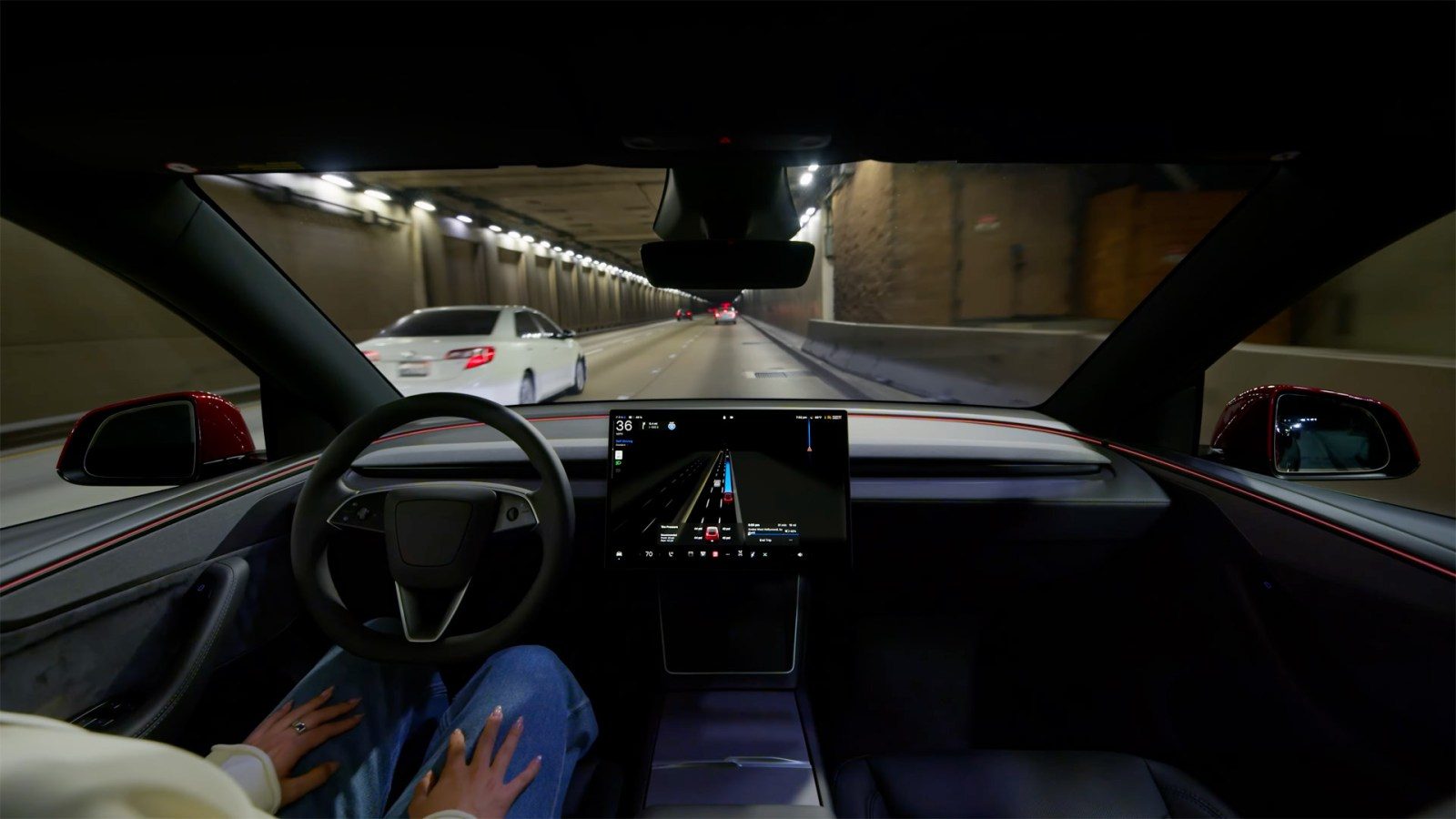

Lemonade has extended its Autonomous Car insurance to Indiana, the third US state to gain the product since its January launch.
Built for self-driving cars broadly, the policy currently covers only Tesla‘s Full Self-Driving (FSD), the first and so far only system it supports.
Co-founder and President Shai Wininger announced the move on X, telling Indiana Tesla owners they are “probably paying too much for your car insurance” and inviting them to switch.
Tesla owners running Full Self-Driving (FSD) in Indiana can now buy coverage that cuts per-mile rates for FSD-engaged driving by approximately 50%.
New York-headquartered Lemonade pitched the line directly at the Tesla community when it launched the product earlier this year in Arizona.
How It Works
Lemonade prices the policy on a pay-per-mile basis and halves the rate for every mile driven with FSD active.
Connection runs through Tesla‘s Fleet API, with the owner’s permission, letting the insurer separate autonomous miles from manually driven ones. No aftermarket device or self-reporting is required.
Eligibility is narrow — coverage applies only to Teslas equipped with Hardware 4 or higher running firmware.
Lemonade pegs FSD-driven miles at roughly twice as safe as manual driving, the basis for the 50% cut, and expects the discount to deepen as Tesla ships further safety improvements.
Tesla vehicles driven with FSD “are involved in far fewer accidents,” according to Wininger.
Lemonade trains its own usage-based risk models on the captured data to distinguish autonomous from human driving and to price against the software version installed, sensor precision, and other vehicle factors.
The company also lets Tesla owners bundle Autonomous Car coverage with its homeowners, renters, pet, or term-life products for additional discounts, and offers further savings for safe-driving behavior.
Existing customers receive the FSD discount at policy renewal.
Rollout
Lemonade began selling Autonomous Car insurance in Arizona on January 26 and added Oregon a month later.
Indiana extends the product to a third market roughly four months after launch.
Lemonade’s existing pay-per-mile car insurance, which covers most popular models including Teslas, remains available in Arizona, California, Colorado, Illinois, Indiana, Ohio, Oregon, Tennessee, Texas, and Washington.
Policy terms cover intermittent FSD use and households running a mix of Teslas and non-FSD vehicles under a single plan.
Tesla’s FSD Push
Indiana availability lands as Tesla restructures how it sells the software.
From February 14, the company ended outright purchases of FSD, offering it only through a subscription option at $99 per month in the US.
FSD currently runs on Version 14 and receives weekly updates that add features or refine performance.
Tesla‘s CEO Elon Musk has predicted that by V14.3 — the current version — the car “will feel like it is sentient.”
Pricing Autonomy
Insurers are repricing risk as driver-assistance and autonomy spread.
S&P Global research published last September projected falling rates for both commercial fleets and personal consumers as autonomy advances, while warning that the product itself needs a structural overhaul rather than a simple price adjustment.
When a vehicle with Level 3 to 5 autonomy crashes while the driver is disengaged, fault shifts from the driver to the manufacturer or software provider, according to the research.
Future policies will have to distinguish coverage by whether a human or the software was in control at the time of an incident.
Robotaxis complicate the math further, generating up to 52,000 miles a year per vehicle and pushing insurers from per-vehicle toward per-mile exposure.
Fewer claims but higher repair costs is a trend already visible across electric vehicles.
Rivian founder and CEO RJ Scaringe addressed the same shift on the Access podcast, calling lower insurance rates “one of the driving forces” toward automation as underwriters recognize the safety record of autonomous miles.
Lemonade Context
Lemonade reported first-quarter 2026 results on April 29, with a per-share loss narrower than analyst estimates.
The insurer sells renters, homeowners, car, pet, and life products across the US and Europe — and has framed Autonomous Car as a step toward its stated goal of becoming the lowest-cost insurer in its markets.
The New York-based firm carried a market cap of around $4.2 billion.
As of press time, its stock was trading 6% down at $54.30, nearly half of its peak of $99.90 on January 22.
Tesla, which reached its all-time high on December 22, 2025, trading as high as $498.83, has seen its stock plunge as low as $333.25 in April.
The company’s shares were trading nearly flat at $426.00 on Wednesday.