Onvo ranked first among new energy vehicle (NEV) brands in China for resale value retention in May, recording an 81.5% rate that edged out Aito, Xiaomi, and Li Auto.
In a monthly study released on Monday, Nio Inc.‘s family-oriented sub-brand reached a new monthly high in residual value — which climbed from 80.9% in March and 80.7% in April to take the top spot.
Seres Group’s Aito followed at 81.3%, while Tesla posted 80.7%, Li Auto 80.2% and Xiaomi 79.9%, according to the Jielan Road Monthly Tracking Study on Used New Energy Vehicle Prices and Value Retention.
All five leading brands maintained retention rates around or above 80%, pointing to strong overall resale performance across China’s premium NEV segment.
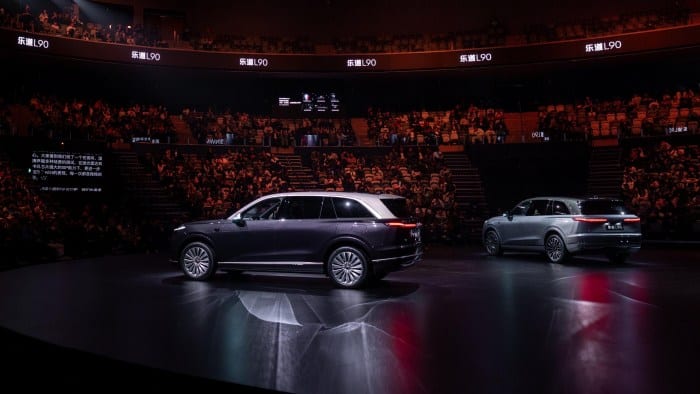
Onvo L90
Jielan Road attributed Onvo‘s climb to first place primarily to the L90 entering the used car market.
The model first debuted in July 2025. Onvo launched an updated version of the model last month, including LiDAR-equipped trims.
Additionally, the report flagged the dominance of Battery-as-a-Service in secondhand transactions — nearly all Onvo used-car sales during the month involved BaaS models, as the brand benefits from its parent company’s battery swapping network.
Under BaaS, buyers purchase the vehicle without the battery — the component that depreciates fastest — and lease the pack instead.
In the used car market, second owners inherit a subscription rather than an aging cell, eliminating the battery degradation risk that weighs on conventional EV resale prices.
The BaaS advantage has been documented in earlier Jielan Road research.
A separate report published in late April found the Onvo L60 achieved an 83.1% one-year value retention rate under the battery-separation model, compared with just 71.8% for the non-BaaS version — a gap exceeding 10 percentage points.
In October 2025, the L60 topped China’s ranking of pure electric mid-size SUVs for value retention at 71.9% in a separate industry report, narrowly beating Tesla‘s Model Y at 71.7%.
The Nio Swap Ecosystem
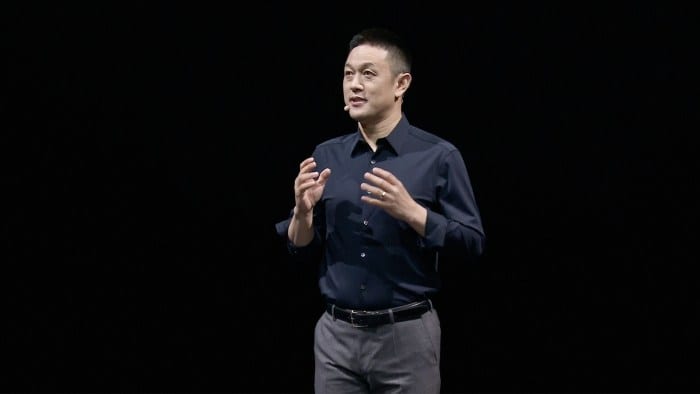
Onvo‘s brand chief Fei Shen has repeatedly linked the brand’s resale performance to its battery swap ecosystem.
In a recent interview, the executive said the L60’s strong retention rate stems fundamentally from product strength, but is also tied to stable pricing policies, the direct sales model, and battery swapping capabilities — factors he described as critical to family buyers’ long-term confidence in the brand.
Shen has previously explained the structural disadvantage pure electric vehicles face without easy battery replacement, noting that increasing uncertainty as cells age and high replacement costs — averaging around 80,000 yuan ($11,000) — compress resale values and shorten effective vehicle lifecycles.
Battery swapping, he has argued, resolves this by ensuring buyers never face degradation risk.
Fei Shen holds a doctorate in electrical engineering from Tsinghua University and joined Nio in 2015 as one of its earliest employees.
He spent nearly a decade building the company’s energy business from the ground up, overseeing the rollout of what is now the world’s largest battery swap network.
As of Monday, Nio operated 3,946 swap stations in China, with over 2,000 of them being compatible with Onvo vehicles.
Shen, who had held a role as head of Nio Power, replaced Alan Ai as Onvo‘s chief after the L60 missed early sales targets.
Earlier this summer, Shen formally signed off as legal representative of Wuhan Nio Energy Co, the entity that operates Nio Power, completing his administrative separation from the energy business.
Chief Financial Officer Yu Qu has been leading the unit since April 2025.
Onvo Lineup Updates
Onvo‘s rise in the resale rankings coincides with an aggressive product refresh across its entire lineup over the past two months.
The updated 2026 L90 began deliveries in late April, adding a LiDAR-equipped variant powered by Nio‘s in-house Shenji NX9031 chip alongside the existing pure-vision option.
Onvo launched its third model, the L80, on May 15 — the sub-brand’s second anniversary.
The five-seat SUV shares its platform, dimensions, and 900-volt architecture with the three-row L90.
Prices start at 242,800 yuan ($35,800) with battery or 156,800 yuan ($23,100) under BaaS, undercutting Tesla‘s Model Y by 17,700 yuan in China.
Earlier this month, the brand also launched a refreshed L60 that reversed its founding vision-only hardware strategy by adding an optional 192-line rooftop LiDAR sensor — a move driven by competitive pressure as rivals including BYD have begun shipping LiDAR on vehicles priced below 100,000 yuan.
Onvo delivered 12,029 vehicles in May 2026, a 91.5% year-on-year increase and a 124.8% jump from April, driven primarily by L80 and 2026 L90 deliveries.
Cumulative deliveries since September 2024 have reached approximately 150,000 units.
Rival Brands Performance
Aito recorded the largest month-over-month gain in the three-month tracking period, jumping from 76.6% in March to 82.7% in April before settling at 81.3% in May.
Li Auto‘s retention rate held at 80.2%, supported by the L6 and L7 alongside premium models such as the MEGA and L9.
Tesla posted 80.7% in May, down steadily from 82.7% in March, with the Model 3 and Model Y continuing to benefit from strong brand recognition, a large installed base, and a mature secondhand ecosystem.
Xiaomi ended May at 79.9%, though performance varied significantly by model and trim.
The YU7 posted an 87% retention rate and the SU7 Long-Range RWD Smart Driving Edition reached 83%, but the SU7 Ultra managed only 72% — well below the brand average.
Among mid-tier brands, BMW stood out — the German automaker’s NEV retention rate improved steadily from 69.1% in January to 76.5% in May.
The recovery comes as BMW prepares to launch the iX3 Long Wheelbase in the Chinese market in the second half of 2026 — a China-specific version of the Neue Klasse platform’s debut model.
The iX3 won both World Car of the Year and World Electric Vehicle of the Year in New York in April.
The global iX3 is built on BMW’s sixth-generation 800-volt eDrive architecture with a 108.7 kWh battery and up to 434 miles of range, a significant step forward from the older-generation electric BMWs that have weighed on the brand’s secondhand values in China.
BMW sold 625,527 vehicles in China in 2025, a 12.5% year-on-year decline and its weakest result in the market since 2017–2018, as domestic rivals continued to erode the German brand’s pricing power.