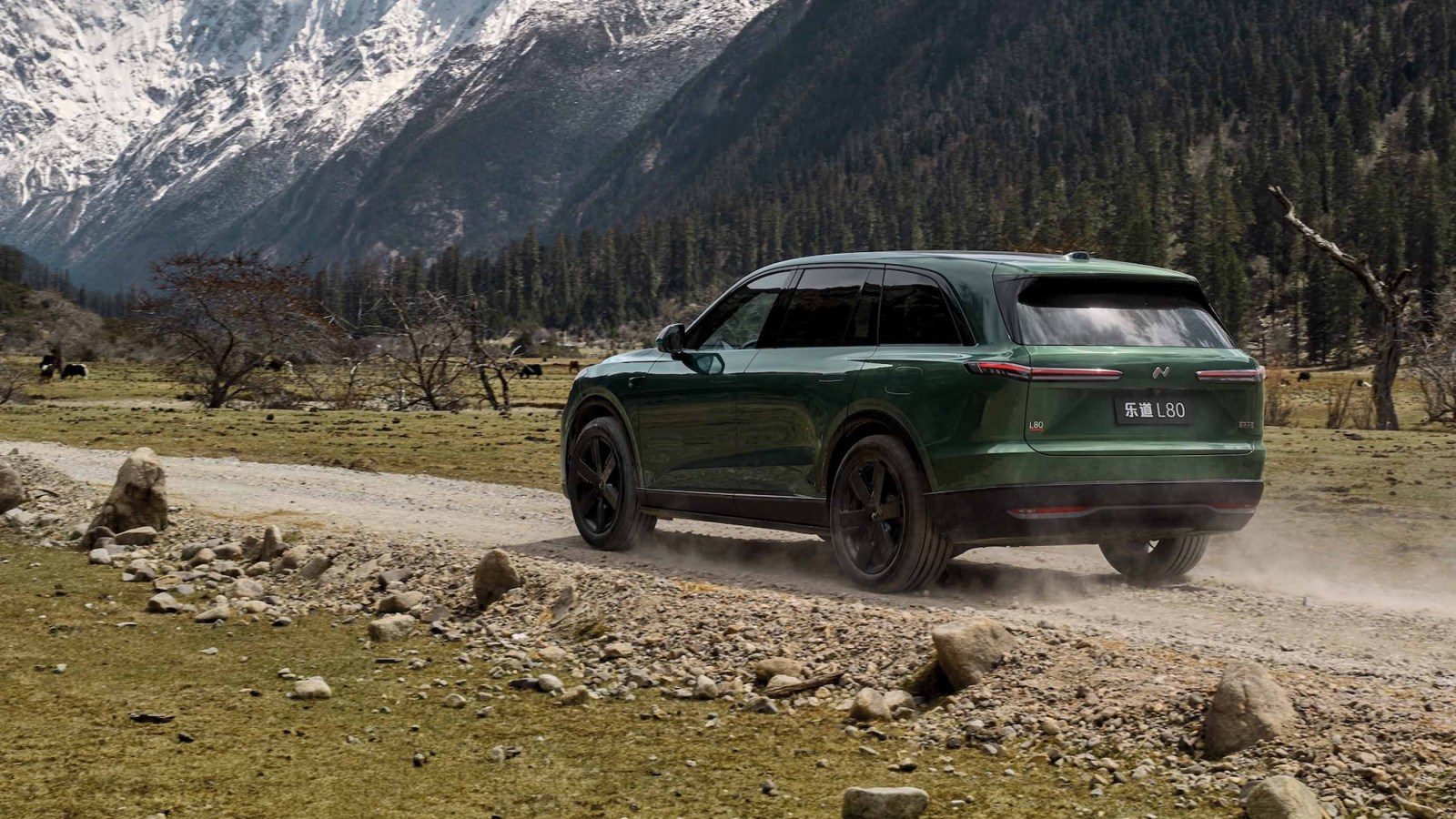

Nio Inc.‘s family-focused sub-brand Onvo priced the L80 SUV from 245,800 yuan ($36,020) in pre-sales at a launch event in Beijing on Tuesday, undercutting Tesla‘s Model Y by 17,700 yuan.
Tesla‘s best selling model has consistently been among the best selling premium models in China despite increasing competition from the smartphone giant Xiaomi with its YU7 SUV.
The pre-sale prices of Onvo‘s third model position the new five-seat model 7.5% below the larger three-row L90 in the brand’s lineup.
Tesla‘s Model Y starts at 263,500 yuan in China while the Onvo L90 begins at 265,800 yuan with the battery included.
The final price is expected to be slightly lower than the pre-sale figure.
Nio‘s sub-brand Onvo was launched in May 2024 with deliveries of the debut model beginning in September of that year.
The launch caps a month of intensive product launches at Nio, which is rolling out what chief executive officer William Li has described internally as the group’s “three arrows” — the L80, an L90 facelift, and an L60 facelift — to offset weakening domestic sales in the first quarter.
The L80 measures 5,145 millimeters in length, 1,998 millimeters in width, and 1,786 millimeters in height, with a 3,110-millimeter wheelbase, Onvo said.
The front trunk (known as frunk) holds 240 liters, while folding the second row expands cargo capacity to a total of 2,600 liters.
The model slots between the Onvo L60 compact SUV — priced from 149,900 yuan ($22,000) under Nio‘s Battery-as-a-Service scheme or 206,900 yuan ($30,200) with the battery included — and the three-row L90.
‘Pure Electric Inflection Point’
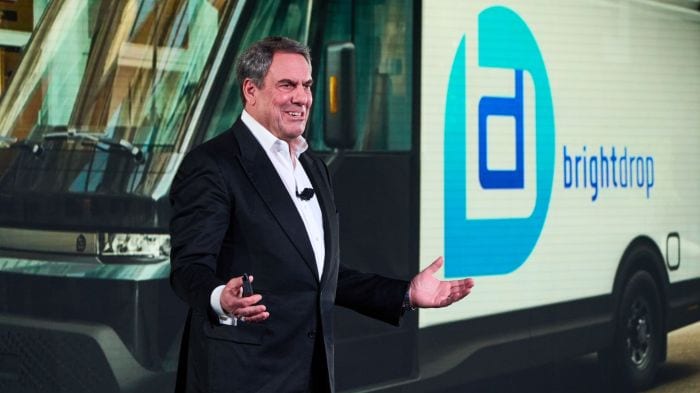
Li used the launch event to argue that fully electric large three-row SUVs are at an inflection point against range-extender alternatives, presenting a chart that compared monthly sales of pure-electric three-row SUVs with extended-range three-row models from July 2025 through March 2026.
The chart, displayed on stage during Li’s presentation, showed pure-electric models gaining share over the nine-month period.
Range-extender three-row SUVs from rivals including Li Auto and Aito, the Huawei-backed brand, dominated the segment in 2025, but the gap has narrowed as battery technology and charging infrastructure improved.
The L90, which launched in July last year, has been the Onvo brand’s most successful model in the three-row segment.
Coconut and Coconut+
The L80 will be available with two assisted-driving systems, branded Coconut and Coconut+, Onvo said.
The flagship Coconut+ configuration combines 30 sensors with Nio‘s in-house Shenji NX9031 autonomous driving chip and the latest version of its World Model artificial intelligence foundation, NWM 2.0, for full-scenario smart driving capability.
The 30-sensor stack includes one high-precision LiDAR, seven 8-megapixel high-definition cameras, four 3-megapixel high-sensitivity surround-view cameras, one 4D imaging millimeter-wave radar, 12 ultrasonic sensors, three high-precision positioning units, a hands-on-detection driver monitoring sensor, and an enhanced driver perception sensor.
The Coconut variant uses a vision-only configuration, mirroring the dual-track approach the sub-brand introduced with the L90 facelift in the second quarter.
Shenji Safety Camera System
Onvo introduced a new in-house perception platform with the L80, branded “Shenji,” which the company described as a full-stack safety camera system spanning hardware, chips, and AI image-enhancement algorithms.
The camera hardware uses an F1.46 aperture, 8-megapixel resolution, 140-decibel high dynamic range, quad exposure, and an ultra-wide field of view of up to 195 degrees, according to specifications presented during the launch.
The Shenji chip operates with sub-5-millisecond latency, 26-bit ultra-wide bit depth, 6.5-gigapixel-per-second bandwidth, and 25 independent processing channels, with the highest functional safety rating of ASIL-D.
The system uses AI-based image enhancement for smart scene exposure, halo enhancement, glare elimination, fog and water vapor elimination, ultra-low-light night vision, multi-domain noise reduction, red-light suppression, and license plate enhancement.
The L80 is fitted with a 35-inch AR-HUD safety screen, a 17.2-inch 3K central recessed display, and an 8-inch rear-row scene screen.
Camera-based blind-spot fill covers dynamic driving scenarios, A-pillar steering blind spots, ultra-wide A-pillar coverage, intersection information overlays, and interior and exterior mirror views.
For special scenarios, the system offers tire-crossing blind-spot fill, a 360-degree panoramic parking floor view, dynamic transparent chassis, and a real-time child detection view.
A door-opening warning view and remote vehicle exterior live view are included for parking safety.
The ASIL-D rating, the highest level under the ISO 26262 functional safety standard for automotive electronics, is Onvo‘s strongest technical claim for the L80 ahead of the LiDAR-equipped variant.
Battery Safety Test
Onvo said the L80 passed a battery safety challenge conducted by CATARC Brand Technology (Tianjin) Co., the Chinese government-backed automotive testing body, combining continuous underbody scraping over rocks with 600-millimeter water immersion.
In the test, the same vehicle drove over a 30-meter rocky section at up to 65 kilometers per hour with the underbody clearing as little as 300 millimeters, before entering a 500-meter water-immersion section at 10 kilometers per hour with water depth of 600 millimeters.
The battery pack showed no leakage, no casing rupture, no fire, and no explosion, with insulation resistance testing normal after the challenge, Onvo said.
The cabin remained dry throughout the test, the company said.
The certification was issued in April 2026 under standard GB 18384-2025 for electric vehicle safety requirements.
Xiao Le Voice Assistant
Onvo‘s in-car voice assistant, named Xiao Le, will proactively initiate suggestions on the L80 based on real-time environmental awareness, the company said.
The assistant’s “proactive suggestion” function covers driving safety, respiratory health, cabin comfort, and multi-scenario coverage, with the system using real-time environmental perception to make smart judgments and prompt the driver, Onvo said.
On the L90 SUV, Xiao Le supports over 1,630 voice commands.
“It can remember 20 different occupants and their preferences, and suggest cabin settings based on both in-cabin and external conditions, bringing greater peace of mind and more enjoyment to the whole family,” Onvo said when it launched the L90 in July last year.
Lineup Strategy
The L80 launch follows Onvo‘s decision to delay the model from late 2025 as the brand prioritized ramping up production capacity for the L60 and L90.
Nio co-founder and president Qin Lihong said earlier this year that the L80 would launch “around mid-May,” coinciding with the second anniversary of the Onvo brand on May 15.
The L80 is positioned as a five-seat iteration of the L90, with Lihong saying the brand would maintain a price gap of more than 100,000 yuan between the L80 and the upcoming five-seat Nio ES8 to avoid cannibalizing the premium brand.
The L80 will compete in the same segment as Li Auto Inc.’s L-series and Xiaomi Corp.’s YU7 — both of which have rapidly accumulated orders in the 2025 model year.
Li Auto‘s L6 starts at 249,800 yuan, while Xiaomi‘s YU7 starts at 253,500 yuan.
Onvo currently offers 60-kilowatt-hour and 85-kilowatt-hour battery packs, with the originally planned 100-kilowatt-hour pack on hold, Shen said earlier this year.
The brand’s intelligent driving system will receive two major version upgrades this year, developed and iterated based on Nio‘s World Model artificial intelligence foundation.