
Written by Cláudio Afonso | LinkedIn | X
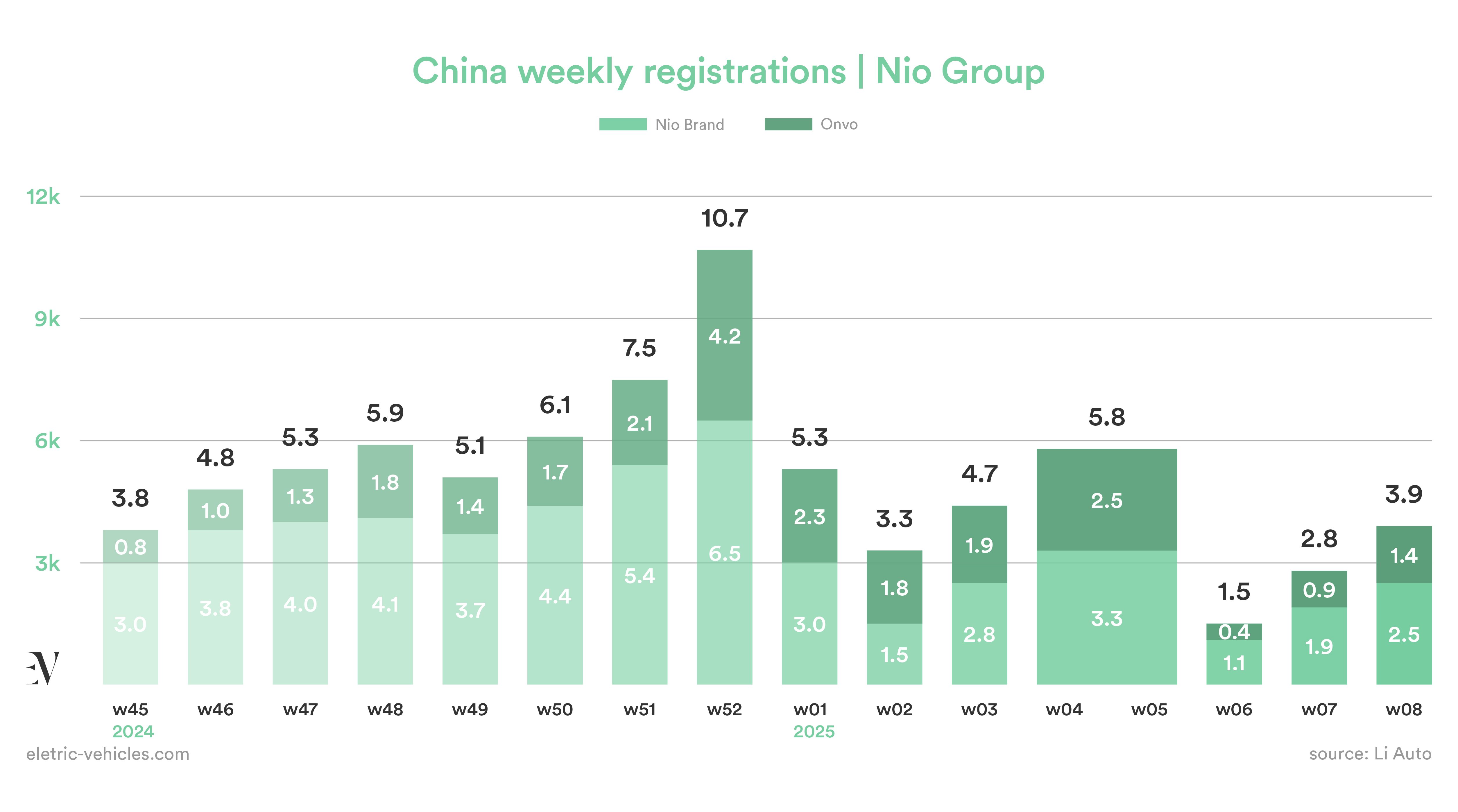
Shanghai-based EV maker Nio registered 2,500 vehicles between February 17 and 23 in China, data shared by the automaker Li Auto showed on Tuesday. The figures mark a 31.6% increase from the second week of February.
Nio’s first sub-brand, Onvo, recorded 1,400 insurance registrations bringing the group’s total to 3,900 vehicles, up from 2,800 the previous week.
The company delivered a total of 13,863 vehicles in January, consisting of 7,951 Nio-brand units and 5,912 Onvo-brand vehicles.
XPeng led the sector with 8,800 registrations, up from 8,100 a week earlier, followed by Li Auto with 7,700 units (up from 7,500). Xiaomi’s SU7 sedan recorded 6,400 registrations, down from 6,900. Zeekr, a premium EV brand under Geely, reported 3,500 units, slightly lower than the previous week’s 3,600.
Facelifts + New Models
Nio will introduce facelifts for four of its premium models, while its more affordable sub-brand, Onvo, will launch two new SUVs. Meanwhile, Firefly, Nio’s recently unveiled third brand, will begin deliveries of its first model in late April.
The brand’s entry-level model, the ET5 sedan — alongside its Touring version ET5T — will be updated. The smallest SUV ES6 (known as EL6 in Europe) and the coupe SUV EC6 will also roll out new versions later this year.
Nio founder and CEO William Li said earlier this month that the company plans to launch new or updated models every quarter of 2025, beginning in the second quarter.
Goldman Sachs
Goldman Sachs analyst Tina Hou increased the price targets for Nio and XPeng last week but remained cautious on both stocks.
For Nio’s U.S.-listed shares, Hou raised the price target from $3.50 to $3.90 while keeping a Sell rating on the stock. The new target suggests a 10.8% downside from the stock’s last closing price before the research note was issued.
Sales Target
In 2025, the Shanghai-based group aims to double sales to about 440,000 units. After delivering 13,683 EVs in January, Nio needs to deliver 426,300 vehicles across its three brands over the next eleven months, an average of about 38,750 units.